

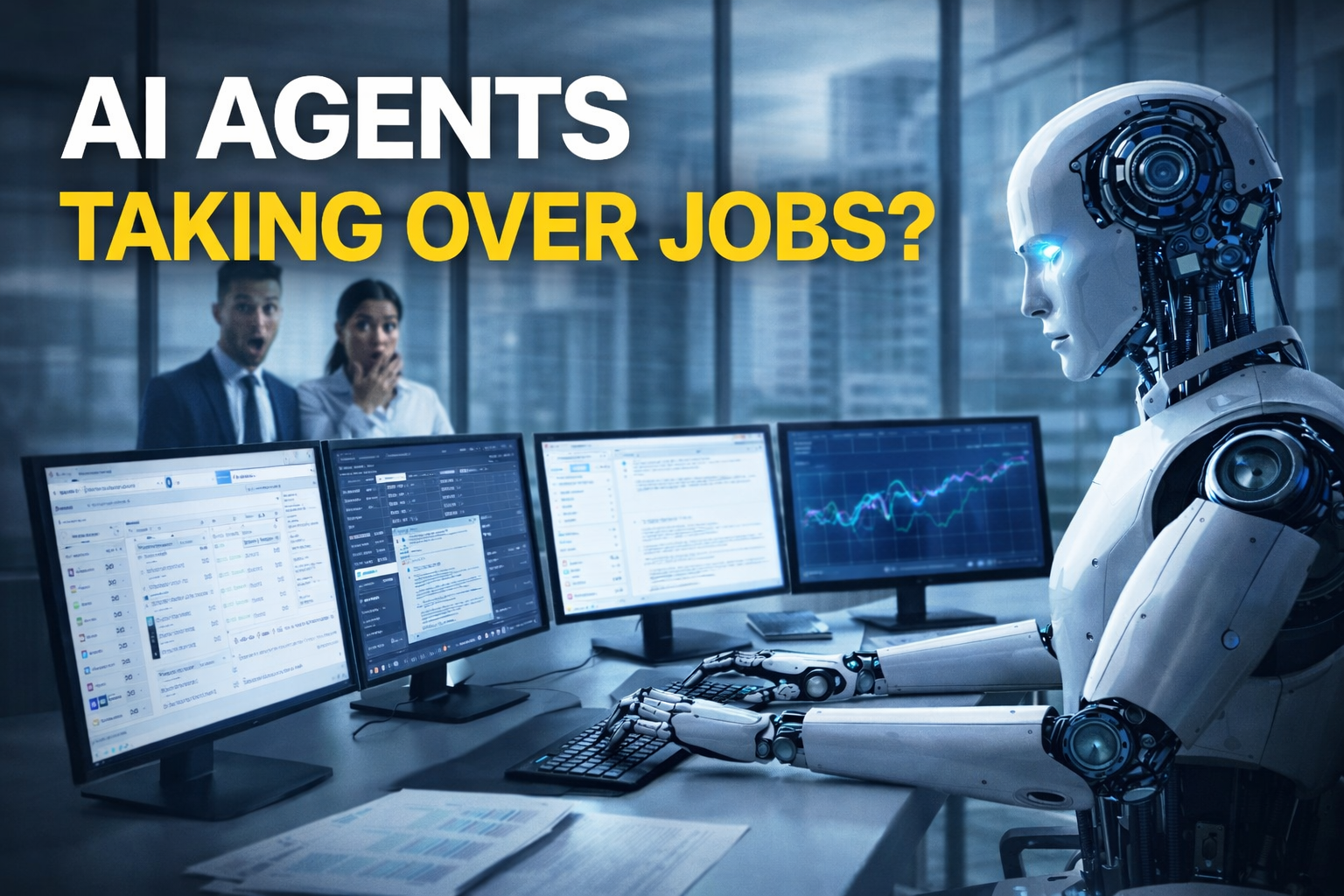
New AI Agents Can Now Use Computers Like Humans – Experts Say This Could Change Every Job
Artificial intelligence is entering a powerful new phase. Recent developments in AI technology have introduced systems known as AI agents, which can now operate computers in ways that closely resemble how humans work.
Unlike traditional AI tools that only answer questions or generate text, these new AI agents can perform real tasks on computers, including navigating software, completing workflows, and managing digital operations.
Experts believe this technological breakthrough could transform the global workforce and change how businesses operate in the coming years.
What Are AI Agents?
AI agents are advanced artificial intelligence systems designed to perform tasks independently. Instead of simply responding to prompts, they can analyze situations, make decisions, and take actions across different software platforms.
For example, an AI agent can open a spreadsheet, analyze the data, create charts, write a report, and send the results via email — all without human intervention.
Technology companies including OpenAI and Microsoft have been developing increasingly sophisticated AI systems that aim to automate complex digital tasks.
These systems are often connected to multiple applications, allowing them to operate across different tools and services simultaneously.
How AI Agents Work
AI agents function by combining several technologies, including machine learning, natural language processing, and automation tools.
Once given a goal, the AI can break the task into smaller steps and complete them sequentially. For example, if a company wants to analyze customer feedback, the AI agent could:
- Collect customer reviews from different platforms
- Organize the data into spreadsheets
- Identify patterns or trends
- Create a detailed report
- Send the report to managers
This level of automation significantly reduces the amount of manual work required from human employees.
Why Businesses Are Interested
Businesses around the world are paying close attention to AI agents because of their potential to increase efficiency and productivity.
Companies are constantly looking for ways to streamline operations, reduce costs, and improve performance. AI agents offer a way to automate time-consuming tasks that normally require multiple employees.
For instance, an AI agent could handle customer support tickets, manage scheduling systems, or process financial data. By automating these activities, organizations may be able to operate faster and with fewer resources.
As a result, many companies are already exploring how AI agents can be integrated into their daily operations.
Could AI Agents Replace Jobs?
The rise of AI agents has also sparked concerns about the future of work. Some experts believe that if these systems become widely adopted, many routine jobs could be replaced by automation.
Roles that involve repetitive digital tasks are considered the most vulnerable. These include positions such as:
- Administrative assistants
- Data entry clerks
- Customer service representatives
- Basic financial analysts
- Content moderators
Organizations like the World Economic Forum have previously warned that automation and artificial intelligence could reshape the global labor market over the next decade.
However, experts emphasize that AI may not eliminate jobs entirely but rather change the type of skills workers need.
New Opportunities Created by AI
While AI agents may reduce demand for certain roles, they are also expected to create new opportunities in emerging technology fields.
As companies adopt AI systems, they will require professionals who can build, manage, and improve these technologies. Careers related to artificial intelligence are already growing rapidly.
Some of the new roles expected to expand include:
- AI engineers
- Machine learning specialists
- Data scientists
- AI ethics researchers
- Automation consultants
These careers focus on designing and managing the very systems that automate other tasks.
The Future Workplace
The workplace of the future may involve collaboration between humans and intelligent machines. Instead of replacing employees entirely, AI agents could assist workers by handling routine tasks and freeing them to focus on creative and strategic work.
For example, a marketing professional might use an AI agent to analyze market data while focusing on campaign strategy and creative development.
Similarly, financial analysts could rely on AI agents to process large datasets while they interpret the results and make strategic decisions.
In this way, AI could become a powerful tool that enhances human productivity rather than replacing it completely.
Challenges and Ethical Questions
Despite the benefits, the rise of AI agents also raises important ethical and economic questions.
Governments and policymakers are beginning to discuss how artificial intelligence should be regulated. Key issues include data privacy, job displacement, and ensuring that AI systems are used responsibly.
Some experts believe societies will need to invest heavily in education and retraining programs to help workers adapt to technological change.
Preparing people for new careers in technology may be essential as AI continues to evolve.
A Major Turning Point in Technology
The emergence of AI agents represents a significant step forward in the development of artificial intelligence. By enabling machines to perform complex digital tasks, this technology could reshape industries ranging from finance and healthcare to marketing and customer service.
While it remains unclear exactly how widespread these systems will become, one thing is certain: artificial intelligence is rapidly moving from a tool that assists humans to one that can act on their behalf.
For businesses, workers, and governments, understanding and preparing for this transformation will be crucial in the years ahead.
As AI agents continue to improve, the question is no longer whether artificial intelligence will change the workplace — but how quickly those changes will arrive.