

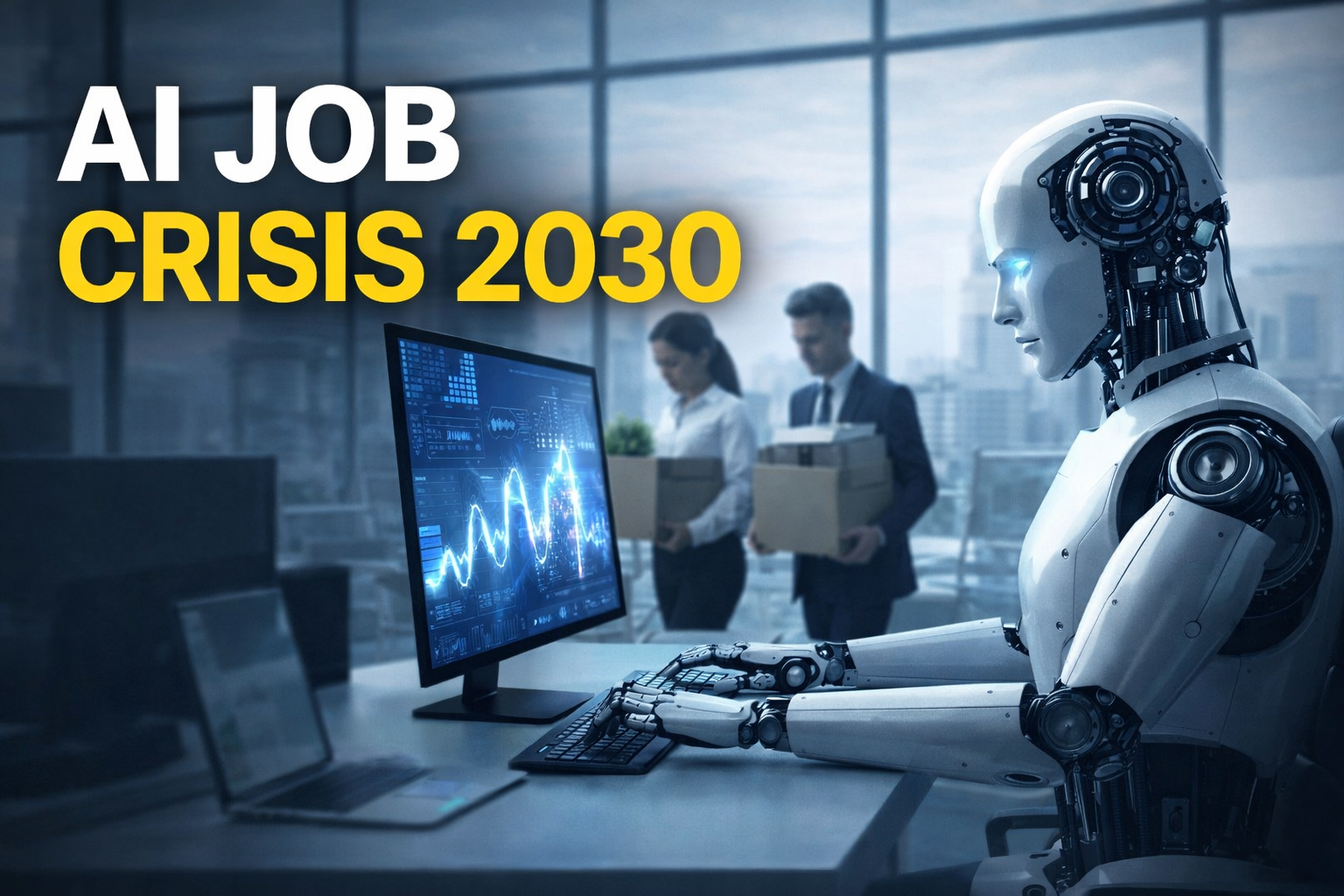
AI Just Reached a Dangerous Level – Experts Warn Millions of Jobs Could Disappear by 2030
Artificial intelligence is evolving faster than ever, and many experts now believe the world may be entering a new era of automation. Recent advancements in AI technology have sparked serious discussions among economists, technology leaders, and governments about the future of employment.
Some researchers warn that millions of jobs could disappear by 2030 as companies increasingly rely on artificial intelligence to perform tasks once done by humans. While AI has already transformed many industries, its rapid development in recent years suggests that the biggest changes may still be ahead.
The Rapid Rise of Artificial Intelligence
Artificial intelligence is no longer limited to simple automation. Modern AI systems can write articles, analyze data, generate images, and even make complex decisions. Tools developed by companies such as OpenAI and Google have demonstrated capabilities that were once considered science fiction.
In the past, automation mainly affected manufacturing jobs. Robots replaced repetitive tasks on factory floors, increasing efficiency and productivity. Today, however, AI is expanding into areas that previously required human creativity and decision-making.
For example, AI systems are now capable of generating reports, coding software, designing graphics, and answering customer service questions.
Jobs Most at Risk
Experts studying the impact of AI say certain industries may be more vulnerable than others. Roles that involve routine digital tasks are particularly likely to be affected.
Some of the jobs most at risk include:
• Data entry clerks
• Customer service representatives
• Basic accounting roles
• Content moderation jobs
• Administrative assistants
Even creative industries are beginning to feel the impact. AI tools can now generate artwork, music, and written content in seconds, raising concerns among designers, writers, and other professionals.
Research conducted by organizations like the World Economic Forum suggests that automation could significantly reshape the global workforce over the next decade.
Why Companies Are Adopting AI Quickly
One major reason businesses are embracing artificial intelligence is efficiency. AI systems can operate 24 hours a day, process enormous amounts of data, and perform tasks with remarkable speed.
Companies are also attracted by the potential cost savings. Once an AI system is developed or deployed, it can handle large volumes of work without the need for salaries, breaks, or traditional workplace resources.
Because of this, many businesses see AI as a powerful tool for improving productivity and staying competitive in a rapidly changing market.
Not All News Is Negative
Despite fears about job losses, some experts argue that AI could also create new opportunities. Throughout history, technological revolutions have often replaced certain jobs while creating entirely new industries.
For example, the rise of the internet eliminated some traditional roles but created millions of new positions in technology, digital marketing, and online services.
Similarly, the AI revolution is expected to generate new careers in areas such as:
• AI development
• Machine learning engineering
• Data science
• AI ethics and regulation
• Technology infrastructure
Educational institutions and governments are already exploring ways to prepare workers for these emerging roles.
Governments and Experts Raise Concerns
While many people are excited about the possibilities of artificial intelligence, some experts warn that the transition could be challenging if it happens too quickly.
Policymakers are discussing potential solutions such as job retraining programs, stronger labor protections, and education reforms to help workers adapt to a changing economy.
Some economists also believe society will need to rethink traditional employment models as technology continues to evolve.
The Future of Work in the AI Era
Artificial intelligence is expected to become even more powerful over the next decade. Researchers are developing systems that can reason, learn, and interact with humans in increasingly sophisticated ways.
Although predictions about the exact number of jobs affected vary widely, most experts agree that AI will transform the way people work.
Rather than completely replacing humans, many believe the future will involve collaboration between humans and intelligent machines. Workers may focus more on creative thinking, strategy, and interpersonal skills while AI handles repetitive tasks.
Preparing for an AI-Driven Future
As artificial intelligence continues to evolve, individuals may need to adapt by learning new skills and staying informed about technological changes.
Experts often recommend focusing on abilities that are difficult for machines to replicate, such as creativity, leadership, emotional intelligence, and complex problem-solving.
These human qualities may become even more valuable in an economy increasingly shaped by intelligent technology.
A Turning Point for the Global Workforce
The rise of AI represents one of the most significant technological shifts in modern history. While the technology offers enormous potential benefits, it also raises important questions about employment, education, and the future of society.
Whether artificial intelligence ultimately replaces millions of jobs or simply transforms them, one thing is clear: the world is entering a new chapter in the evolution of work.
For workers, businesses, and governments alike, preparing for that future may be one of the biggest challenges of the coming decade.