

🧠 Intro (Let’s be real for a second…)
You know that feeling when fuel prices finally stop going up… and you start thinking, “Okay, maybe things are stabilizing now”?
Yeah… about that.
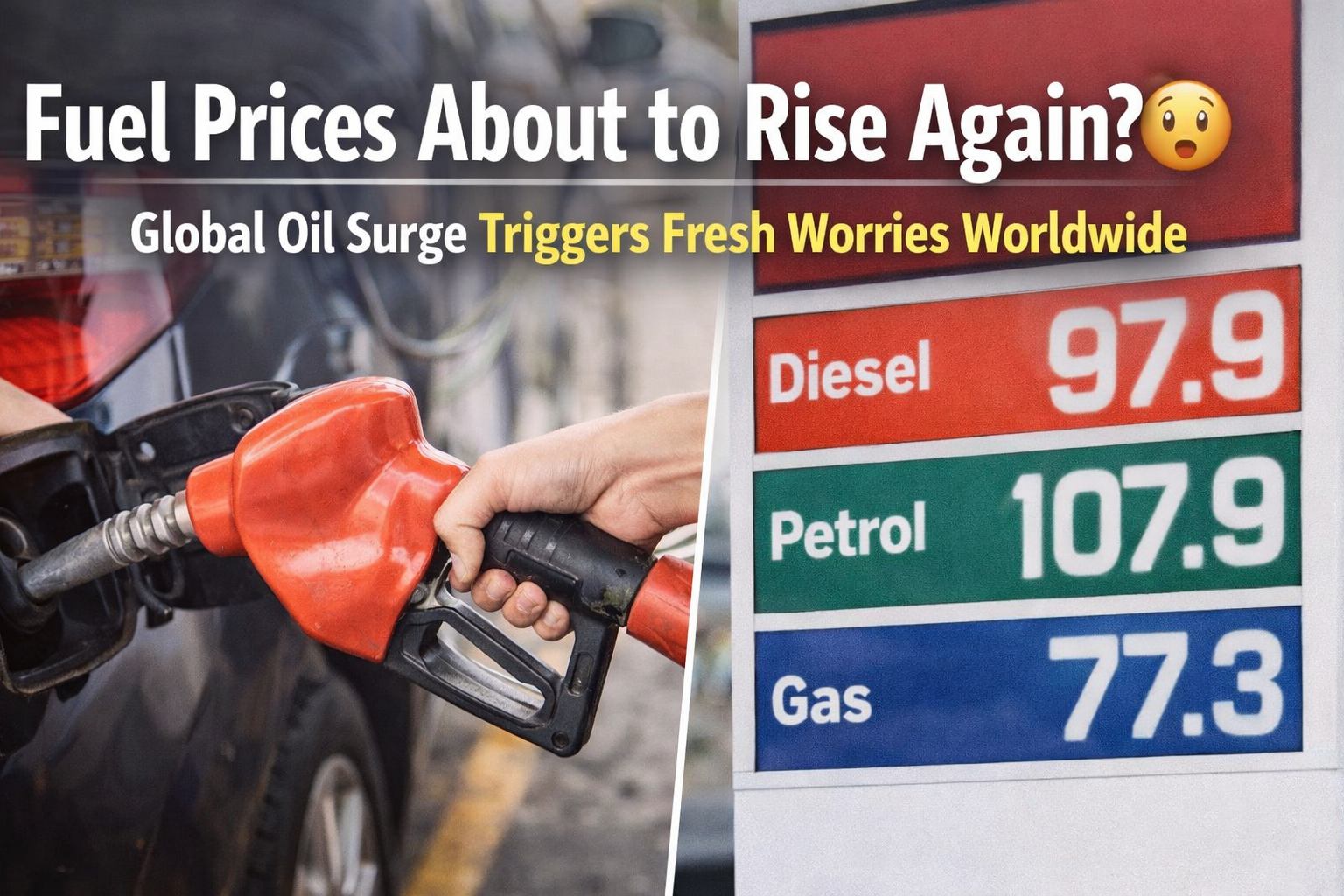
Just when people across the world — especially here in India — were starting to breathe a little, oil prices are climbing again, and it’s quietly setting off alarm bells in global markets.
No loud panic yet. No chaos.
Global Oil Crisis 2026: Prices Are Suddenly Rising Again… Is a Bigger Economic Shock Coming?
But the signals? They’re there.
And if this continues, it’s not just about petrol pumps — it’s about everything getting more expensive again.
🌍 So… what’s actually happening?
Right now, global crude oil prices are moving upward again after a brief period of stability.
And whenever oil moves, the world reacts. Fast.
Because oil isn’t just fuel for vehicles — it’s basically the backbone of:
- Transportation 🚚
- Manufacturing 🏭
- Delivery systems 📦
- Even food pricing 🍚
So when oil prices go up, it creates a ripple effect that touches almost everything.
📈 Why are prices rising again?
There’s no single reason — it’s more like a mix of pressure building up behind the scenes:
1. Supply uncertainty
Some key oil-producing regions are dealing with instability and output concerns. Even small disruptions can push prices higher.
2. Demand isn’t slowing down
Despite everything, global demand for fuel is still strong. Travel, trade, and industry are all active again.
3. Market psychology
Sometimes, it’s not just reality — it’s expectation.
When traders think supply might tighten, prices react immediately.
🇮🇳 What does this mean for people in India?
Let’s not sugarcoat it — this could hit directly.
If crude oil keeps rising, India (which imports most of its oil) may face:
- Higher petrol & diesel prices ⛽
- Increased transportation costs 🚛
- Rising grocery bills 🛒
- Pressure on household budgets 💸
And we’ve seen this pattern before.
Fuel prices go up → transport costs rise → everything else slowly becomes more expensive.
It’s subtle at first… then suddenly noticeable.
🛒 The real impact (this is where it gets serious)
This isn’t just about what you pay at the pump.
It affects:
- Food delivery charges 🍔
- Cab fares 🚕
- Online shopping logistics 📦
- Flight tickets ✈️
- Daily essentials 🥛
Basically, even if you don’t drive — you still pay the price.
That’s the frustrating part.
📊 What are experts saying right now?
Economists and market analysts aren’t panicking yet — but they are watching closely.
The general mood is:
“If this trend continues for a few more weeks, consumers will start feeling the pressure again.”
So this isn’t a full-blown crisis…
…but it could become one if prices keep climbing steadily.
🏛️ What might governments do?
Governments usually have a few options when oil prices rise:
- Adjust fuel taxes
- Use strategic oil reserves
- Control price hikes temporarily
- Shift import strategies
But here’s the reality — these are short-term solutions.
If global oil prices stay high, there’s only so much control any government has.
🔮 What happens next?
This is the big question everyone is asking.
There are two possible paths:
📉 Scenario 1: Prices stabilize
If supply improves and markets calm down, prices might settle — and we avoid major impact.
📈 Scenario 2: Prices keep rising
If the upward trend continues, we could see:
- Fuel price hikes
- Inflation creeping up again
- More pressure on everyday spending
Right now, we’re somewhere in between.
👀 Real-life example (you’ve probably noticed this)
Remember the last time fuel prices went up?
Suddenly:
- Auto fares increased
- Delivery fees got higher
- Grocery bills felt heavier
It didn’t happen overnight — but it added up.
That’s exactly what people are worried about again.
Fuel prices go up → transport costs rise → everything else slowly becomes more expensive.
It’s subtle at first… then suddenly noticeable.
🧩 The hidden chain reaction most people don’t notice
Here’s something people usually don’t realize until it’s too late — fuel prices don’t just increase costs, they quietly change behavior.
For example:
- Small businesses start cutting corners
- Delivery times get longer
- Discounts and offers reduce
- Service charges slowly creep up
It’s not always obvious. You won’t see a big “price hike” label everywhere.
But you will notice things like:
“Why is this ₹20 more than last month?”
“Didn’t delivery used to be free?”
That’s how inflation quietly enters everyday life.
🚚 Why logistics companies are already watching this closely
Behind the scenes, logistics and transport companies are some of the first to react.
The moment fuel prices show an upward trend:
- Truck operators start recalculating routes
- Delivery platforms adjust pricing models
- Airlines review ticket pricing strategies
Even e-commerce giants begin preparing for cost adjustments.
So by the time the average person notices changes…
the system has already adapted.
🏪 Small businesses feel it first (and hardest)
Big corporations can absorb short-term cost increases.
But small businesses? Not really.
Think about:
- Local grocery stores
- Vegetable vendors
- Small online sellers
- Food delivery kitchens
For them, even a small rise in fuel cost can mean:
- Lower profit margins
- Higher selling prices
- Losing customers
And that creates a difficult cycle — raise prices and risk losing buyers…
or keep prices low and reduce earnings.
💬 What people are already saying online
If you scroll through social media right now, you’ll notice something interesting.
People aren’t panicking — but they’re concerned.
Comments like:
- “Not again…”
- “Everything was just getting normal”
- “This is going to hit middle-class families hard”
That sentiment matters.
Because when public concern starts building early, it often turns into a bigger reaction later.
🧠 A quick reality check (no hype, just facts)
Let’s keep it real — this isn’t a crisis yet.
There’s no immediate fuel hike announcement.
No emergency situation.
But it is one of those early signals that smart observers pay attention to.
Because historically, oil price trends don’t stay isolated —
they eventually show up in daily expenses.
🔄 Can this situation reverse?
Yes — and that’s the hopeful part.
If:
- Supply improves
- Market tensions ease
- Production increases
Then prices can stabilize again.
And when that happens, the pressure reduces just as quietly as it built up.
But until then, markets remain… a bit uncertain.
❓ FAQ (What people are already searching)
Q1. Will petrol prices increase immediately?
Not instantly — but if crude keeps rising, price hikes become more likely.
Q2. Why does oil affect everything?
Because it powers transport, and transport connects every industry.
Q3. Can governments stop price hikes completely?
They can delay or reduce impact — but not fully control global prices.
Q4. Is this temporary or long-term?
Too early to say — depends on how global supply and demand behave.
🧾 Conclusion (Honestly speaking…)
This isn’t one of those “ignore it” news stories.
It’s the kind that starts quietly… and then slowly becomes part of everyday life.
Right now, it’s just a warning signal — not a full problem.
But if oil prices keep rising, we might all start feeling it again…
at petrol pumps, in grocery bills, and basically everywhere.
So yeah — it’s worth paying attention to this one.