

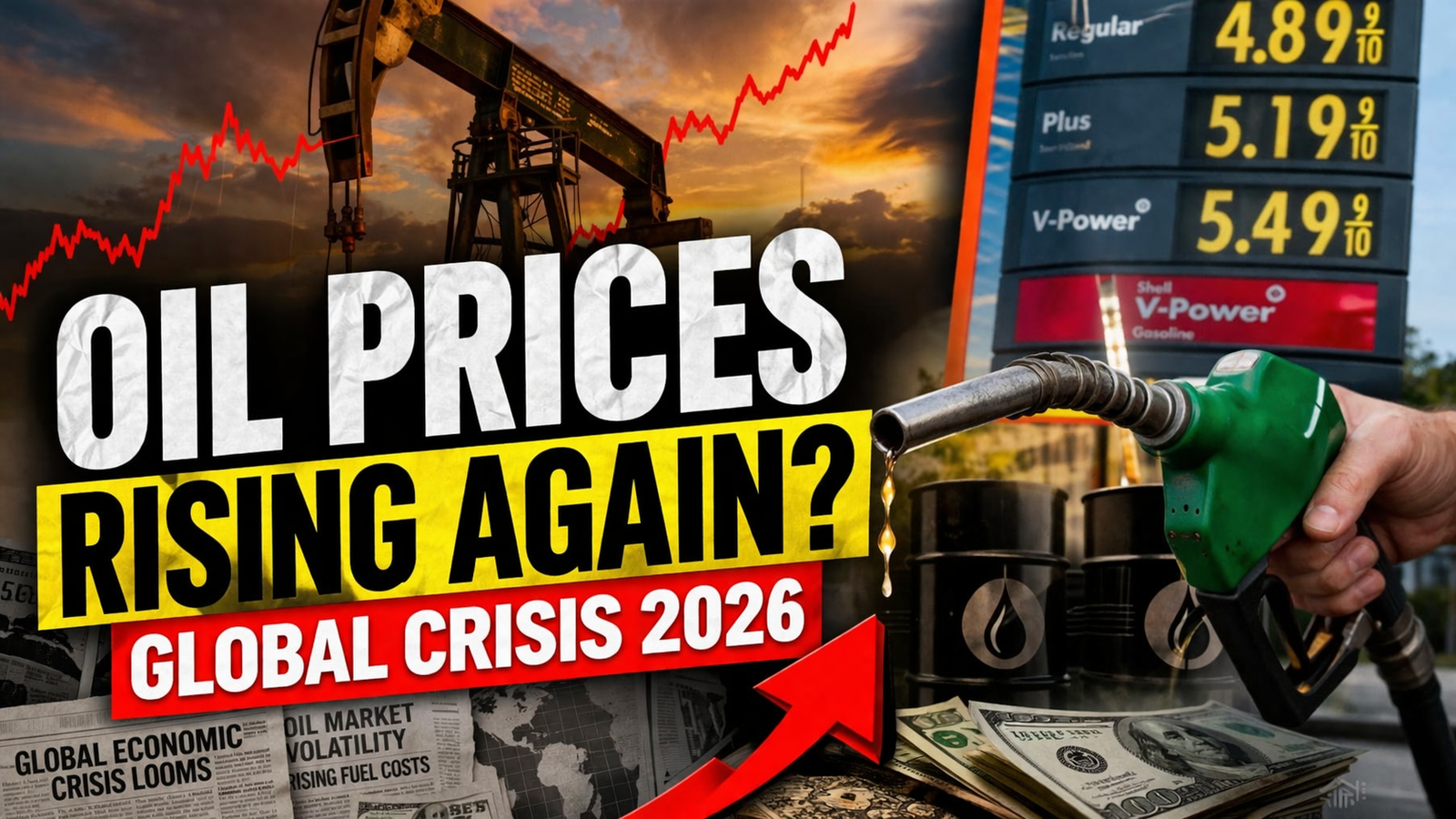
Global Oil Crisis 2026 is quietly unfolding right now… and this time, it feels a little more serious than usual.
Not in a loud, breaking-news-everywhere kind of way.
But in that subtle, uneasy way… where things don’t look scary yet — but something just feels off.
You know that feeling when prices start increasing slowly, people begin talking about “global tensions,” and suddenly your daily expenses don’t feel the same anymore?
Yeah… we’re entering that phase again.
You know that moment when everything seems fine… and then suddenly your fuel bill jumps, flights get expensive, and people start saying “something big is coming”?
Yeah… that’s exactly where we are right now.
Over the past few days, oil prices have started climbing again. Not slowly. Not quietly. But in that uneasy, unpredictable way that usually means something bigger is happening behind the scenes.
And if you’re thinking, “Okay but how does this affect me?” — trust me, it does. More than you think.
This One Route Could Crash the World Overnight 😳 | Middle East Crisis 2026 Explained
—
## 🌍 So what’s actually going on?
Right now, global oil markets are reacting to rising tensions in the Middle East. Every time there’s even a hint of conflict in that region, oil prices don’t just react — they jump.
Why? Because a huge portion of the world’s oil supply moves through a narrow route called the Strait of Hormuz. It’s basically like a bottleneck for global energy.
If something disrupts that flow — even slightly — the entire world feels it.
And that’s exactly what traders are worried about right now.
—
## 📈 Why prices are suddenly rising
This isn’t just random fluctuation. There are a few clear reasons:
### 1. Fear of supply disruption
Markets run on expectations. Even the possibility of conflict affecting oil supply is enough to push prices up.
### 2. Panic buying
Countries and companies start stocking up “just in case.” That increased demand pushes prices even higher.
### 3. Global uncertainty
When the world feels unstable, investors move money into commodities like oil. It’s seen as a safer bet compared to stocks.
—
## 😬 Why this feels different this time
We’ve seen oil spikes before. But this one feels… heavier.
It’s not just about oil anymore. It’s about the ripple effect.
– Fuel prices go up
– Transportation costs increase
– Food prices rise (because logistics becomes expensive)
– Flights become costly
– Daily life quietly becomes more expensive
And the worst part?
It doesn’t happen all at once. It creeps in.
One day it’s petrol. Next week it’s groceries. Then suddenly your monthly expenses feel off — and you don’t even realize why.
—
## 🇮🇳 What this means for India (and countries like it)
Countries that rely heavily on imported oil — like India — feel this impact faster.
If global oil prices rise:
– Petrol & diesel prices may increase
– Inflation can go up
– Government may adjust taxes or subsidies
– Everyday costs start climbing
And even if prices don’t spike immediately, the pressure builds in the background.
👀 What’s actually happening right now (no hype, just real)
Behind all the noise online, something very real is building:
- Oil prices are rising again
- Supply fears are increasing
- Global tensions are making markets unstable
But here’s the catch…
It doesn’t look like a crisis yet.
And that’s exactly why people underestimate it.
🧠 The psychology of “slow crises”
Big global problems rarely start with panic.
They start with normal-looking changes.
That’s what makes them dangerous.
Because when things rise slowly:
- People delay reacting
- Governments take time to respond
- Markets keep adjusting quietly
And by the time it feels serious… it already is.
Middle East War 2026 Escalates: Oil Shock, Global Tension & What Happens Next
🌍 Why this matters more than you think
Let’s be real for a second.
You might think, “Okay oil prices are rising… so what?”
But oil is connected to almost everything in your life:
- The food you buy
- The fuel you use
- The packages you order
- The flights you book
It’s not just an industry thing.
It’s a daily life thing.
📉 The chain reaction (this is where it hits you)
Here’s how it actually plays out step-by-step:
- Oil prices increase
- Transport costs rise
- Businesses spend more
- Product prices go up
- Your monthly expenses increase
And the crazy part?
It doesn’t feel like one big change.
It feels like everything just got slightly more expensive.
😶 Why people don’t talk about this early
Because early stages aren’t dramatic.
There’s no viral moment. No shocking headline.
Just slow movement.
And slow movement doesn’t trend… until it becomes a problem.
🧩 Real example (you’ve probably seen this before)
Think back to the last time fuel prices increased.
At first:
- It was just a small hike
Then:
- Cab fares increased
- Delivery charges went up
- Groceries got slightly expensive
And suddenly:
- Your monthly budget felt tight
That’s exactly how this starts.
🧠 What you should do (simple, practical)
No panic moves. Just awareness.
✔️ 1. Notice small changes
If prices are rising slowly, don’t ignore it.
✔️ 2. Adjust early
Even small adjustments now can save you later.
✔️ 3. Stay informed
Global events matter more than people think.
✔️ 4. Don’t fall for hype
Not every spike becomes a crisis — but ignoring patterns is worse.
🤔 The real question right now
Is this just a temporary rise…
Or the beginning of a bigger shift?
That’s what no one can answer yet.
Because everything depends on how global events unfold next.
—
## 🌎 This isn’t just an “oil story”
This is where most people misunderstand things.
They think this is just about fuel.
It’s not.
This is about:
– Global economy
– Cost of living
– Job markets
– Business stability
Oil is like the heartbeat of the global system. When it speeds up or becomes unstable, everything else reacts.
—
## 🧠 What you should actually do (practical, no hype)
No panic. No overreaction. Just smart moves:
### ✔️ 1. Be aware of spending
Keep an eye on fuel and daily expenses. Small changes add up fast during times like this.
### ✔️ 2. Avoid unnecessary travel (for now)
If prices continue rising, travel costs will spike. Plan wisely.
### ✔️ 3. Watch inflation trends
If groceries and essentials start getting expensive, adjust early instead of reacting late.
### ✔️ 4. Stay updated
Things are changing quickly. What’s true today might shift in a week.
—
## 💬 Real-world example (why this matters)
Think back to previous global tensions.
Every time oil prices surged:
– Cab fares increased
– Delivery charges went up
– Flight tickets became expensive
– Businesses quietly increased prices
You didn’t see it as “oil crisis” — you just felt life getting costlier.
That’s how this works.
—
## ❓ FAQ (quick, honest answers)
### Is this a full-blown crisis yet?
Not yet. But it’s definitely heading in that direction if tensions continue.
### Will petrol prices increase immediately?
Not instantly. But if the trend continues, increases are very likely.
### Is this temporary?
Could be — but depends entirely on how the situation evolves globally.
### Should people be worried?
Not worried. Just aware. Big difference.
—
## 🧾 Final thoughts (real talk)
This isn’t one of those overhyped internet trends.
This is one of those slow-moving situations that quietly affects everything.
Right now, it’s just headlines.
In a few weeks? It could be your daily expenses.
And the truth is — most people won’t notice until it’s already happening.
So yeah… stay informed. Stay a little alert.
Because sometimes the biggest changes don’t come with loud warnings.
They just… st