

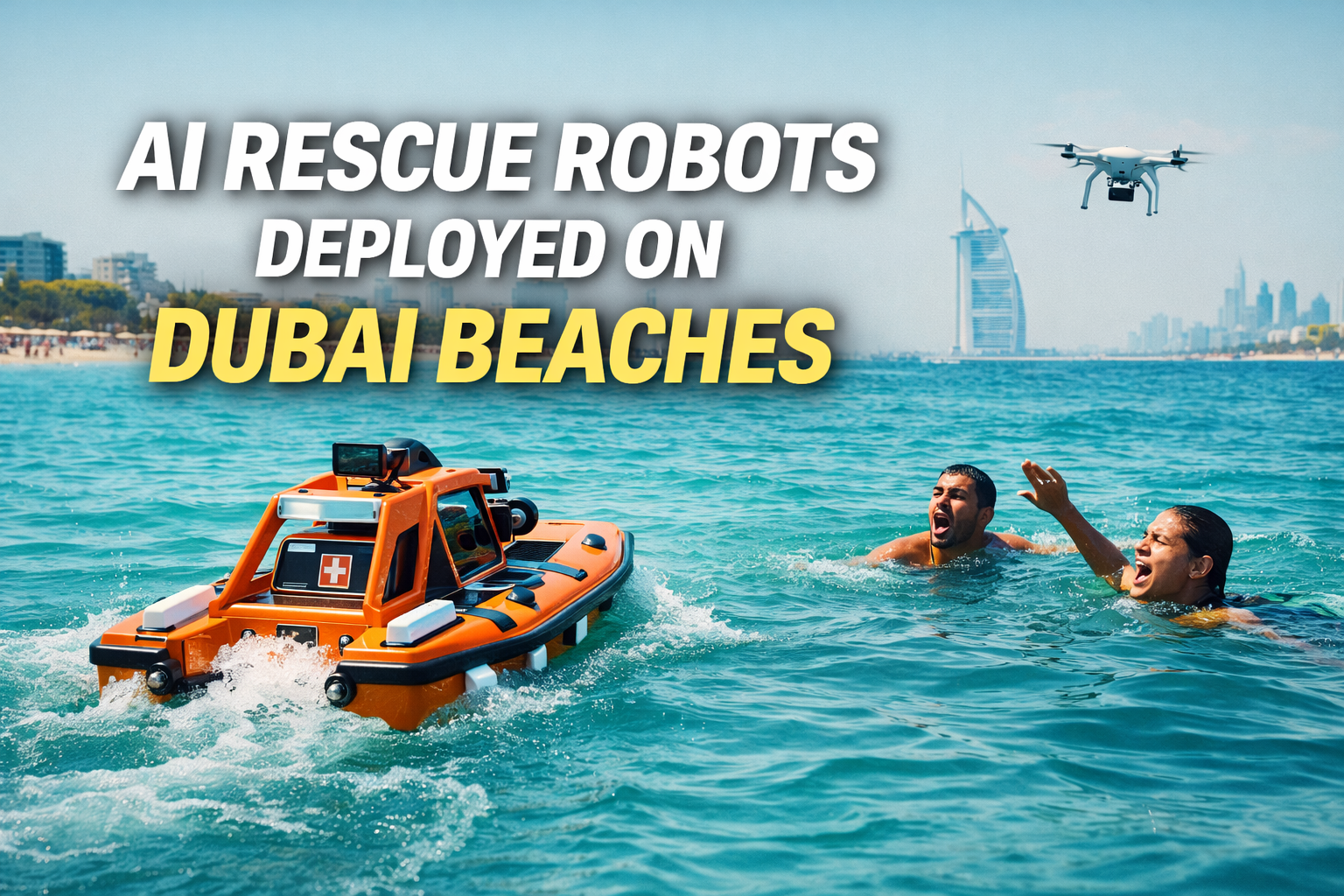
AI Rescue Robots Deployed on Dubai Beaches: Technology That Could Save Thousands of Lives
A new generation of AI-powered rescue robots and drones has been deployed on beaches in Dubai, marking a major step forward in public safety technology. Authorities say these intelligent machines can detect drowning swimmers and reach them faster than human lifeguards, potentially saving thousands of lives every year.
The futuristic rescue system combines artificial intelligence, drones, and aquatic robots capable of towing heavy weights in water. Officials behind the project believe the technology could soon become a global standard for beach safety.
According to reports, the newly deployed robots can tow up to 500 kilograms in water, allowing them to assist multiple swimmers at once during emergency situations.
How the AI Rescue System Works
The system uses a network of cameras, drones, and smart sensors placed along the coastline.
Artificial intelligence continuously scans the water for signs of distress such as unusual swimming patterns, sudden movements, or a swimmer struggling to stay afloat.
Once a potential emergency is detected, the system automatically alerts lifeguards and deploys a rescue drone or robotic flotation device.
The robotic units can reach swimmers much faster than traditional rescue methods because they travel directly across the water surface.
Experts say the speed advantage is crucial because drowning incidents can become fatal within just a few minutes.
Robots That Can Tow Up to 500kg
One of the most impressive features of the new system is its powerful towing capability.
Some aquatic robots can pull up to 500 kilograms, which means they can assist multiple swimmers at the same time or help transport injured people safely back to shore.
These machines are equipped with advanced propulsion systems designed to operate in rough water conditions.
Unlike human lifeguards, the robots do not tire and can operate continuously for extended periods.
This allows them to respond instantly during peak beach hours when thousands of tourists are in the water.
Why Dubai Is Leading the AI Safety Revolution
Dubai has become one of the world’s leading cities in adopting advanced technologies.
The government has invested heavily in smart city initiatives, including AI traffic monitoring, autonomous taxis, and drone delivery systems.
The beach rescue robot project is part of a larger effort to use artificial intelligence to improve public safety and emergency response times.
Authorities say the goal is to create the safest beaches in the world by combining human lifeguards with intelligent machines.
Could This Technology Spread Worldwide?
Experts believe the technology could soon be adopted in other countries with large coastlines.
Every year, hundreds of thousands of drowning incidents occur worldwide, making beach safety a major public concern.
AI-powered rescue systems could help reduce these numbers dramatically by providing faster detection and response.
Countries such as Australia, the United States, and Spain have already begun experimenting with drone-based rescue technology.
Dubai’s large-scale deployment could accelerate the global adoption of similar systems.
The Future of AI in Emergency Response
Rescue robots are just one example of how artificial intelligence is transforming emergency services.
Researchers are developing AI systems capable of predicting disasters, detecting fires earlier, and assisting in search-and-rescue missions.
In the future, experts believe autonomous drones could patrol coastlines, forests, and mountains to identify emergencies before they escalate.
Some experimental systems are already capable of delivering flotation devices, medical kits, or communication equipment to people in danger.
Rising Demand for AI Technology
The rapid growth of artificial intelligence has also created new opportunities for entrepreneurs and technology startups.
Recently, an Indian-origin founder joined the AI company xAI after building a successful startup with a small team, highlighting how AI innovation is spreading across the global tech industry.
This surge in innovation is driving investments in robotics, automation, and intelligent safety systems.
Many experts believe the next decade will see AI playing a much larger role in everyday life.
Conclusion
The launch of AI-powered rescue robots on Dubai’s beaches shows how technology can directly save lives.
By combining artificial intelligence, drones, and powerful aquatic robots, authorities are creating a faster and more efficient emergency response system.
If the technology proves successful, similar systems could soon appear on beaches around the world.
For millions of swimmers and tourists, the future of beach safety may soon depend on intelligent machines watching over the waves.