

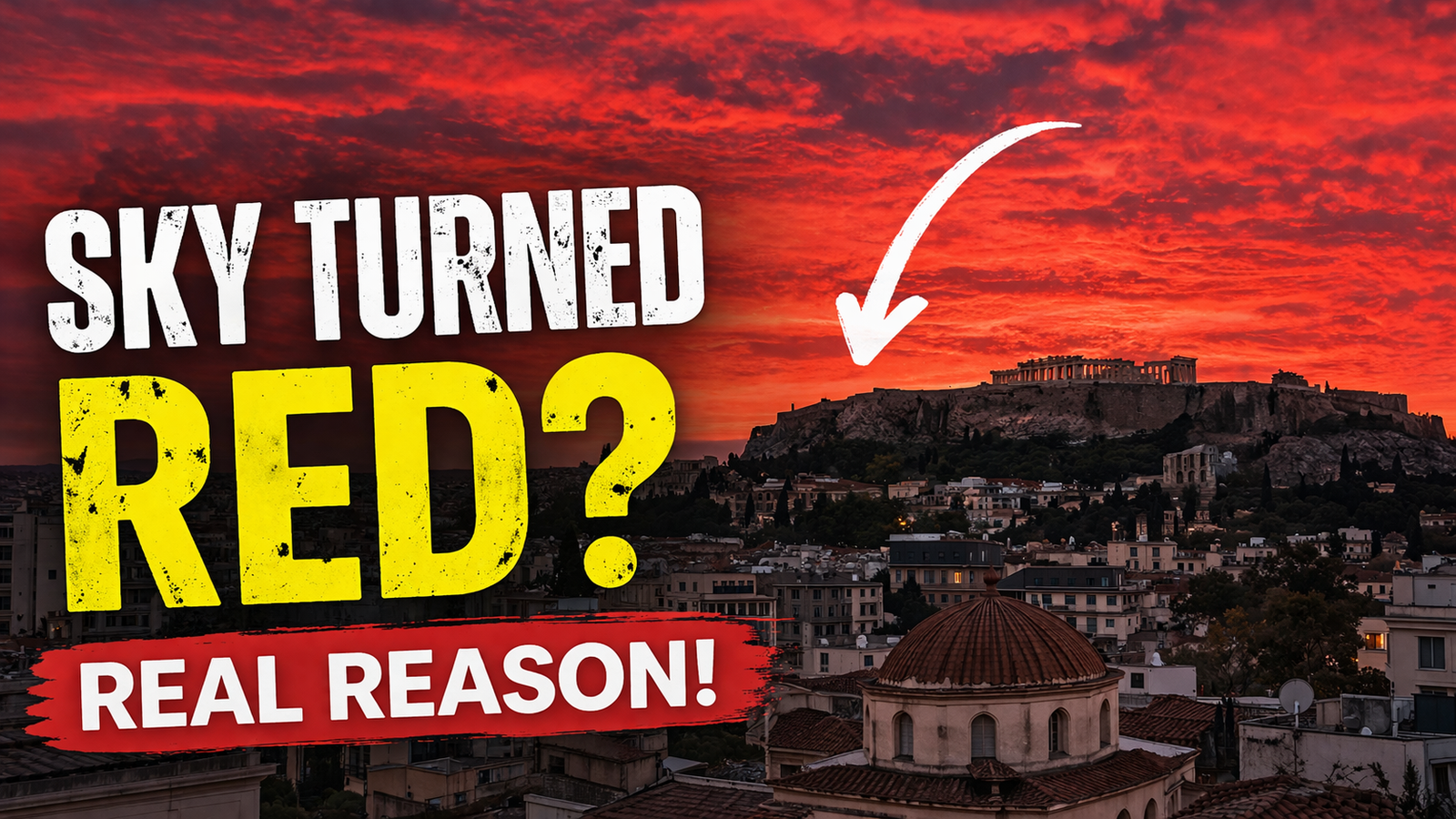
🌍 Why Did the Sky Turn Red? Strange Weather Events Around the World Explained
A few days ago, people in Athens looked up at the sky… and honestly, it didn’t feel like Earth anymore.
It was deep red. Almost apocalyptic.
Photos and videos spread like wildfire online. Some people called it “Mars-like,” others thought something serious was happening. And if you’re seeing this kind of news lately, you’re probably wondering:
Is this normal… or is something changing?
Let’s break it down in simple terms — no complicated science, just real explanation.
🌅 What Does It Mean When the Sky Turns Red?
Major Earthquake Today 2026: What We Know So Far and How People Are Responding
First thing — no, it’s not the end of the world.
A red sky usually happens when tiny particles in the air scatter sunlight differently. Normally, we see blue skies because shorter wavelengths of light scatter more. But when the air is filled with dust, smoke, or pollution, the light bends in unusual ways.
That’s when the sky starts looking:
- Red
- Orange
- Even dark brown
In the case of Athens, it was caused by dust storms coming all the way from the Sahara Desert.
Yes, dust traveled across continents.
🌪️ What’s Causing These Strange Sky Events?
Now here’s where things get interesting.
These events are not completely new… but they are becoming more frequent.
1. 🌍 Climate Change
Rising global temperatures are changing wind patterns and weather systems. This makes it easier for dust and pollutants to travel long distances.
2. 🏜️ Desert Dust Storms
Places like the Sahara Desert release massive amounts of dust into the atmosphere. Under the right conditions, this dust can reach Europe, Asia, and beyond.
3. 🔥 Wildfires
Forest fires release smoke particles that can turn the sky orange or red — something we’ve already seen in countries like the US and Australia.
4. 🏙️ Pollution
Urban pollution adds to the effect, especially in crowded cities.
😟 Should You Be Worried?
Short answer: Not panic-level worried — but aware, yes.
These sky changes are more of a warning sign than a direct danger.
They tell us:
- Air quality may be poor
- Climate patterns are shifting
- Extreme weather could become more common
So while the red sky itself isn’t harmful, the reason behind it matters.
💥 Real Impact on Daily Life
Let’s make this real for you.
If these events increase, you might notice:
- More breathing issues (especially for sensitive people)
- Reduced visibility (affecting travel)
- Warmer temperatures
- Strange weather patterns
Imagine stepping outside and feeling like the air is heavier than usual. That’s not just in your head — it’s the particles in the air.
🧭 What Should You Do in Such Situations?
Here are some simple, practical steps:
✔ Step 1: Check Air Quality
Use apps or local news to see AQI levels before going out.
✔ Step 2: Limit Outdoor Activity
If the air looks dusty or hazy, avoid long exposure.
✔ Step 3: Wear a Mask
Yes, even now — masks help filter dust particles.
✔ Step 4: Stay Hydrated
Dry, dusty air can affect your throat and lungs.
✔ Step 5: Follow Official Updates
Government advisories are usually issued during extreme conditions.
🧠 Simple Example (So You Get It Clearly)
Let’s say a dust storm starts in the Sahara.
Strong winds carry that dust thousands of kilometers. It travels across the Mediterranean and reaches places like Athens.
When sunlight passes through this dusty air, it scatters differently — and boom…
👉 The sky turns red.
It’s not magic. It’s physics + environment.
🏛️ What Are Governments Doing About It?
Governments and environmental agencies are:
- Monitoring air quality closely
- Issuing public health warnings
- Studying climate patterns
- Working on pollution control policies
But honestly, this is a global issue. No single country can fix it alone.
📰 Why Did the Sky Turn Red? Strange Weather Events Around the World Explained
A few days ago, people in Athens stepped outside expecting a normal evening…
…but what they saw instead didn’t feel real.
The sky wasn’t blue.
It wasn’t even orange like a sunset.
It was deep red — heavy, dusty, almost unreal.
Some described it as “beautiful but scary.” Others said it looked like something out of a movie. Within hours, videos started spreading online, and millions of people were asking the same question:
👉 “Why does the sky suddenly look like this?”
And honestly, if you saw it in person, you’d probably feel the same mix of curiosity and concern.
🌌 When Nature Feels… Different
We’re used to predictable skies.
Blue mornings. Golden sunsets. Dark nights.
But lately, things feel slightly off.
Not just in Athens — similar strange sky colors have been reported in different parts of the world. Sometimes it’s orange. Sometimes pink. Sometimes an eerie dark yellow.
And that’s what’s making people pause.
Because it’s not just one random event anymore.
It’s happening again… and again.
🌅 The Real Science (Explained Like a Human, Not a Textbook)
Let’s keep this simple.
Sunlight looks white, but it actually contains many colors. When it enters Earth’s atmosphere, it interacts with tiny particles — dust, smoke, water droplets.
Normally:
- Blue light scatters more → sky looks blue
But when the air is filled with larger particles like dust or pollution:
- Red and orange light dominate
That’s why the sky suddenly shifts color.
In the case of Athens, strong winds carried fine dust particles from the Sahara Desert across continents.
It’s kind of wild when you think about it…
👉 Sand from Africa… changing the sky in Europe.
🌍 Why Are These Events Becoming More Noticeable?
Here’s where it gets slightly serious.
These things have always existed. But now, they’re becoming more frequent and more intense.
And there are a few reasons behind that.
🌡️ 1. Climate Patterns Are Shifting
The Earth’s climate isn’t stable anymore like it used to be.
Small temperature changes are affecting:
- Wind directions
- Storm intensity
- Seasonal patterns
This makes it easier for dust, smoke, and pollutants to travel long distances.
🏜️ 2. Stronger Dust Storms
Deserts like the Sahara are becoming drier in some regions, which increases loose particles.
When winds pick up, they carry massive clouds of dust into the sky — sometimes so large they can be seen from satellites.
🔥 3. Wildfires Are Increasing
Across countries like the US, Australia, and even parts of Europe, wildfires are becoming more common.
These fires release thick smoke into the atmosphere, which can:
- Travel thousands of kilometers
- Change sky colors
- Reduce visibility
🏙️ 4. Human Activity
Let’s be honest — pollution plays a role too.
Industries, vehicles, and construction all release particles into the air. When these mix with natural elements like dust, the effect becomes stronger.
😟 The Emotional Side People Don’t Talk About
Here’s something interesting.
It’s not just about science.
When people see a red sky, they feel something.
A bit of fear.
A bit of curiosity.
A strange sense that something isn’t right.
And that emotional reaction is exactly why these events go viral so fast.
Because deep down, it triggers a basic human instinct:
👉 “Is everything okay?”
🌆 Real-Life Impact (Not Just a Viral Moment)
Let’s bring this closer to real life.
Imagine stepping outside and noticing:
- The air feels heavier
- The sunlight looks dimmer
- Your throat feels slightly dry
That’s not just your imagination.
That’s the effect of particles in the air.
Over time, this can lead to:
- Breathing discomfort
- Eye irritation
- Reduced outdoor activity
For people with asthma or allergies, it can be even more serious.
🧭 What You Should Actually Do (Simple & Practical)
No panic. Just smart actions.
✔ Step 1: Don’t Ignore the Signs
If the sky looks unusual, check the air quality instead of assuming it’s harmless.
✔ Step 2: Reduce Exposure
Avoid long walks or outdoor exercise when the air looks dusty or hazy.
✔ Step 3: Use Basic Protection
A simple mask can reduce how much dust you inhale.
✔ Step 4: Keep Indoor Air Clean
Close windows if necessary and use fans or purifiers if available.
✔ Step 5: Stay Updated
Follow local weather or environmental updates — they often give early warnings.
🧠 A Simple Scenario (So It Sticks in Your Mind)
Let’s visualize this.
A dust storm begins in the Sahara Desert.
Winds carry millions of tiny particles into the sky. These particles rise high into the atmosphere and begin traveling across regions.
Days later, that same dust reaches Athens.
Sunlight passes through this dense layer of dust…
…and suddenly, the sky turns red.
No explosion. No disaster.
Just nature — working in a way we don’t usually notice.
🏛️ What Authorities Are Doing
Governments and environmental agencies are not ignoring this.
They are:
- Tracking dust movement using satellites
- Issuing air quality warnings
- Advising people to stay indoors when needed
- Studying long-term climate changes
But here’s the truth — this isn’t something that can be “fixed” overnight.
It’s part of a larger environmental shift.
🔮 Is This Going to Become Normal?
That’s the big question.
And the honest answer is…
👉 We might start seeing this more often.
Not every day. Not everywhere.
But enough times that it stops feeling “rare.”
And that’s when it becomes important to understand it — instead of just reacting to i
❓ Frequently Asked Questions (FAQ)
❓ Is a red sky dangerous?
Not directly. But it may indicate poor air quality, which can affect health.
❓ Does this mean climate change is getting worse?
It’s one of the signs. Events like these are becoming more frequent due to changing climate patterns.
❓ Can this happen in India?
Yes, especially during dust storms or high pollution days.
❓ Why does the sky look normal most days?
Because the air is usually cleaner, allowing blue light to scatter normally.
❓ Should I stay indoors when this happens?
If air quality is low, it’s a good idea — especially for kids and elderly people.
🔚 Final Thoughts
The truth is… the Earth isn’t suddenly turning into Mars.
But it is changing.
Strange sky colors, unusual weather, and viral moments like the one in Athens are reminders that something bigger is happening in the background.
And maybe, instead of just watching these viral videos, it’s time we start paying attention.
Because today it’s a red sky somewhere else…
Tomorrow, it could be above us.