

🌍
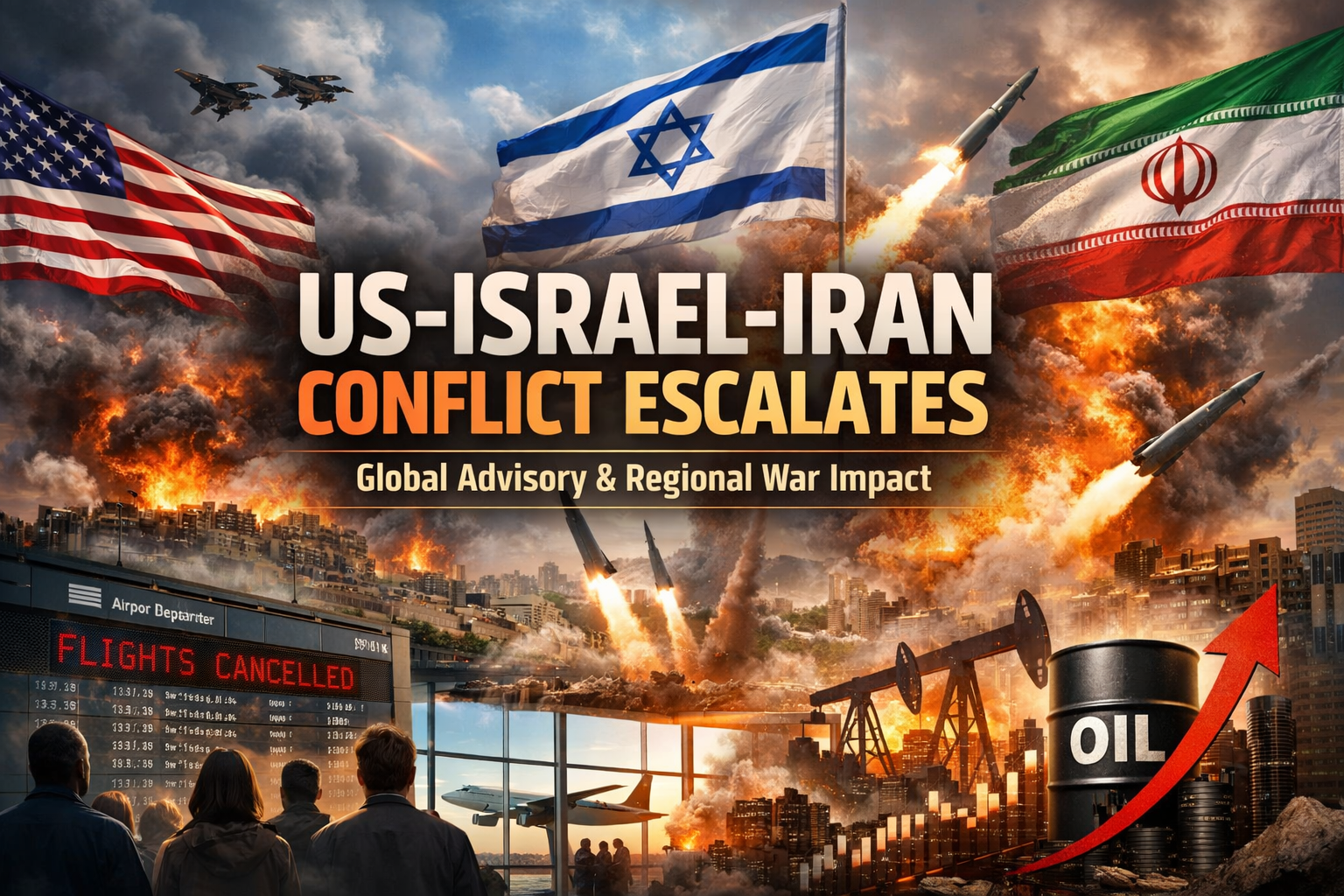
US–Israel–Iran Conflict Escalates: Global Advisory and Regional War Impact
In one of the most consequential global developments of 2026, the conflict involving the United States, Israel, and Iran has sharply escalated, triggering urgent travel advisories, widening warfare across the Middle East, and causing international economic and diplomatic ripples. The situation continues to unfold rapidly, raising serious security, humanitarian, and economic concerns worldwide.
📢 Urgent Departure Advisory Issued
The United States Department of State issued a “Depart Now” advisory for American citizens across more than a dozen Middle Eastern countries, including Saudi Arabia, the United Arab Emirates, Qatar, Egypt, Israel, Jordan, Kuwait, Lebanon, and more, as escalating hostilities heighten danger levels in the region. Officials urged U.S. nationals to leave via commercial transport as soon as possible due to severe safety risks, including drone and missile attacks on diplomatic missions and civilian areas.
This advisory marks a rare and serious travel alert, typically reserved for full-scale war zones or exceptionally unstable security environments. It reflects fears that the conflict may broaden beyond its current theaters of violence.
⚔️ Widening War Across the Region
The conflict burst into full view after joint military strikes by the U.S. and Israel targeted Iranian bases and leadership, including the assassination of Iran’s Supreme Leader, which ignited a wave of Iranian retaliatory attacks across neighboring countries. Multiple reports confirm Iranian drone and missile strikes have hit U.S. and allied positions in Gulf states such as Kuwait and Saudi Arabia, and even caused damage to diplomatic compounds.
Additionally, airspace closures, disruptions to civilian flights, and travel chaos have been reported as nations in the region respond to shifting battle lines. These moves have heightened fears of a broader war, with global observers warning that the crisis could extend for weeks or months.
🧭 International Reaction and Diplomatic Strain
Global reactions to the worsening conflict have been mixed. European Governments have called for restraint, while diplomatic tensions continue to rise. Saudi Arabia has summoned Iran’s envoy in protest over missile strikes near its territory, underscoring deepening distrust and a fractured regional diplomatic landscape.
International organizations and nations not directly involved in the fighting are scrambling to de-escalate tensions and prevent civilian suffering, even as strategic and military objectives dominate public statements.
📈 Economic and Oil Market Ripples
As hostilities intensify, global oil markets are reacting sharply. Shipping traffic through the Strait of Hormuz — a critical artery for global energy trade — has been severely disrupted, with tankers rerouting and oil prices surging on fears of supply instability. Analysts warn prolonged conflict could trigger sustained market volatility, affecting fuel costs worldwide and inflating transportation and manufacturing expenses.
This dynamic has broader implications for inflation trends, global economic recovery efforts post-pandemic, and investor confidence across commodities markets.
🛫 Travel, Safety, and Civilian Impact
Commercial aviation has taken a hit as airlines suspend flights over much of the Middle East due to safety threats. Countries like the UAE and Bahrain have temporarily closed air corridors, leaving travelers stranded and complicating evacuation efforts. Many foreign nationals, including students and expatriates, have begun relocating to safer zones as recommended by their respective governments.
Humanitarian concerns are mounting as civilians bear the brunt of the conflict’s expansion, with casualties reported across Iran, Israel, and Lebanon. Non-combatants have faced dangers from airstrikes, missile launches, and the closures of essential infrastructure, raising alarms among international aid agencies.
🧠 What’s Next?
As diplomatic channels intensify efforts to bring factions to the negotiating table, world leaders and analysts are watching closely for signs of de-escalation or further escalation. The heavy military posture and public rhetoric from involved governments suggest that the conflict could remain a defining global issue for the foreseeable future.
For your audience, this period of uncertainty presents both a critical news moment and an opportunity to stay informed about how geopolitical upheavals affect travel, economics, and global security.