

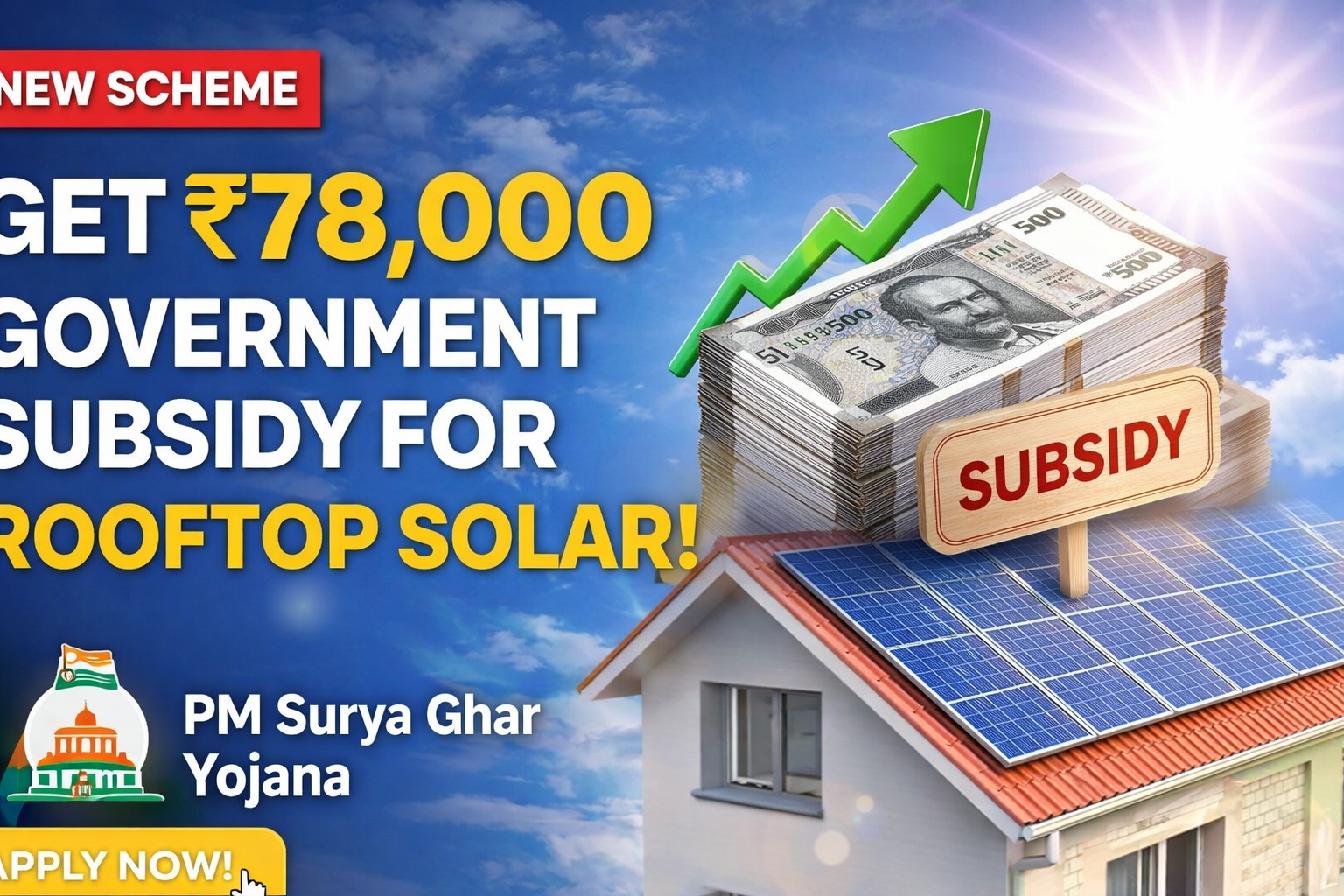
☀️ Solar Subsidy India 2026: Get Up to ₹78,000 Government Support for Rooftop Solar Panels
The Solar Subsidy India 2026 program has become one of the most beneficial government initiatives for households looking to reduce electricity bills. Under the PM Surya Ghar: Muft Bijli Yojana, eligible families can receive up to ₹78,000 subsidy for installing rooftop solar panels.
This scheme is part of India’s mission to promote clean energy and help households generate their own electricity.
💡 What is the ₹78,000 Solar Subsidy Scheme?
The Government of India launched the PM Surya Ghar Yojana to encourage residential rooftop solar installations. Under this scheme, financial assistance (subsidy) is provided directly to homeowners after installation.
👉 Key highlight:
- Maximum subsidy: ₹78,000 per household
- Applicable mainly for 3 kW rooftop solar systems
- 🏠 Who Can Apply?
You can apply if:
- You are an Indian residential homeowner
- You have a valid electricity connection
- You install solar panels through approved vendors
⚡ Benefits of Installing Solar Panels
💰 1. Huge Savings on Electricity
- You can reduce or even eliminate your electricity bill
- Some households may get up to 300 units free power
🌱 2. Clean & Renewable Energy
- Reduces pollution
- Supports India’s green energy mission
🔄 3. Earn from Extra Power
- With net metering, extra electricity can be sent to the grid
- You get credits on your electricity bill
🛠️ How to Apply for Solar Subsidy
Follow these steps:
- Visit the official portal
👉 Apply for Rooftop Solar Scheme - Register with your details
- Choose an approved solar vendor
- Install the system
- Get inspection done
- Receive subsidy directly in your bank account
💸 Cost vs Subsidy Example
- Total cost (3 kW system): ₹2.5–₹3 lakh
- Government subsidy: ₹78,000
- Final cost: Much lower after subsidy
⚠️ Important Points to Know
- Subsidy is only for residential users
- Money is credited after installation
- Must use government-approved vendors
- Maximum benefit capped at ₹78,000
🚀 Why This Scheme is Trending
- Rising electricity prices
- Government push for renewable energy
- Opportunity for zero electricity bills
🧠 Conclusion
The Solar Subsidy India 2026 scheme is a great opportunity for households to switch to clean energy while saving money. With up to ₹78,000 financial support, installing rooftop solar has become more affordable than ever.
If you are planning long-term savings and energy independence, this government scheme is definitely worth considering.
- 🧾 Detailed Cost Breakdown of Rooftop Solar
When planning for a rooftop solar system under Solar Subsidy India 2026, it’s important to understand the full cost structure:
💸 Approximate Installation Cost
- 1 kW system → ₹90,000 – ₹1,20,000
- 2 kW system → ₹1.5 lakh – ₹2 lakh
- 3 kW system → ₹2.5 lakh – ₹3 lakh
👉 Prices may vary depending on:
- Location
- Brand of solar panels
- Installation complexity
- Vendor charges
🔋 Types of Solar Systems You Can Choose
1. On-Grid Solar System ⚡
- Connected to government electricity grid
- Most popular and eligible for subsidy
- No battery required
👉 Best for normal households
2. Off-Grid Solar System 🔋
- Works without electricity connection
- Requires battery storage
- No subsidy in most cases
3. Hybrid Solar System 🔄
- Combination of both
- Battery + grid support
- More expensive but reliable
⚙️ How Much Electricity Can You Generate?
A 3 kW solar system can generate:
👉 10–15 units per day (approx.)
👉 300–450 units per month
This is enough for:
- Fans
- Lights
- TV
- Fridge
- Washing machine
💰 How Much Money Can You Save?
Example Calculation:
- Monthly electricity bill: ₹2,000
- Yearly bill: ₹24,000
👉 With solar:
- Bill becomes ₹0 or very low
📊 5-Year Savings:
👉 ₹24,000 × 5 = ₹1,20,000 saved
👉 That means system pays for itself in a few years!
🏦 Loan & EMI Option for Solar
If you cannot pay upfront:
- Banks offer solar loans
- EMI starts from ₹2,000–₹4,000/month
- Tenure: 3–7 years
👉 In many cases:
EMI ≈ Your old electricity bill
So financially, it feels similar but you own the system later 💡
📍 State-Wise Additional Subsidy (Important)
Apart from central subsidy, some states provide extra benefits:
- Karnataka
- Gujarat
- Maharashtra
- Delhi
👉 This can further reduce your total cost
🛡️ Maintenance & Lifespan
⏳ Lifespan:
- Solar panels: 20–25 years
🧽 Maintenance:
- Clean panels once in 15–30 days
- Minimal maintenance cost
👉 Very low long-term expense
❌ Common Mistakes to Avoid
- Choosing non-approved vendors
- Not checking subsidy eligibility
- Installing wrong system size
- Ignoring net metering process
👉 These mistakes can reduce your benefits
📊 Who Should Definitely Apply?
This scheme is best for:
- Middle-class households 💰
- People with high electricity bills ⚡
- Homeowners planning long-term savings 🏠
🌍 Environmental Impact
Switching to solar helps:
- Reduce carbon footprint 🌱
- Decrease dependency on coal
- Support India’s renewable goals
👉 One home solar system = huge environmental impact
❓ Frequently Asked Questions (FAQ)
1. Is the ₹78,000 subsidy really free?
👉 Yes, it is a government subsidy, but given after installation.
2. Can tenants apply?
👉 ❌ No, only homeowners are eligible.
3. How long does approval take?
👉 Usually 15–45 days
4. Is subsidy available for commercial use?
👉 ❌ No, only for residential installations.
5. What happens during power cut?
👉 On-grid systems will not work unless you install battery backup.
🧠 Final Conclusion (Extended)
The Solar Subsidy India 2026 initiative under PM Surya Ghar Yojana is one of the most impactful schemes for Indian households. With financial assistance of up to ₹78,000, the government is making clean energy more accessible and affordable.
By installing rooftop solar panels, you not only reduce your electricity expenses but also secure long-term savings and contribute to a greener future. With rising power costs, investing in solar today can be one of the smartest financial decisions for your home.
📊 Subsidy Breakdown (Official)
| Solar System Size | Subsidy Amount |
| 1 kW | ₹30,000 |
| 2 kW | ₹60,000 |
| 3 kW or more | ₹78,000 (Max)
|