

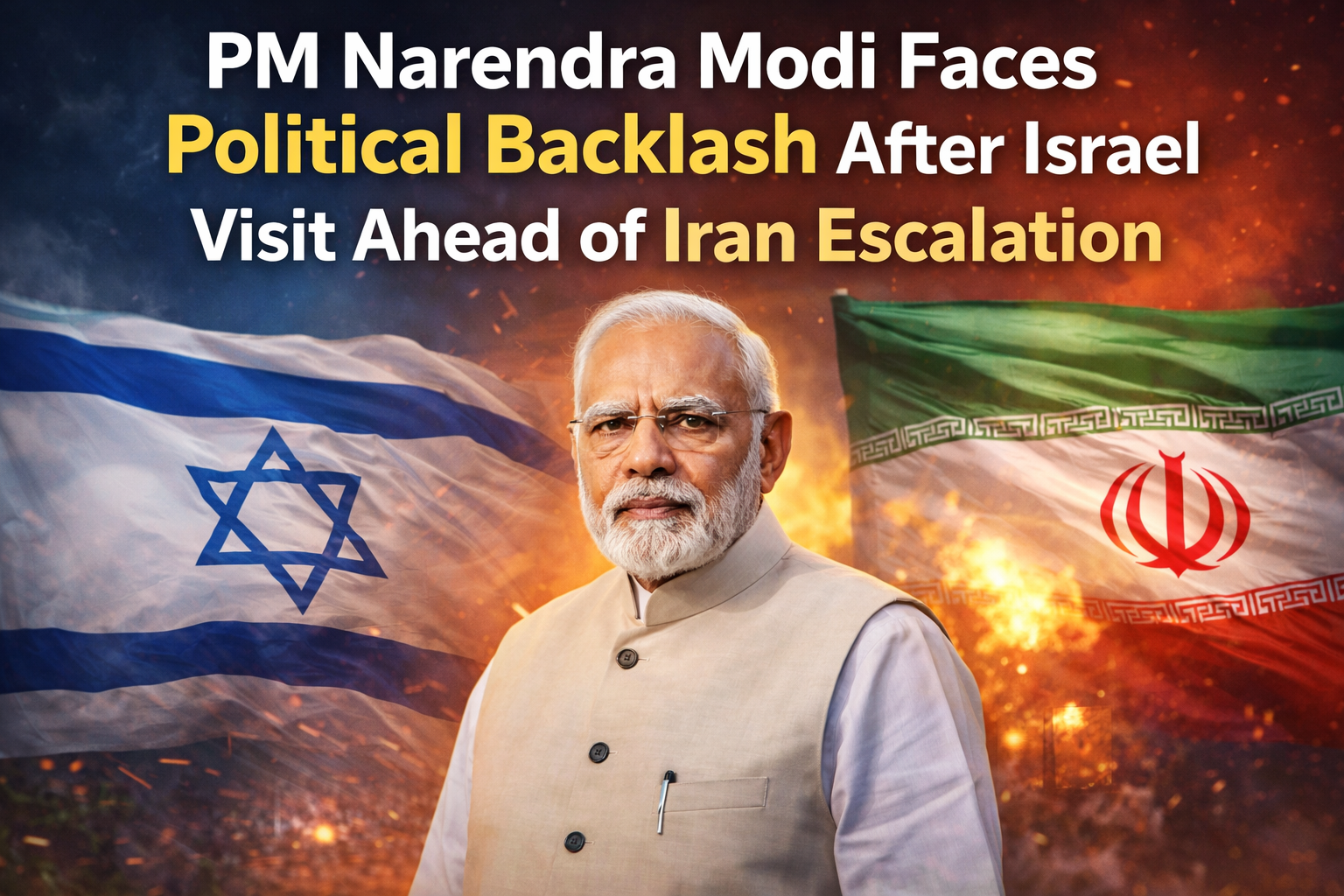
PM Narendra Modi Faces Political Backlash After Israel Visit Ahead of Iran Escalation
India’s foreign policy has come under intense debate after Narendra Modi faced criticism over his recent diplomatic engagement with Israel, which occurred just days before escalating attacks involving Iran.
The timing of the visit has triggered political reactions both domestically and internationally, with opposition leaders questioning whether the diplomatic outreach could complicate India’s traditionally balanced approach toward the Middle East.
As tensions in the region intensified following Iran-linked military actions, the debate around India’s foreign policy strategy has gained momentum.
Timing of the Visit Sparks Debate
Prime Minister Modi’s diplomatic engagement with Israel was initially viewed as part of India’s ongoing efforts to strengthen strategic and economic cooperation with the country. Over the past decade, relations between India and Israel have significantly expanded in areas such as defense technology, agriculture, cybersecurity, and trade.
However, critics argue that the visit’s timing—so close to the outbreak of renewed hostilities involving Iran—has put India in a sensitive diplomatic position.
Opposition leaders and political commentators have raised questions about whether the government should have anticipated rising tensions in the region and exercised caution in scheduling such a high-profile engagement.
Supporters of the government, on the other hand, have dismissed these concerns, stating that diplomatic relations with Israel are long-standing and independent of sudden geopolitical developments.
India’s Delicate Middle East Balance
India has historically maintained a careful balance in its relations across the Middle East. While it has developed strong strategic ties with Israel, it also maintains important diplomatic and economic relationships with several other regional powers.
Iran, in particular, holds strategic importance for India due to energy cooperation and connectivity projects that link India to Central Asia.
For decades, India’s diplomatic strategy has focused on maintaining positive relationships with multiple countries in the region without appearing to take sides in conflicts. This balancing act has often been described as a pragmatic approach aimed at protecting national interests.
The recent escalation of tensions between Israel and Iran, however, has placed that delicate balance under renewed scrutiny.
Escalation of Regional Tensions
The controversy around the Israel visit intensified after attacks attributed to Iran or its allied groups triggered fears of a wider regional conflict.
The Middle East has experienced several rounds of escalating tensions in recent years, often involving missile strikes, drone attacks, or military confrontations between rival groups and states.
Such developments not only affect regional security but also have global implications, especially for energy markets and international diplomacy.
India, which has millions of citizens working across the Middle East and relies heavily on oil imports from the region, has a strong interest in maintaining stability.
Any major escalation could potentially impact energy prices, trade routes, and the safety of Indian nationals living abroad.
Government’s Response to Criticism
Government officials have defended the Prime Minister’s diplomatic outreach, emphasizing that India’s relationship with Israel has evolved into a robust strategic partnership over the years.
They argue that diplomatic visits and international cooperation should not be viewed solely through the lens of emerging conflicts.
Officials also highlighted that India continues to maintain dialogue with multiple countries in the region, including Iran, and remains committed to promoting peace and stability.
From the government’s perspective, maintaining strong bilateral relations with key partners is an essential part of India’s broader foreign policy strategy.
Opposition Voices Concerns
Despite these explanations, opposition leaders have used the situation to question the government’s diplomatic judgment.
Some political figures argue that the optics of the visit could complicate India’s traditional neutral stance in Middle Eastern conflicts.
They have called for greater transparency regarding India’s diplomatic engagements and urged the government to prioritize regional stability while safeguarding India’s strategic interests.
Political analysts note that foreign policy decisions often become subjects of domestic political debate, especially during periods of international crisis.
Impact on India’s Foreign Policy
While the political debate continues, many experts believe India’s long-standing diplomatic relationships across the Middle East remain strong.
India has historically demonstrated the ability to maintain cooperative ties with countries that have competing interests in the region.
Analysts also emphasize that India’s foreign policy has increasingly focused on economic partnerships, technological collaboration, and strategic cooperation with multiple global players.
In that context, the Israel visit may be viewed as part of a broader diplomatic engagement strategy rather than a shift in geopolitical alignment.
Looking Ahead
As tensions in the Middle East continue to evolve, India will likely continue its cautious approach, emphasizing dialogue and stability.
The government is expected to monitor developments closely while maintaining communication with all major stakeholders in the region.
For now, the debate surrounding the timing of the Prime Minister’s Israel visit reflects the broader challenges of navigating complex geopolitical relationships in an increasingly unpredictable world.
- While criticism and political reactions may continue in the short term, India’s foreign policy framework remains focused on protecting national interests, strengthening international partnerships, and promoting regional peace. 🌍