

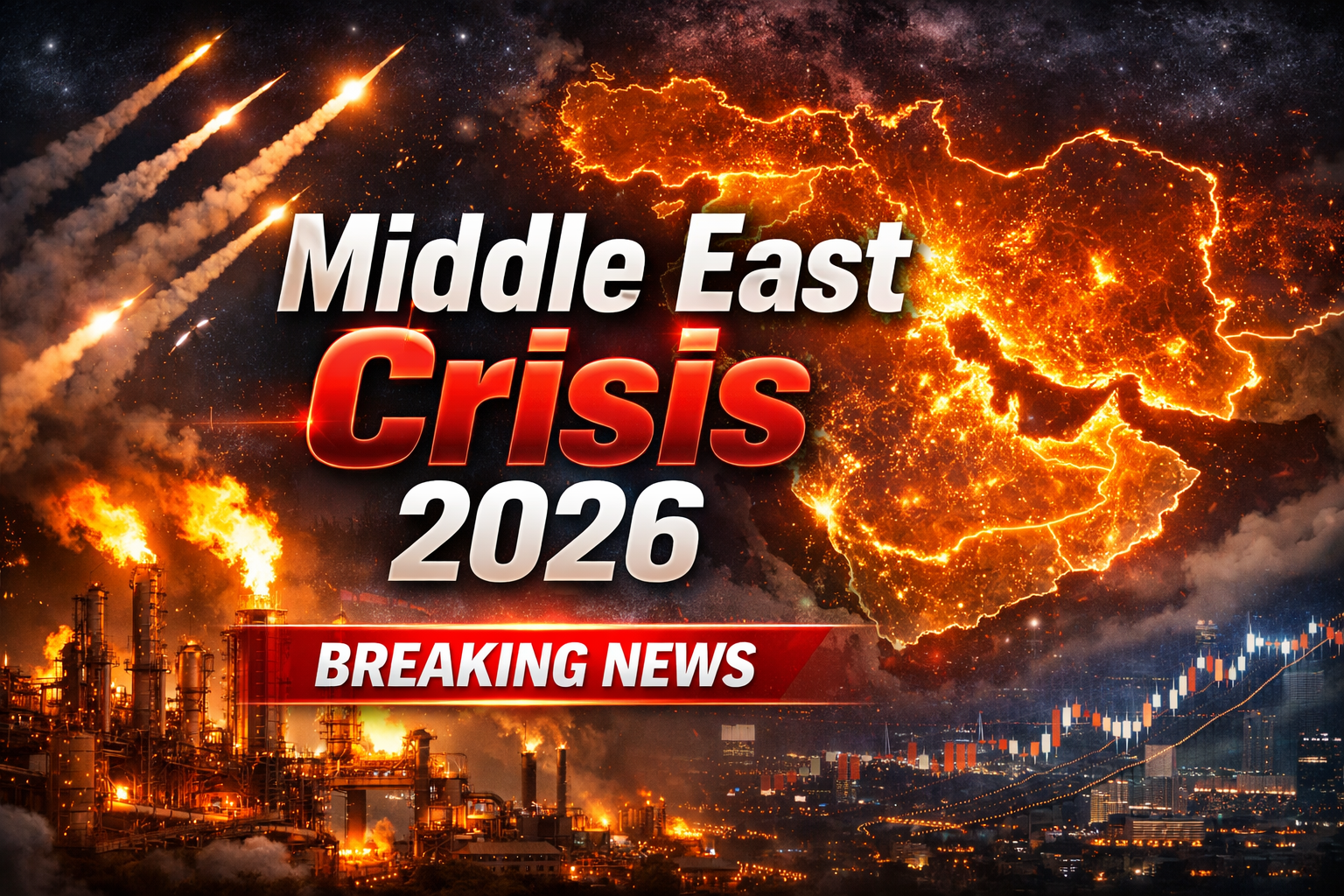
Middle East Crisis 2026: Iran–Israel Conflict Escalates as Oil Prices Surge and Global Markets React
The Middle East Crisis 2026 has rapidly become one of the most significant geopolitical events of the year, drawing global attention as tensions between Iran and Israel intensify. Over the past week, a series of missile strikes, military operations, and retaliatory attacks have escalated the conflict, raising fears of a wider regional war and sending shockwaves through global markets.
The crisis began when military strikes targeted key infrastructure and strategic locations in Iran, leading to immediate retaliation. Iran responded with a wave of missile and drone attacks aimed at Israel and several locations in the Middle East believed to host allied military facilities. These developments have dramatically heightened tensions across the region and triggered international concern.
Missile Strikes and Rising Military Operations
Reports indicate that multiple missiles were launched toward Israeli territory, with some striking areas near major urban centers. Emergency services were quickly deployed as explosions were reported near critical infrastructure. While defense systems intercepted several incoming missiles, the attacks highlighted the increasing scale of the conflict.
Meanwhile, military operations have expanded across several areas in the region, including Lebanon and parts of the Gulf. Analysts say the number of strikes and counter-strikes has grown significantly within just a few days, indicating that both sides are preparing for a prolonged confrontation.
The rising violence has prompted international calls for de-escalation, with global leaders urging diplomatic solutions to prevent the crisis from spiraling into a broader war.
Global Oil Prices Surge
One of the most immediate global impacts of the Middle East Crisis 2026 has been the sudden spike in oil prices. The Middle East is one of the world’s most critical energy hubs, and any disruption in the region quickly affects global oil supply chains.
Following the escalation, crude oil prices surged past $80 per barrel, marking one of the biggest weekly increases in recent years. Analysts warn that continued instability in the region could push prices even higher, potentially affecting fuel costs worldwide.
The possibility of disruptions to key shipping routes and energy facilities has also heightened concerns about a broader energy crisis.
Airlines and Global Travel Disruptions
The ongoing conflict has also caused major disruptions in international travel. Several airlines have cancelled or rerouted flights due to security concerns and airspace restrictions across parts of the Middle East.
Travel experts warn that if the conflict continues to escalate, airline operations across Asia, Europe, and the Middle East could face further disruptions. Airspace closures in sensitive zones have already forced airlines to adjust their flight paths, increasing travel time and operational costs.
Economic and Market Impact
Global financial markets have reacted cautiously to the crisis. Major stock indices experienced volatility as investors responded to rising geopolitical risk.
Energy companies have seen gains due to rising oil prices, while sectors such as travel and manufacturing have faced uncertainty. Economists warn that prolonged instability could affect global supply chains and slow economic growth.
The crisis has also raised concerns among governments about the potential impact on inflation, particularly if energy prices continue to climb.
Humanitarian Concerns
Beyond economic and geopolitical implications, humanitarian organizations are increasingly concerned about civilians caught in the conflict. Reports suggest that thousands of people across affected regions are facing displacement as military operations continue.
The United Nations and other international organizations have called for urgent humanitarian assistance and safe corridors for civilians seeking refuge.
Experts warn that the situation could worsen if the conflict expands into neighboring countries, potentially triggering one of the largest humanitarian crises in recent years.
What Happens Next?
As the Middle East Crisis 2026 continues to unfold, the world is watching closely. Diplomatic efforts are underway to reduce tensions, but the situation remains highly unpredictable.
Military analysts believe the coming days will be crucial in determining whether the conflict stabilizes or escalates further. Meanwhile, global markets, governments, and citizens remain on high alert as developments continue to shape the geopolitical landscape.
For now, the Middle East crisis stands as one of the most important global stories of 2026, with far-reaching implications for international security, energy markets, and global stability.