

⚡
Article: Iranian Drone Strike on U.S. Embassy in Riyadh Escalates Gulf Tensions | Global Reaction & Regional Impact
RIYADH, MARCH 4, 2026 — A significant escalation in the ongoing Middle Eastern crisis unfolded this week when a suspected Iranian drone strike hit the U.S. Embassy compound in Riyadh, Saudi Arabia’s capital. The incident marks a dangerous widening of hostilities that have already swept across multiple countries in the Gulf region, shifting a localized conflict into a broader geopolitical crisis.
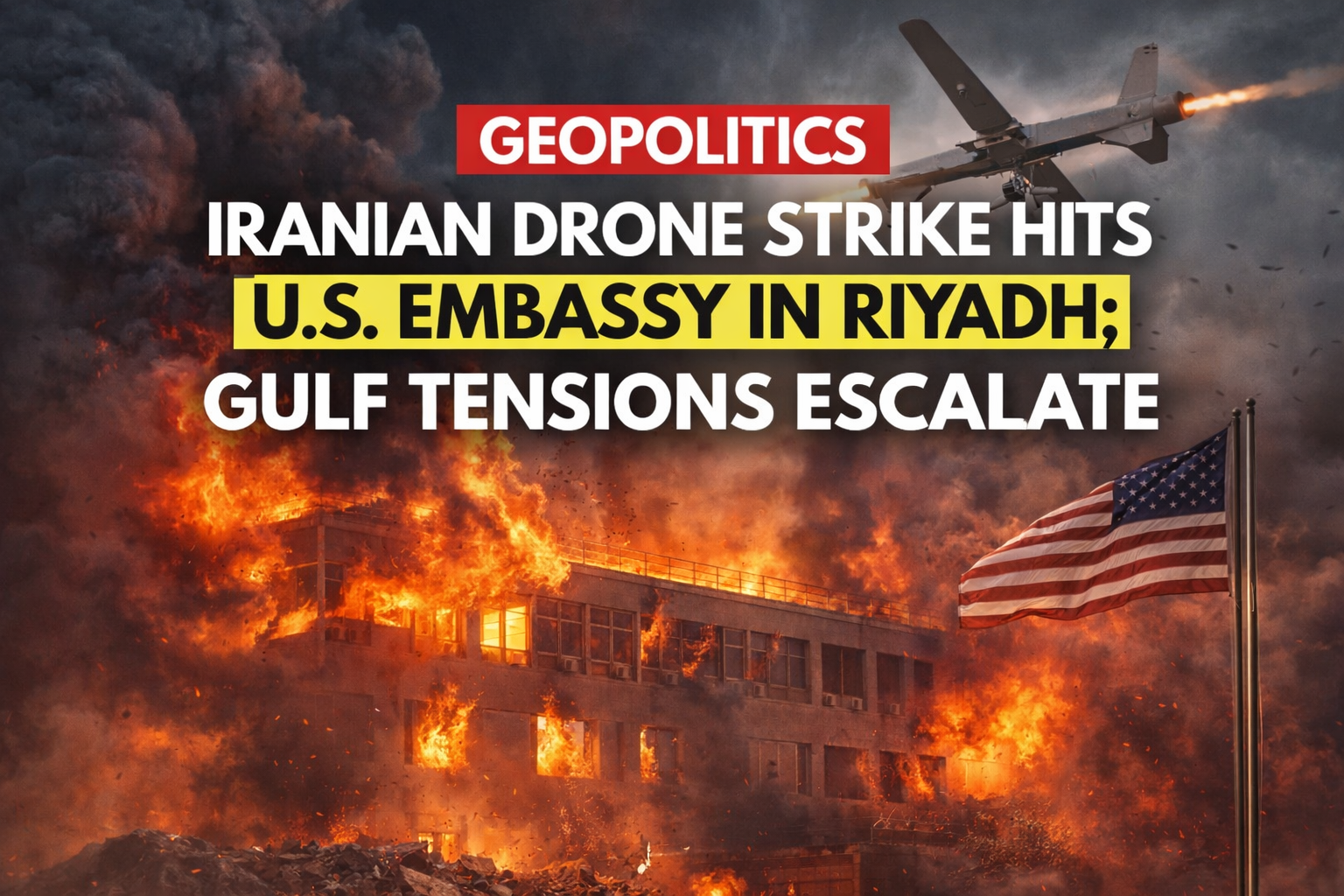
According to official statements from Saudi authorities, two drones struck the U.S. diplomatic mission early Tuesday, igniting a limited fire and causing minor structural damage to parts of the compound. Local reports confirmed that no casualties were reported, as the embassy was empty at the time of the incident.
In response to the attack, the U.S. Embassy in Riyadh issued a shelter-in-place advisory for American citizens across Saudi cities, including Riyadh, Jeddah, and Dhahran, urging them to take cover and avoid the area until further notice.
📍 Regional Context: Widening Conflict Beyond Borders
The strike on the Riyadh embassy comes amid an intensifying regional war triggered by a series of U.S. and Israeli airstrikes against Iranian targets, including leadership sites and military infrastructure. Multiple news sources have reported that the U.S.–Israel campaign has now entered its fourth day, with President Donald Trump warning that the offensive could continue for weeks as tensions deepen across the Middle East.
Iranian forces have increasingly retaliated with missile and drone attacks on Gulf countries hosting U.S. military assets, including Bahrain, Kuwait, and now Saudi Arabia. There are ongoing reports of strikes and interceptions over airspace in several neighboring states — the UAE, Qatar, and Oman — indicating how widespread these hostilities have become.
🇸🇦 Saudi Arabia’s Response
The Saudi government condemned the attack, stressing its commitment to defending national security and working with allied partners to manage the growing threat. Cabinet officials reaffirmed that Riyadh would take all necessary measures to protect its territory and citizens.
Saudi Arabia has historically been a key U.S. security partner in the Gulf. The attack on foreign soil has therefore not only raised regional alarms but has also shaken confidence in diplomatic stability across the Middle East.
🇺🇸 U.S. Policy & Diplomatic Shifts
In reaction to escalating violence, the U.S. State Department has ordered the evacuation of non-emergency personnel and families from embassies in multiple Gulf states, including Bahrain, Kuwait, Iraq, and Jordan. This move signals heightened concern for American lives and infrastructure, as threats continue to surge across borders.
Meanwhile, the U.S. government has issued travel alerts advising American citizens in the broader Middle East to leave the region if possible. These alerts highlight the unpredictable nature of the conflict and the fast-moving security environment that now encompasses civilian and diplomatic targets alike.
🌍 Broader International Reactions
Major world powers and allied nations have urged restraint while condemning attacks on diplomatic missions. Leaders from European and Arab nations voiced concerns over violations of sovereignty and warned against actions that could plunge the Middle East into a larger, prolonged war.
At the same time, global markets have reacted to rising tensions: oil prices spiked as fears of supply disruption intensified following strikes not only on diplomatic sites but also on energy infrastructure in Oman and other Gulf states.
🧭 Implications for Global Security and Stability
Analysts warn that this latest wave of hostilities could have far-reaching effects:
- Diplomatic volatility — Attacks on embassies and consular offices are rare and signify a major shift in battlefield strategy, signaling that state actors may be willing to strike diplomatic infrastructure.
- Economic shockwaves — Stability in the Gulf is crucial to global oil markets; continued conflict threatens supply chains and could influence global energy inflation.
- Regional alliances under strain — Gulf Cooperation Council (GCC) member states have found themselves under pressure to balance diplomatic ties with security obligations, particularly as Iran’s retaliation grows.
🕊️ What’s Next?
- As the situation stands, both sides have shown no sign of de-escalation. With conflict spreading across multiple fronts — from aerial strikes to embassy targets — diplomatic efforts risk being overshadowed by rapid military escalation. The international community is calling for emergency talks, but with fresh attacks ongoing, a swift peace agreement seems unlikely in the immediate future.