

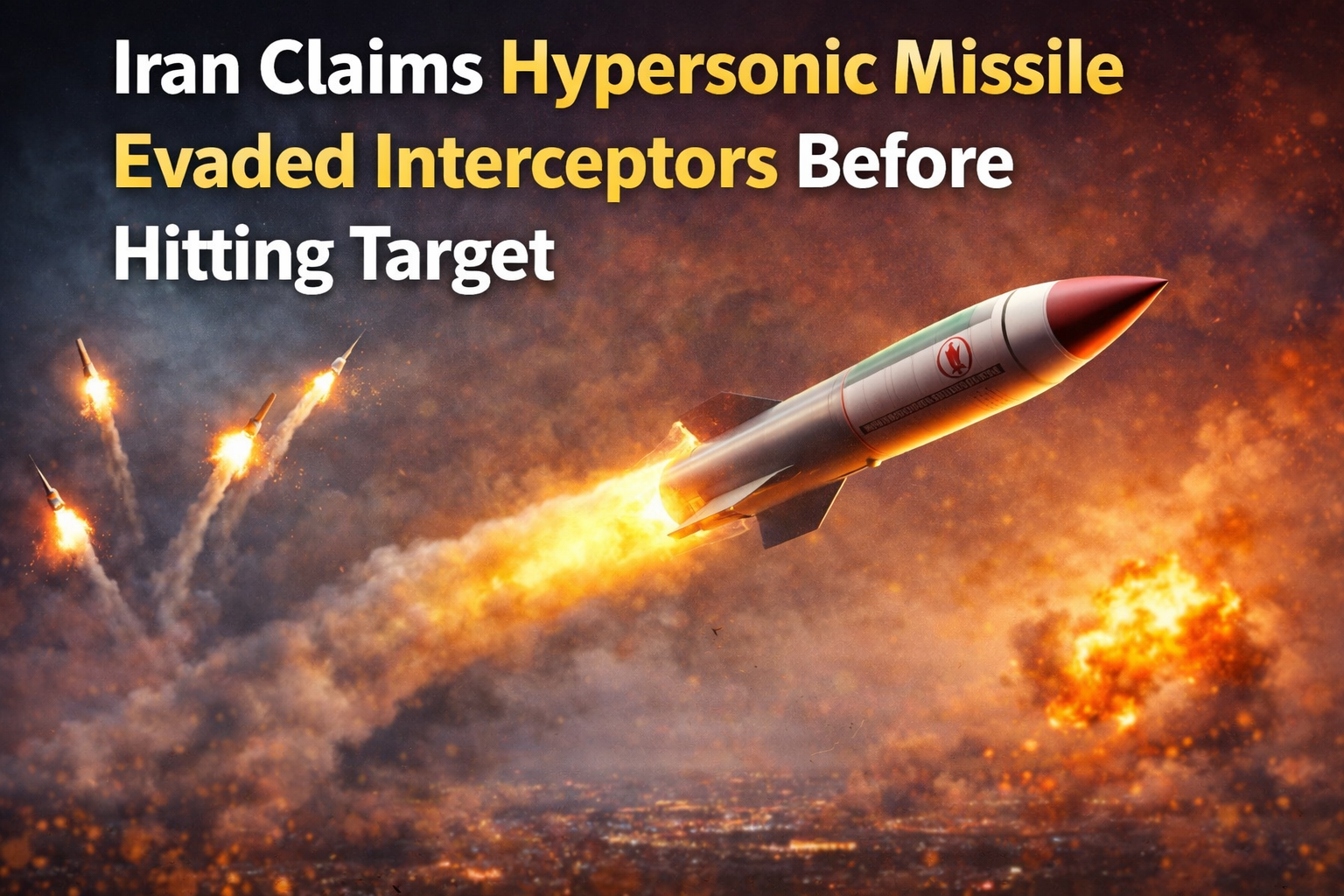
Iran Claims Hypersonic Missile Evaded Interceptors Before Hitting Target
A dramatic new development in the Middle East has drawn global attention after Iran announced that one of its hypersonic missiles successfully evaded multiple defense interceptors before reaching its intended target. The claim, if confirmed, highlights the rapidly evolving capabilities of advanced missile technology and has raised concerns among military analysts worldwide.
According to Iranian officials, the hypersonic missile managed to bypass more than ten interceptor attempts before striking its target, demonstrating what they described as the weapon’s ability to maneuver at extremely high speeds while avoiding air defense systems.
What Makes Hypersonic Missiles Different
Hypersonic missiles are considered one of the most advanced forms of modern weaponry. Unlike traditional ballistic missiles, which follow predictable flight paths, hypersonic weapons travel at speeds greater than Mach 5 and can maneuver during flight.
This maneuverability makes them far more difficult to track and intercept using conventional missile defense systems. Military experts note that even advanced radar and interception technology can struggle to accurately predict the path of such fast-moving weapons.
Iran has been investing heavily in developing its missile program over the past decade. The country has repeatedly claimed breakthroughs in both ballistic and hypersonic technology, though independent verification of some of these claims remains limited.
Defense Systems Under Pressure
The reported incident has once again highlighted the challenges faced by modern missile defense systems. Interceptors are designed to detect incoming missiles, calculate their trajectory, and destroy them before they reach their targets.
However, hypersonic weapons change the equation by combining extreme speed with the ability to change direction mid-flight. This reduces the reaction time available to defense systems and increases the chances that the missile will evade interception.
Defense analysts say that as more countries develop hypersonic capabilities, global security dynamics could shift significantly. Several major powers are already investing billions of dollars into research aimed at improving detection and interception technologies.
Rising Tensions in the Region
The missile claim comes amid ongoing tensions across the Middle East, where geopolitical rivalries and security concerns continue to shape regional dynamics.
Countries in the region closely monitor missile developments because such technology can dramatically alter the balance of power. A weapon capable of bypassing multiple interceptors could potentially pose new strategic challenges for neighboring states.
Military experts caution that hypersonic technology is becoming a key area of competition among global powers, with several countries racing to develop both offensive weapons and defensive countermeasures.
Global Reaction and Concerns
International observers have reacted cautiously to Iran’s announcement. While some analysts say the claim demonstrates technological progress, others emphasize that more independent verification is needed before drawing firm conclusions.
Governments around the world are increasingly concerned about the proliferation of hypersonic weapons. Unlike nuclear weapons, which are tightly regulated through international treaties, hypersonic missiles currently exist in a less defined regulatory environment.
Security experts warn that the rapid development of such weapons could increase the risk of miscalculation during conflicts, especially if missile defense systems struggle to respond effectively.
The Future of Missile Warfare
The announcement underscores how quickly military technology is evolving in the 21st century. Hypersonic weapons are often described as the next major step in missile warfare because of their speed, maneuverability, and difficulty to intercept.
Countries including the United States, China, and Russia are also actively developing hypersonic systems, leading to what many analysts describe as a new global arms race.
For now, Iran’s claim about its missile evading multiple interceptors has sparked fresh debate about the future of air defense systems and the challenges they may face in an era of increasingly advanced weapons.
As research into hypersonic technology accelerates, governments and defense organizations around the world will likely continue investing heavily in both offensive and defensive systems to keep pace with the rapidly changing landscape of modern warfare.