

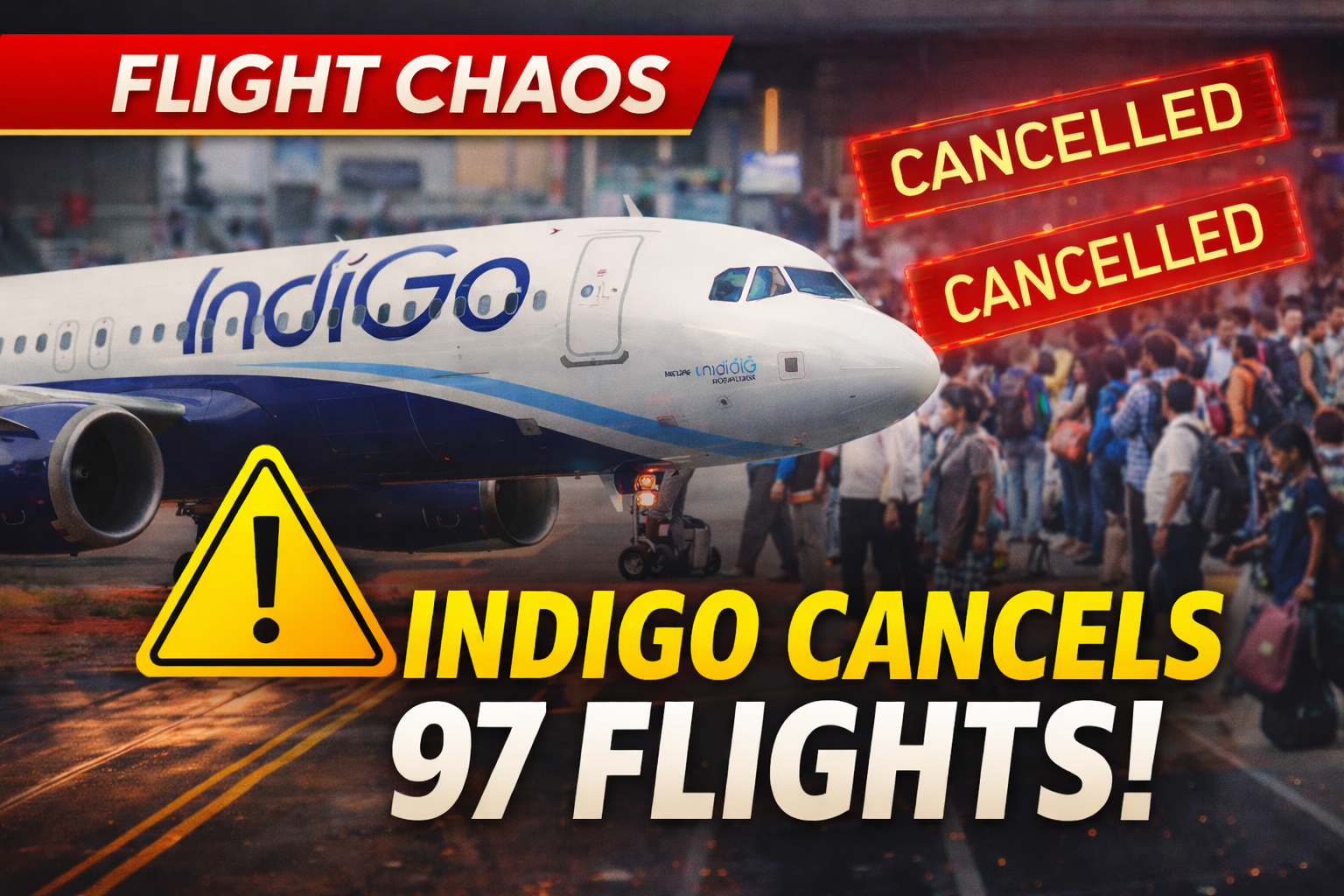
IndiGo Cancels 97 Flights Amid Middle East Tensions, Travel Chaos Hits Passengers
Air travel across parts of Asia and the Middle East has been thrown into uncertainty after IndiGo, India’s largest airline by market share, announced the cancellation of 97 flights due to rising geopolitical tensions in the region.
The sudden move has left thousands of passengers stranded or scrambling to find alternative travel options. Airports across India reported long queues at airline counters as travelers sought updates on their flights and possible refunds or rescheduling options.
The cancellations come amid growing concerns over airspace safety and operational challenges affecting airlines flying through parts of the Middle East.
Why IndiGo Cancelled the Flights
According to airline officials, the cancellations were primarily due to operational adjustments and safety precautions as tensions escalate in parts of the Middle East.
Airlines often need to reroute flights when geopolitical situations threaten the safety of certain air corridors. These changes can increase flight times, fuel costs, and logistical complications, forcing carriers to cancel some services entirely.
The affected routes reportedly include flights connecting India with key Middle Eastern destinations such as Dubai, Doha, and Abu Dhabi, which are major travel hubs for Indian expatriates and international passengers.
Passengers Face Major Travel Disruptions
For many travelers, the sudden cancellations came as an unpleasant surprise.
Passengers arriving at airports early in the morning were informed that their flights had either been cancelled or delayed indefinitely. Some travelers reported waiting hours to speak with airline staff regarding rebooking options.
Business travelers, students, and families planning vacations were among the most affected. Several passengers took to social media to express frustration over the sudden disruption to their travel plans.
Airlines are now working to accommodate passengers on alternative flights, but limited seat availability means some travelers may have to wait longer than expected.
Impact on India–Middle East Travel Routes
The Middle East remains one of the busiest international travel corridors for India. Millions of Indians live and work in Gulf countries, making frequent flights between the regions essential.
Major cities like Dubai and Doha serve as global transit hubs connecting travelers from Asia to Europe, Africa, and North America.
Any disruption to these routes can have a ripple effect across the global aviation network.
Aviation experts say the cancellation of dozens of flights by a major airline like IndiGo highlights how sensitive international travel operations are to geopolitical developments.
Airlines Monitoring the Situation Closely
Other carriers, including Air India, are also closely monitoring the situation. While not all airlines have announced large-scale cancellations, many are adjusting flight routes and schedules as a precaution.
Some airlines are choosing longer but safer routes that avoid potentially risky airspace. While this approach helps ensure passenger safety, it can lead to longer flight times and additional operational costs.
Airline officials have stated that the safety of passengers and crew remains the top priority.
What Travelers Should Do Now
Travel experts recommend that passengers flying internationally in the coming days take extra precautions before heading to the airport.
Travelers should:
- Check their flight status regularly through airline websites or mobile apps
- Arrive earlier at airports in case of unexpected changes
- Stay updated with official airline announcements
- Contact customer support if flights are cancelled or rescheduled
Passengers whose flights were cancelled by IndiGo are generally eligible for refunds or free rebooking options depending on availability.
Aviation Industry Faces Ongoing Challenges
The aviation industry has faced multiple disruptions in recent years, ranging from global pandemics to geopolitical conflicts and extreme weather events.
Each of these factors can affect airline schedules and travel operations worldwide.
Experts say the latest cancellations demonstrate how quickly airlines must adapt to changing conditions. Even a small shift in geopolitical stability can force carriers to revise routes and cancel flights at short notice.
Despite these challenges, aviation authorities and airlines continue working together to maintain safe and efficient travel for millions of passengers.
When Will Normal Flight Operations Resume?
As of now, airlines are closely watching developments in the region before restoring full operations.
If tensions ease and airspace restrictions are lifted, normal flight schedules could gradually return. However, if the situation escalates further, additional cancellations or route changes may occur.
Travel analysts say the coming days will be critical in determining whether the disruption remains temporary or becomes a longer-term challenge for airlines operating in the region.
For passengers planning international travel, staying informed and flexible with travel plans may be the best approach until the situation stabilizes.