

🪶 Intro
If you’ve been to a petrol pump recently and felt that slight hesitation before saying “full tank”… you’re not alone.
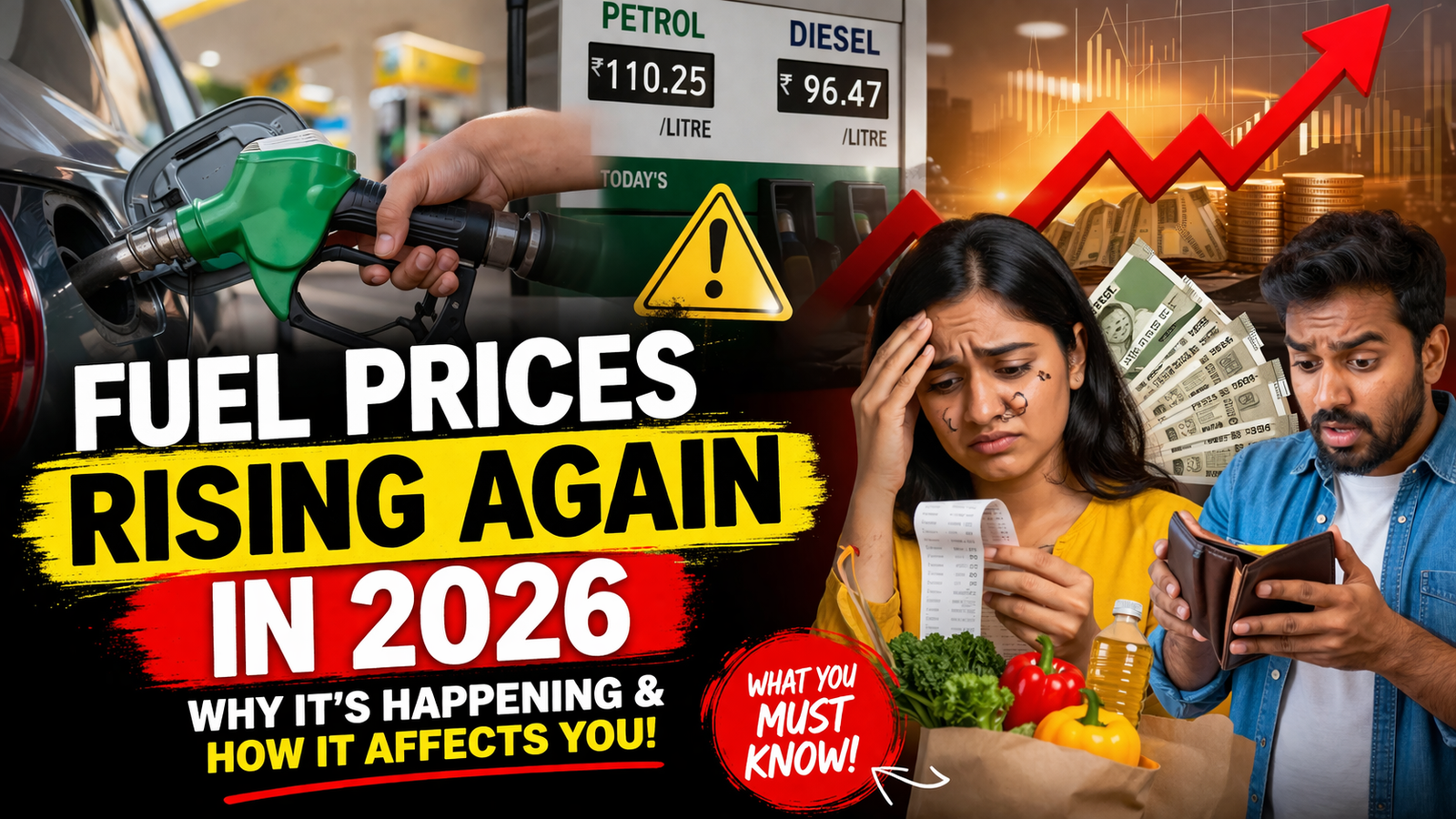
Across the world — and especially here in India — fuel prices are quietly climbing again in 2026. It’s not a sudden jump overnight, but a slow, steady increase that’s starting to hurt.
And the worst part? Most people don’t even know why it’s happening.
Let’s break it down in simple terms — no complicated economics, just the real story behind rising fuel prices and what it means for you.
📊
What Exactly Is Happening? (Explanation)
Fuel prices in many countries have started increasing again after a relatively stable period. Petrol and diesel costs are being adjusted more frequently, and in some regions, prices are hitting uncomfortable levels.
This isn’t just a local issue — it’s part of a global pattern.
And when fuel prices rise, it doesn’t stop at petrol pumps. It slowly spreads to:
- Food prices 🍅
- Transport costs 🚚
- Daily essentials 🛒
That’s why even a small increase matters more than we think.
🌍
The Real Causes Behind the Price Rise
1. Global Oil Supply Issues
Oil-producing countries have started controlling how much oil they release into the market. When supply goes down and demand stays high — prices go up. Simple as that.
2. Ongoing Global Conflicts
Political tensions and conflicts in oil-rich regions are making supply chains unstable. Even a small disruption can push prices higher worldwide.
3. Increased Demand After Economic Recovery
As economies recover, industries are using more fuel again — transportation, manufacturing, flights — everything is picking up.
More demand + limited supply = higher prices.
4. Currency Value Impact
Countries like India import most of their oil. If the currency weakens against the dollar, fuel becomes more expensive even if global prices stay the same.
💥
Impact on Daily Life (This Is Where It Hurts)
Let’s be honest — fuel price hikes don’t stay limited to cars and bikes.
Here’s how it affects you:
🚗 Transportation Costs Go Up
Auto fares, cab prices, delivery charges — everything increases slowly.
🛒 Grocery Bills Increase
Trucks transporting food use fuel. When fuel costs rise, food prices follow.
🏠 Overall Cost of Living Rises
From vegetables to online orders — everything becomes slightly more expensive.
🧠
Real-Life Example
Imagine this:
You used to spend ₹2,500 a month on fuel.
Now, due to price increases, it becomes ₹3,000.
At first, ₹500 doesn’t seem like a big deal…
But over a year, that’s ₹6,000 extra — just on fuel.
Now add increased food and transport costs — and suddenly, your monthly budget feels tight.
Cashless Society 2026 (Latest Update): Is Physical Money Disappearing Fast?
🪜
What You Can Do (Practical Steps)
You can’t control global oil markets, but you can reduce the impact on your wallet.
✅ 1. Plan Your Travel
Avoid unnecessary trips. Combine multiple tasks into one outing.
✅ 2. Use Public Transport Occasionally
Even switching 2–3 days a week can save a lot over time.
✅ 3. Maintain Your Vehicle
Proper tyre pressure and regular servicing improve fuel efficiency.
✅ 4. Consider Carpooling
Sharing rides reduces fuel cost significantly.
✅ 5. Track Your Monthly Fuel Spend
Awareness alone helps you cut down unnecessary usage.
🏛️
Government Actions & What to Expect
Governments are aware of the pressure rising fuel prices create.
Possible actions include:
- Temporary tax reductions
- Subsidies in some sectors
- Strategic oil reserve usage
However, these are often short-term solutions.
In the long run, many countries are also pushing towards:
- Electric vehicles ⚡
- Alternative fuels 🌱
But for now, petrol and diesel still dominate daily life.
🔮
What Might Happen Next?
Experts believe fuel prices could remain unstable throughout 2026.
If global tensions continue or supply remains tight:
👉 Prices may rise further
If conditions improve:
👉 Prices could stabilize — but not drop significantly
So realistically, we should prepare for moderate to high fuel costs this year.
📉
A Hidden Effect Most People Don’t Notice
There’s something subtle about fuel price hikes that many people miss.
It doesn’t hit you all at once.
Instead, it slowly creeps into your life.
One day your fuel cost increases.
A week later, your grocery bill feels slightly higher.
Then your Swiggy or Zomato order costs ₹20–₹30 extra.
You don’t panic immediately…
But over time, you start wondering:
“Why does everything suddenly feel more expensive?”
That’s the real impact of rising fuel prices — it creates a chain reaction across the entire economy.
🧩
How Businesses Quietly Pass the Cost to You
Let’s take a simple example most people can relate to.
🍔 Food Delivery Apps
When fuel prices go up:
- Delivery partners spend more on petrol
- Companies increase delivery charges slightly
- Restaurants adjust menu prices
You don’t see a “fuel price hike” label —
but you pay for it anyway.
📦 E-commerce Orders
Ordered something online recently?
Behind that one package:
- Warehouse → truck → local hub → delivery bike
Each step uses fuel.
So when fuel prices rise:
👉 Logistics cost increases
👉 Product price or delivery fee increases
🏢 Small Businesses
Local shop owners also feel the pressure.
For example:
- A vegetable vendor pays more for transport
- A milk supplier pays more for distribution
And eventually:
👉 Prices increase for customers
Not because they want to — but because they have to survive.
🧠
Why This Situation Feels Worse Than Before
You might be thinking:
“Fuel prices have increased before too… why does it feel worse now?”
Good question — and there’s a reason.
1. Everything Is Already Expensive
We’re already dealing with inflation in 2026.
So fuel price increase feels like an extra burden, not a standalone issue.
2. Daily Dependency Is Higher
We rely more on:
- Online deliveries
- Personal vehicles
- Fast transportation
So fuel impacts more parts of our life than before.
3. Income Isn’t Increasing at the Same Speed
Let’s be real — salaries don’t increase every time fuel prices do.
And that’s where the pressure builds.
🔍
What Most News Doesn’t Tell You
Most headlines just say:
👉 “Fuel prices increased by ₹2”
But they don’t explain the bigger picture.
Here’s the truth:
- Fuel is connected to almost every industry
- Even small increases multiply across the economy
- Governments sometimes delay impact — but not eliminate it
That’s why it feels confusing.
Prices rise slowly… but the impact is massive.
⚠️
Mistakes People Make During Fuel Price Hikes
A lot of people unknowingly make things worse for themselves.
❌ 1. Ignoring Small Increases
“It’s just ₹100 more…”
That mindset leads to thousands lost over months.
❌ 2. Not Tracking Expenses
If you don’t track fuel spending, you won’t realize how much you’re losing.
❌ 3. Delaying Vehicle Maintenance
Bad mileage = more fuel usage = more money wasted.
❌ 4. Overusing Convenience
Too many short rides, unnecessary deliveries, etc.
Convenience feels cheap in the moment…
but becomes expensive over time.
💡
Smart Habits That Actually Make a Difference
Let’s go beyond basic tips — here are real-world habits that help:
🚶♂️ Combine Short Trips
Instead of going out multiple times:
👉 Finish everything in one trip
📱 Use Apps to Compare Fuel Prices
Some apps show nearby petrol prices — even small differences help over time.
🛵 Switch to Two-Wheelers (If Possible)
For short distances, bikes/scooters are more fuel-efficient than cars.
⏰ Avoid Peak Traffic Hours
Less traffic = less fuel wasted in idle time.
🔌 Think Long-Term (EV Shift)
Not immediately — but if you’re planning a new vehicle,
consider electric options.
🌱
Is This the Push Towards Electric Vehicles?
Interestingly, rising fuel prices are also pushing a bigger shift.
More people are now seriously thinking about:
- Electric scooters
- Hybrid cars
- Public transport
Because long-term savings matter more now.
But let’s be honest —
EVs are still not affordable or practical for everyone yet.
So for now, most people are stuck managing petrol and diesel costs.
🧠
One Simple Mindset Shift That Helps
Instead of thinking:
❌ “Prices are increasing, nothing I can do”
Try thinking:
✅ “Where am I wasting fuel without realizing?”
That one question alone can save you money every month.
🔄
Let’s Be Real for a Second…
Nobody likes rising fuel prices.
It’s frustrating.
It feels unfair sometimes.
But ignoring it won’t help.
Adapting will.
Even small changes — like reducing 2–3 unnecessary trips a week —
can actually make a noticeable difference over time.
🧾
Final Thoughts (More Human, Less Robotic)
Fuel prices rising in 2026 isn’t just another news headline.
It’s something you feel — every time you fill your tank, order food, or buy groceries.
And while we can’t control global oil markets or political decisions…
We can control how we respond.
Maybe it’s about being a little more mindful.
A little more planned.
A little less wasteful.
Because in times like this,
smart habits matter more than big income.
📊
Quick Comparison (Reality Check)
❓
| Expense Type | Before Price Rise | After Price Rise |
| Monthly Fuel | ₹2500 | ₹3000+ |
| Grocery Bill | ₹4000 | ₹4500+ |
| Delivery Costs | ₹200 | ₹300 |
FAQ Section
❓ Why are fuel prices rising again in 2026?
Fuel prices are increasing due to global supply issues, rising demand, geopolitical tensions, and currency fluctuations.
❓ Will petrol prices decrease soon?
Prices may stabilize, but a major drop is unlikely unless global supply improves significantly.
❓ How does fuel price affect food prices?
Transportation costs increase when fuel prices rise, which makes food more expensive.
❓ What is the best way to save fuel money?
Planning trips, using public transport, and maintaining your vehicle can reduce fuel expenses.