

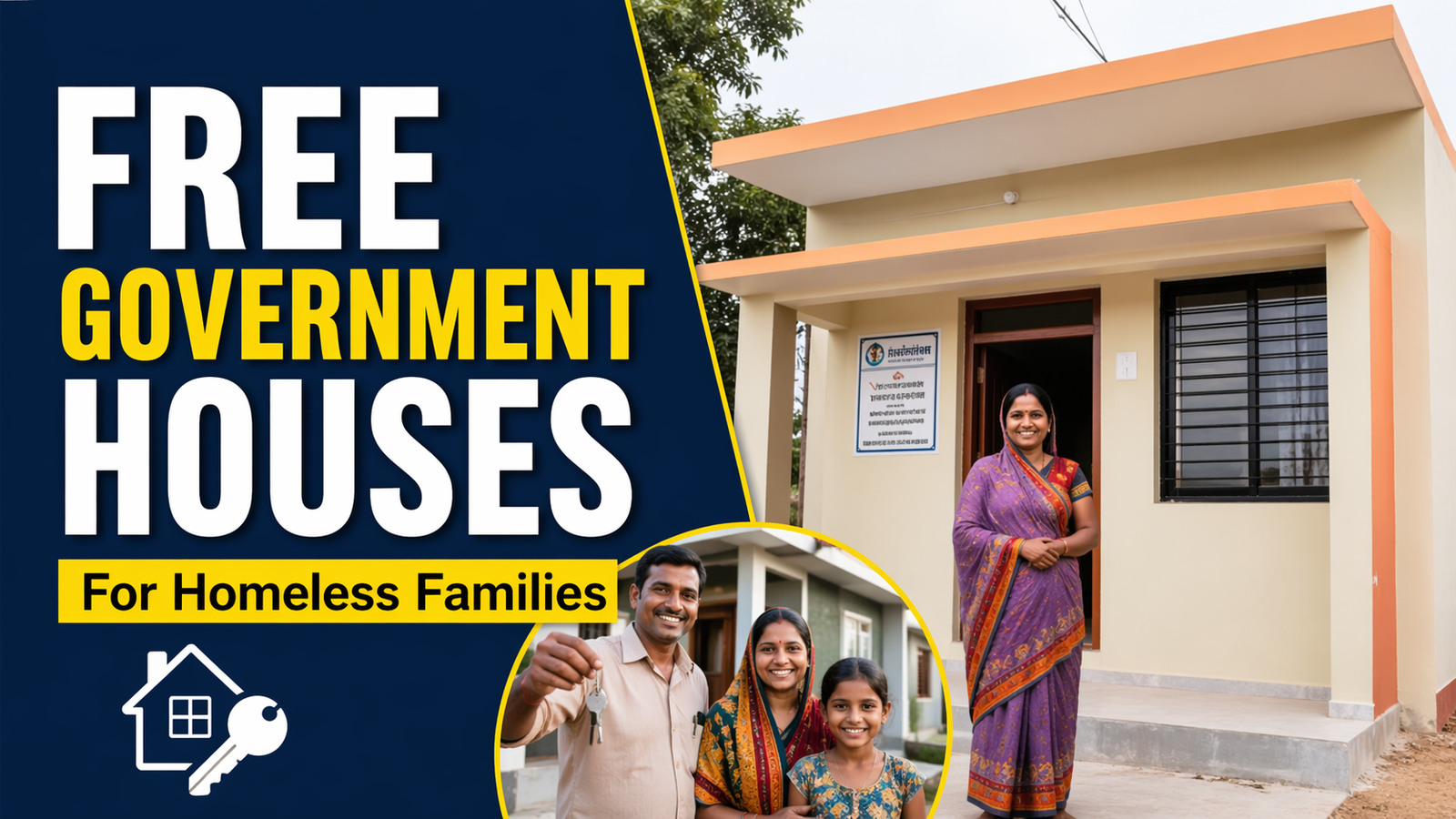
A House Changes Everything — And That’s Why This News Matters
For families living in rented rooms, temporary shelters, roadside settlements, or damaged houses, the idea of getting a permanent home can feel almost impossible. Rent rises, income stays uncertain, and every month becomes a struggle just to survive.
So when people hear that the government may provide free houses or housing support for homeless families, attention rises instantly — and honestly, it should.
A home is not just four walls. It means safety during rain, privacy for women, a better environment for children, and something many people quietly long for: stability.
Across India, several central and state-level housing schemes aim to support people without proper housing. While not every program offers a “completely free house” in every case, many provide strong financial help, subsidies, land support, or low-cost homes for eligible families.
PMAY Free House Scheme: Govt Giving Free Land & Houses? Full Truth You Need to Know (2026 Update)
Here’s the real picture.
What Is Happening: Government Housing Support for Homeless Families
India has run multiple housing initiatives focused on helping economically weaker sections, rural poor, urban low-income families, and homeless citizens.
One of the most widely known programs is Pradhan Mantri Awas Yojana (PMAY), launched to improve access to affordable housing. Different states also run their own housing schemes for local residents.
These programs may include:
- Financial assistance to build a house
- Subsidies on home loans
- Support for repairing unsafe homes
- Allotment of low-cost houses or flats
- Priority support for women, widows, disabled citizens, and marginalized groups
- Rural housing assistance for families living in kutcha or damaged homes
Truth is, many people hear “free house” and imagine instant handover of a ready-made property. In reality, the process often depends on eligibility, income level, land ownership, documentation, and scheme availability.
Why This Matters Right Now
Housing has become one of the biggest financial pressures in India.
In many cities, rent consumes a large part of monthly income. In villages, families may still live in old structures vulnerable to monsoon damage. Migrant workers often live in crowded rented rooms with poor facilities.
That’s why government-backed housing schemes are more important now than ever.
A stable home can lead to:
- Better health outcomes
- Improved school attendance for children
- More savings over time
- Safer living conditions
- Stronger social identity and dignity
Let’s be real: when someone no longer worries about where they’ll sleep next month, life changes in ways numbers cannot fully measure.
Who May Benefit from These Schemes?
Eligibility varies by scheme and state, but many housing programs prioritize people such as:
Low-Income Families
Households with limited annual income may receive support under affordable housing programs.
Homeless Citizens
People without permanent shelter are often a focus area for welfare housing programs, especially in urban areas.
Rural Poor Families
Families living in mud houses, broken structures, or no formal housing may qualify under rural housing assistance.
Women-Led Households
Many schemes encourage registration in a woman’s name or joint ownership, which can improve family security.
Senior Citizens, Widows, Disabled Persons
Special preference may be given depending on policy rules.
Important Documents Often Required
This is where many applications get delayed. Common requirements may include:
- Aadhaar card
- Income certificate
- Residence proof
- Ration card
- Caste certificate (where applicable)
- Bank account details
- Land documents (for some construction schemes)
- Passport-size photos
Rules change, so applicants should verify details through official state or central government portals.
Real-World Impact: What a Home Means to Ordinary Families
Imagine a daily wage worker paying rent for one room shared by five people. Half the income disappears before food is bought.
Now imagine that family receives support to build a small permanent house.
Monthly stress drops. Children get space to study. Medical risks from leaking roofs reduce. Women gain privacy and safety. Savings become possible.
This is why housing policy matters far beyond politics.
It affects everyday life.
And for many families, it can break a cycle of poverty that lasted generations.
What About Karnataka and Other States?
Many states, including Karnataka, have introduced housing programs through housing boards, urban development authorities, or rural welfare departments.
Depending on location, citizens may see schemes related to:
- Economically weaker section housing
- Urban poor housing allotments
- Rural home construction aid
- Slum redevelopment projects
- Beneficiary-led house construction assistance
Surprisingly, some people miss benefits simply because they never applied or didn’t know deadlines existed.
Checking district office notices, municipality announcements, gram panchayat offices, or official housing portals can make a real difference.
Common Problems People Face
Even good schemes face challenges.
Delays in Approval
Applications may take time due to verification or budget cycles.
Lack of Awareness
Many deserving families simply don’t know where to apply.
Documentation Issues
Missing or incorrect records can slow the process.
Demand Higher Than Supply
In urban areas especially, the number of applicants may exceed available homes.
Fraud Risks
Sadly, fake agents sometimes promise guaranteed houses for money. Official applications should go only through trusted government channels.
Punjab & Sind Bank Recruitment 2026: A Quiet Opportunity Many Students Might Miss
What May Happen Next
Housing remains a politically and socially important issue, so more announcements are likely in coming years.
We may continue to see:
- Expanded affordable housing targets
- Faster digital applications
- Rural housing upgrades
- Women-first ownership models
- Subsidized loans for low-income earners
- Smart city-linked low-cost housing projects
As urban populations grow, housing pressure will only increase. Governments know this.
How Readers Can Take Action Today
If you or someone you know needs housing support:
- Check official state housing websites.
- Visit local municipal or panchayat offices.
- Keep documents updated.
- Watch for new beneficiary lists and scheme notices.
- Avoid middlemen demanding money for approvals.
Honestly, staying informed is often the first step toward getting help.
5. FAQ
Is the government giving completely free houses to everyone?
No. Most schemes are targeted toward eligible low-income or homeless families. Some provide full support, while others offer subsidies or partial assistance.
Which scheme is famous for affordable housing in India?
Pradhan Mantri Awas Yojana (PMAY) is one of the best-known national housing programs.
Can people without land apply?
It depends on the scheme. Some programs require land ownership, while others involve flats or government-allocated housing.
Are there state-wise housing schemes too?
Yes. Many states run their own housing programs in addition to central schemes.
How can I apply?
Usually through official portals, municipal offices, panchayats, housing boards, or district welfare offices.
Is there a deadline?
Many schemes open applications in phases, so deadlines can vary.
For people who already own homes, housing schemes may sound like policy talk. But for millions of families, they mean something deeply personal — relief, dignity, and a future that feels possible.
A safe home can change education, health, finances, and confidence all at once.
That’s why every new housing announcement matters.
Because somewhere, someone is still waiting for the key to their first real home.