

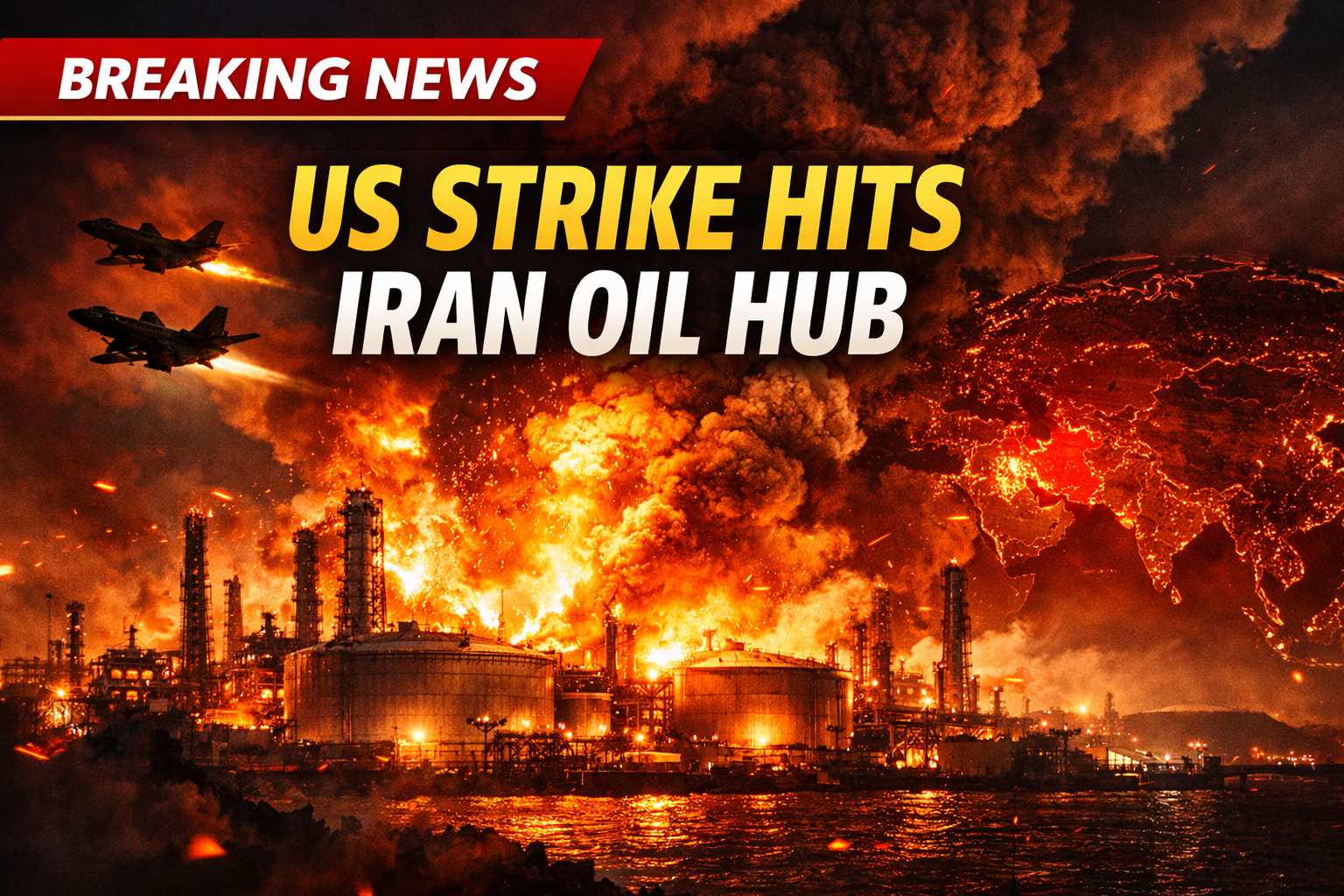
US Strikes Iran’s Kharg Island: Middle East Tensions Send Shockwaves Across Global Markets
Global attention has turned toward the Middle East after reports surfaced that the United States launched a strike targeting infrastructure near Kharg Island, the main oil export terminal of Iran.
The development has triggered intense reactions from governments, financial markets, and energy analysts worldwide. With Kharg Island responsible for the majority of Iran’s crude exports, any disruption there could have significant implications for the global economy.
Read more about the global AI race shaping world technology:
Global AI Technology Race 2026: The Breaking Innovation Wave Transforming Industries Worldwide
Why Kharg Island Is So Important
Kharg Island is often described as the heart of Iran’s oil exports. Situated in the Persian Gulf, the island handles a large percentage of the country’s petroleum shipments to international markets.
Every day, millions of barrels of crude oil are transported from this strategic location to countries across Asia, Europe, and beyond. Because of this, even a small disruption at the terminal could impact global energy supplies.
Energy experts warn that instability in this region often leads to immediate spikes in oil prices and volatility in global markets.
Rising Tensions Between the US and Iran
Relations between United States and Iran have been strained for years due to disputes over nuclear programs, regional influence, and military activity in the Middle East.
Recent incidents in the region have already raised concerns about possible escalation. The latest strike near Kharg Island appears to have intensified those fears, prompting diplomatic reactions and calls for restraint from several countries.
Political analysts say the situation could become a critical geopolitical flashpoint if tensions continue to rise.
Global Oil Markets React Immediately
One of the first sectors to react to the reports was the global oil market. Traders are closely monitoring the situation, as any damage to export infrastructure could disrupt supply chains.
Oil prices historically react strongly to instability in the Persian Gulf, since a large portion of the world’s oil shipments passes through this region.
Even the possibility of disruptions often leads to rapid price fluctuations. Investors and energy companies are now evaluating how long the tensions might last and whether further military actions could occur.
International Community Calls for De-Escalation
Several global leaders and international organizations have urged both sides to avoid further escalation.
Diplomatic sources say many governments are concerned about the broader implications of a prolonged conflict in the Middle East. The region is already dealing with multiple geopolitical challenges, and another major confrontation could destabilize international energy supplies.
Security experts warn that escalation could affect not only oil markets but also global trade routes and regional security.
Impact on Global Economy
The Middle East plays a crucial role in global energy production. Because of this, geopolitical developments in the region often have immediate economic consequences.
If tensions escalate further, analysts believe the following impacts could occur:
- Increased global oil prices
- Rising transportation and fuel costs
- Stock market volatility
- Supply chain disruptions in energy-dependent industries
Countries heavily dependent on imported oil may face additional economic pressure if energy prices rise sharply.
What Happens Next?
At this stage, the situation remains highly fluid. Military analysts say the next few days could determine whether tensions calm down or escalate further.
Diplomatic negotiations may play a key role in preventing a wider conflict. Meanwhile, governments and international organizations are closely monitoring developments.
For millions of people around the world, the concern is not just about geopolitics but also about how rising tensions could affect everyday costs such as fuel, transportation, and goods.
Why the World Is Watching Closely
Events surrounding Kharg Island highlight how fragile global energy systems can be. A single strategic location can influence oil markets, international politics, and economic stability.
As updates continue to emerge, analysts expect global markets and political leaders to remain on high alert.
For now, the world is watching carefully to see whether diplomacy can reduce tensions or whether the crisis could evolve into a larger geopolitical confrontation.