

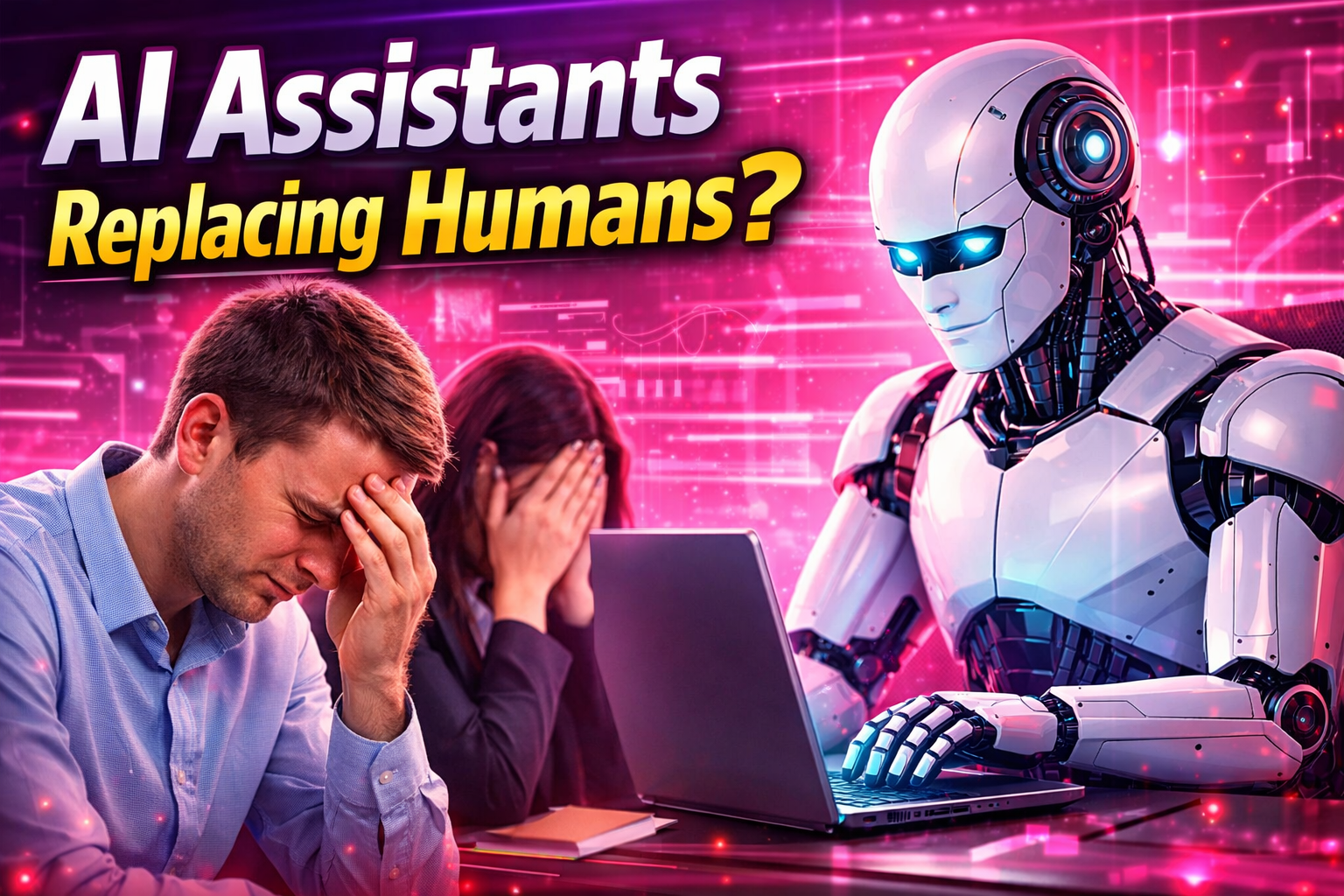
AI Personal Assistants 2026: The Smart Technology That Could Replace Dozens of Everyday Tasks
Artificial intelligence has already transformed many aspects of modern life, from how people search the internet to how businesses manage data. In 2026, however, a new generation of intelligent software known as AI personal assistants is beginning to change the way individuals and companies handle everyday tasks.
These advanced digital assistants go far beyond the simple voice helpers that people once used to set alarms or ask for weather updates. Today’s AI systems are capable of managing complex activities, organizing schedules, creating content, analyzing information, and even assisting with business decisions.
Experts believe this technology could soon become one of the most influential innovations of the decade.
The Evolution of AI Assistants
Early digital assistants were limited in what they could do. They could respond to basic voice commands or search the internet for quick answers, but they lacked deeper understanding and the ability to perform complex work.
Modern AI assistants, however, are powered by advanced machine learning models that allow them to process large amounts of information and respond intelligently to detailed instructions. These systems can understand context, learn user preferences, and adapt to different tasks.
For example, a modern AI assistant can help organize an entire workday. It can scan emails, schedule meetings, prepare summaries of documents, create reports, and even generate presentations for business discussions.
Instead of switching between multiple applications, users can simply instruct the AI assistant to complete tasks automatically.
Transforming Productivity in the Workplace
One of the biggest impacts of AI assistants is being seen in professional environments. Businesses are increasingly using AI tools to streamline operations and improve productivity.
Administrative tasks such as data entry, appointment scheduling, customer inquiries, and document preparation can now be handled quickly by intelligent software. This allows employees to focus on more strategic work that requires creativity and decision-making.
For example, a company executive might ask an AI assistant to review hundreds of emails and highlight only the most important messages. The assistant could also create a daily summary of business updates, saving valuable time.
Small businesses are also benefiting from this technology. Many startups do not have large teams, but AI assistants allow them to automate marketing campaigns, track customer behavior, and generate reports without hiring additional staff.
As a result, companies of all sizes are becoming more efficient.
How AI Is Changing Daily Life
AI assistants are not limited to offices. They are also becoming powerful tools for personal use.
Many people already rely on digital assistants to manage calendars, set reminders, and answer questions. New AI systems take these abilities even further by acting as personal productivity managers.
For instance, an AI assistant might help a user plan an entire trip. It could search for flights, compare hotel prices, create a travel schedule, and send reminders about departure times.
Students may use AI assistants to organize study plans, summarize long textbooks, and generate practice questions for exams. Professionals might rely on them to draft emails, manage projects, and monitor deadlines.
This level of automation could dramatically simplify daily routines.
Concerns About Job Disruption
While the benefits of AI assistants are clear, some experts are concerned about how the technology might affect employment.
Because these systems can perform many routine tasks, certain roles that involve repetitive administrative work may gradually decline. Jobs focused on scheduling, data organization, or basic customer communication could be particularly affected.
However, many economists argue that technological change has historically created new opportunities even as it replaced older forms of work.
As AI assistants become more common, new careers may emerge in areas such as AI management, system training, cybersecurity, and digital workflow design.
In other words, rather than eliminating work entirely, AI may simply change the types of skills that are most valuable.
The Importance of Responsible Development
Another major discussion surrounding AI assistants involves ethics and data privacy.
Because these tools often access personal emails, schedules, and documents, protecting user information is extremely important. Technology companies are therefore investing heavily in security systems to ensure that sensitive data remains safe.
Governments and international organizations are also exploring regulations that encourage responsible AI development. These policies may require transparency in how AI systems operate and how they use data.
Ensuring that humans remain in control of important decisions is considered essential for maintaining public trust.
The Future of AI Assistants
The capabilities of AI assistants are expected to grow rapidly in the coming years. Developers are working on systems that can understand voice, text, and images simultaneously, allowing them to interact with users more naturally.
Future assistants may be able to manage entire digital ecosystems. They could coordinate smart home devices, track health information, monitor finances, and help individuals make informed decisions about daily activities.
Some experts even predict that AI assistants could become personalized digital partners that learn from users over time and provide tailored recommendations for work, travel, education, and lifestyle choices.
While the technology is still evolving, its influence is already becoming clear.
A New Era of Human-AI Collaboration
The rise of AI personal assistants marks the beginning of a new relationship between humans and technology. Instead of simply using software tools, people may soon collaborate with intelligent systems that help them manage information and make better decisions.
Businesses will likely continue integrating AI assistants into their workflows, while individuals adopt them as everyday productivity tools.
Although challenges related to privacy, employment, and regulation will need careful attention, the overall potential of AI assistants remains enormous.
As artificial intelligence continues to advance, these digital helpers could redefine how people work, learn, and organize their lives in the years ahead.