

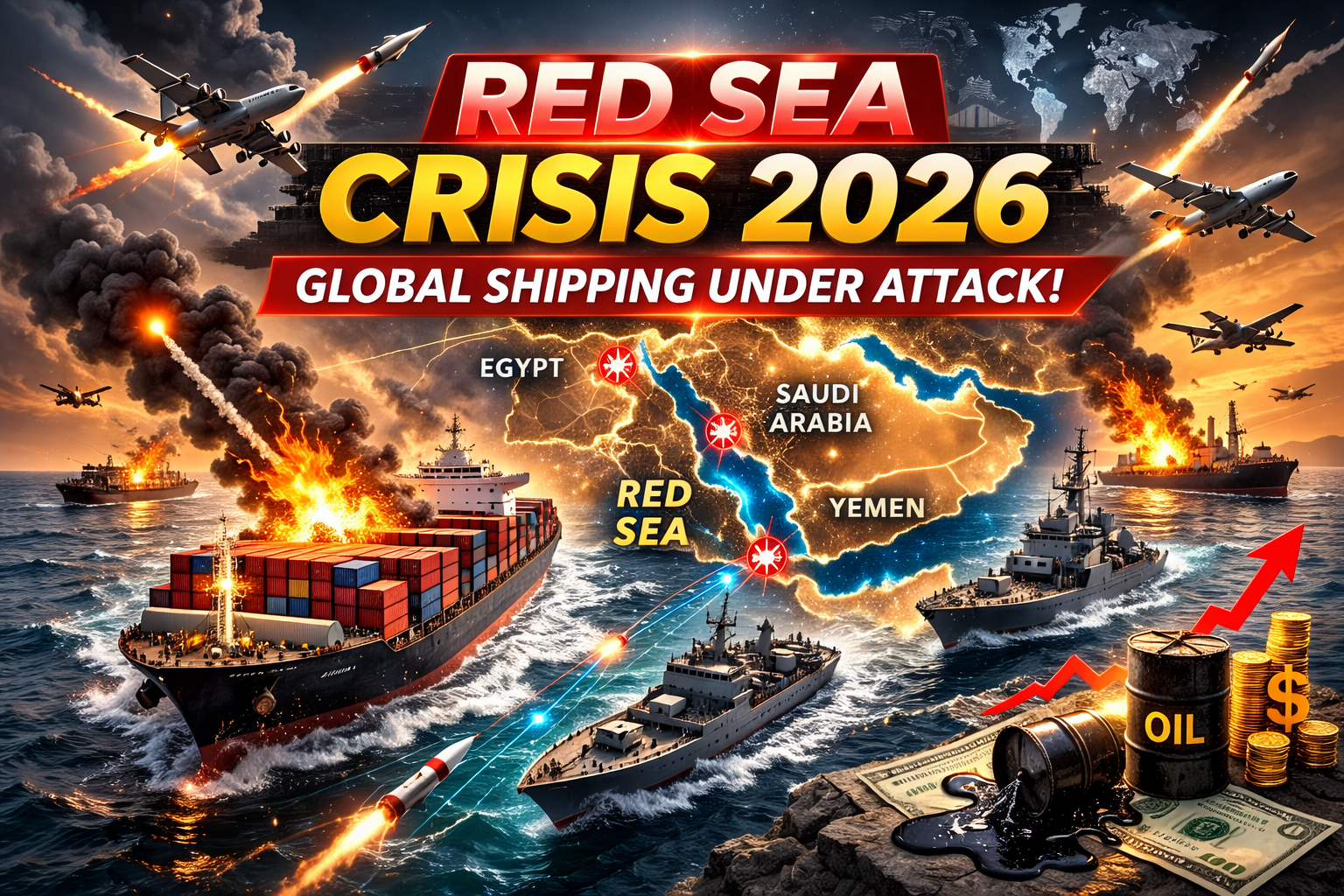
Red Sea Crisis 2026: Shipping Attacks Disrupt Global Trade and Raise Security Concerns
The Red Sea Crisis 2026 is rapidly emerging as one of the most significant global security challenges, as attacks on cargo ships and rising tensions in the region disrupt one of the world’s most critical maritime trade routes. The Red Sea connects the Mediterranean Sea with the Indian Ocean through the Suez Canal, making it a vital passage for international shipping and global commerce.
Over the past few months, multiple commercial vessels traveling through the Red Sea have reported missile threats, drone attacks, and security incidents. These developments have raised serious concerns among governments, shipping companies, and international organizations about the safety of global trade routes.
Rising Attacks on Commercial Ships
The crisis intensified after several cargo ships and oil tankers reported attacks or attempted strikes while passing through the region. Some vessels were forced to change course, while others required military escort to safely continue their journey.
Maritime security agencies have warned that these incidents are becoming more frequent, increasing the risk for commercial shipping companies operating in the area. Shipping firms have begun reassessing their routes, with some choosing to avoid the Red Sea entirely and take longer alternative paths around southern Africa.
These changes are not only affecting shipping schedules but also increasing transportation costs for global trade.
Impact on Global Trade
The Red Sea is one of the busiest maritime corridors in the world. Every year, thousands of cargo ships carrying oil, consumer goods, electronics, and raw materials pass through this route. Any disruption in this region can quickly affect supply chains worldwide.
Experts estimate that nearly 12 percent of global trade passes through the Red Sea and the nearby Suez Canal. If shipping companies continue to divert vessels away from this region, delivery times for goods traveling between Asia and Europe could increase by several weeks.
Such delays can also lead to higher transportation costs, which may eventually affect prices for consumers around the world.
Oil and Energy Market Concerns
One of the most immediate consequences of the Red Sea Crisis 2026 has been the growing uncertainty in global energy markets. Oil tankers frequently use this route to transport crude oil from the Middle East to Europe and other regions.
Any disruption to these shipments can create concerns about global energy supplies. As a result, oil prices have shown signs of volatility as traders monitor the situation closely.
Energy analysts warn that if the crisis escalates further, it could put additional pressure on already fragile global energy markets.
Military Response and Security Measures
In response to the growing threat to shipping lanes, several countries have deployed naval forces to the region. International coalitions are working together to monitor maritime traffic and protect commercial vessels traveling through high-risk areas.
Warships and surveillance aircraft are now regularly patrolling parts of the Red Sea to detect potential threats and respond quickly to emergencies.
These security measures aim to ensure that international trade can continue without major disruptions, although tensions in the region remain high.
Shipping Industry Adjustments
The global shipping industry is already feeling the impact of the crisis. Insurance costs for vessels passing through the Red Sea have increased significantly due to the heightened risk.
Some shipping companies have introduced new safety protocols, including increased security measures on board ships and coordination with naval forces in the region.
Meanwhile, logistics companies are adjusting delivery schedules to account for possible delays caused by route changes or security checks.
Global Economic Implications
The Red Sea Crisis 2026 highlights how geopolitical instability in one region can quickly affect the global economy. From rising shipping costs to potential energy supply disruptions, the crisis has far-reaching implications for businesses and consumers worldwide.
If tensions continue to escalate, experts warn that the global supply chain could face additional pressure, particularly in industries that rely heavily on international shipping.
Governments and international organizations are closely monitoring the situation and urging diplomatic efforts to reduce tensions and restore stability in the region.
What Happens Next?
While security operations are ongoing, the situation in the Red Sea remains unpredictable. Much will depend on diplomatic negotiations and the ability of international forces to maintain safe shipping routes.
For now, the Red Sea Crisis 2026 serves as a reminder of how critical maritime routes are to the global economy and how quickly geopolitical tensions can disrupt international trade.
As the world continues to watch developments in the region, businesses and governments are preparing for potential challenges that may arise if the crisis deepens further.