

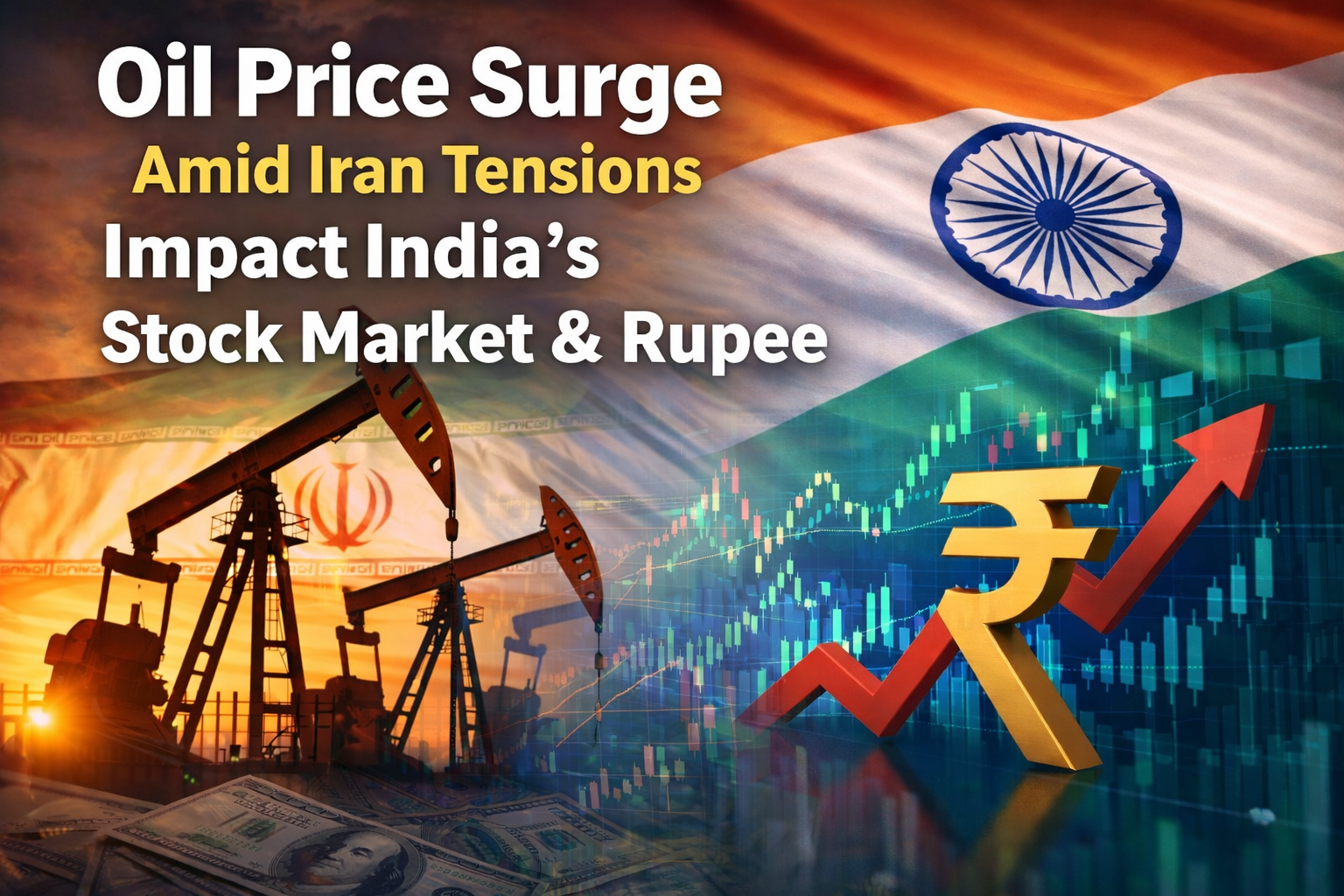
Oil Price Surge Amid Iran Tensions Raises Concerns for India’s Stock Market and Rupee
Global markets are closely watching rising geopolitical tensions involving Iran, as oil prices surge and begin to ripple through emerging economies. For India, which relies heavily on imported crude oil, the latest rally in global energy prices could pose a serious challenge to financial stability, the stock market, and the rupee.
Investors and economists are increasingly worried that a prolonged rise in oil prices could create inflationary pressure, widen the current account deficit, and force policymakers to adjust their monetary strategy.
Oil Prices Jump on Geopolitical Uncertainty
Crude oil prices often react sharply to geopolitical tensions in the Middle East, a region responsible for a large share of global oil production. When instability or conflict emerges, markets quickly factor in potential supply disruptions.
The recent escalation involving Iran has triggered exactly such fears. Traders are anticipating possible supply constraints, pushing crude prices upward in global markets. Even a moderate increase in oil prices can significantly affect countries that depend heavily on imports.
India imports more than 80% of its crude oil requirements, making it particularly vulnerable to fluctuations in global energy markets. As oil becomes more expensive, the country’s import bill rises, putting additional pressure on its economy.
Impact on the Indian Rupee
One of the first areas to feel the impact of rising oil prices is the currency market. When oil becomes expensive, India needs more dollars to pay for imports. This increases demand for foreign currency and can weaken the rupee.
A weaker rupee further amplifies the cost of imports, creating a cycle that adds to inflationary pressures. Energy prices influence transportation, manufacturing, and even food costs, meaning higher oil prices can gradually affect the entire economy.
Currency traders are already watching the rupee closely as global oil prices climb. If geopolitical tensions continue to push crude prices higher, the rupee could face additional depreciation pressure in the coming weeks.
Stock Market Sensitivity to Oil Prices
India’s stock market also tends to react negatively when oil prices spike. Several sectors are directly affected by higher energy costs, including aviation, logistics, chemicals, and manufacturing.
Companies operating in these sectors often see their operating costs rise sharply when crude prices increase. Unless they pass these costs on to consumers, profit margins can shrink.
At the same time, rising inflation fears can make investors cautious. When inflation rises, interest rates may remain higher for longer, which can slow economic growth and reduce corporate earnings expectations.
As a result, market sentiment can turn cautious, leading to increased volatility in benchmark indices. Investors may move money into safer assets until the geopolitical situation becomes clearer.
RBI’s Strategy to Manage the Situation
The central bank, Reserve Bank of India, plays a crucial role in managing economic stability during such global shocks. Policymakers are expected to closely monitor both currency movements and inflation trends.
If oil prices remain elevated, the RBI may need to intervene in currency markets to prevent excessive rupee volatility. This can involve selling foreign exchange reserves to stabilize the currency.
Another important consideration is inflation. Higher oil prices can push consumer price inflation upward. If inflation remains above target levels, the RBI might delay potential interest rate cuts or adopt a more cautious monetary policy stance.
Maintaining a balance between controlling inflation and supporting economic growth will be a key challenge for the central bank.
Investors Advised to Stay Cautious
Market analysts suggest that investors should remain cautious during periods of geopolitical uncertainty. While short-term volatility may increase, long-term investors are often advised to focus on strong fundamentals rather than temporary market swings.
Energy companies and oil producers sometimes benefit from rising crude prices, while sectors heavily dependent on fuel costs may struggle. Diversification across sectors can help reduce risk during such uncertain periods.
Additionally, investors should keep an eye on global developments, as geopolitical events can evolve rapidly and shift market sentiment within hours.
The Road Ahead
The trajectory of oil prices in the coming weeks will largely depend on how tensions involving Iran unfold. If the situation stabilizes, markets may quickly calm down and crude prices could retreat.
However, if geopolitical tensions escalate further, oil prices could remain elevated, creating sustained pressure on India’s currency, inflation levels, and financial markets.
For policymakers, the priority will be ensuring macroeconomic stability while shielding the economy from external shocks. For investors, the key will be navigating uncertainty while keeping a long-term perspective.
As global energy markets remain volatile, the interplay between oil prices, the rupee, and stock market sentiment will continue to shape India’s economic outlook in the near future. 📊