

Google‘s May Be Preparing Its Boldest AI Move So Far
The AI race just got more intense.
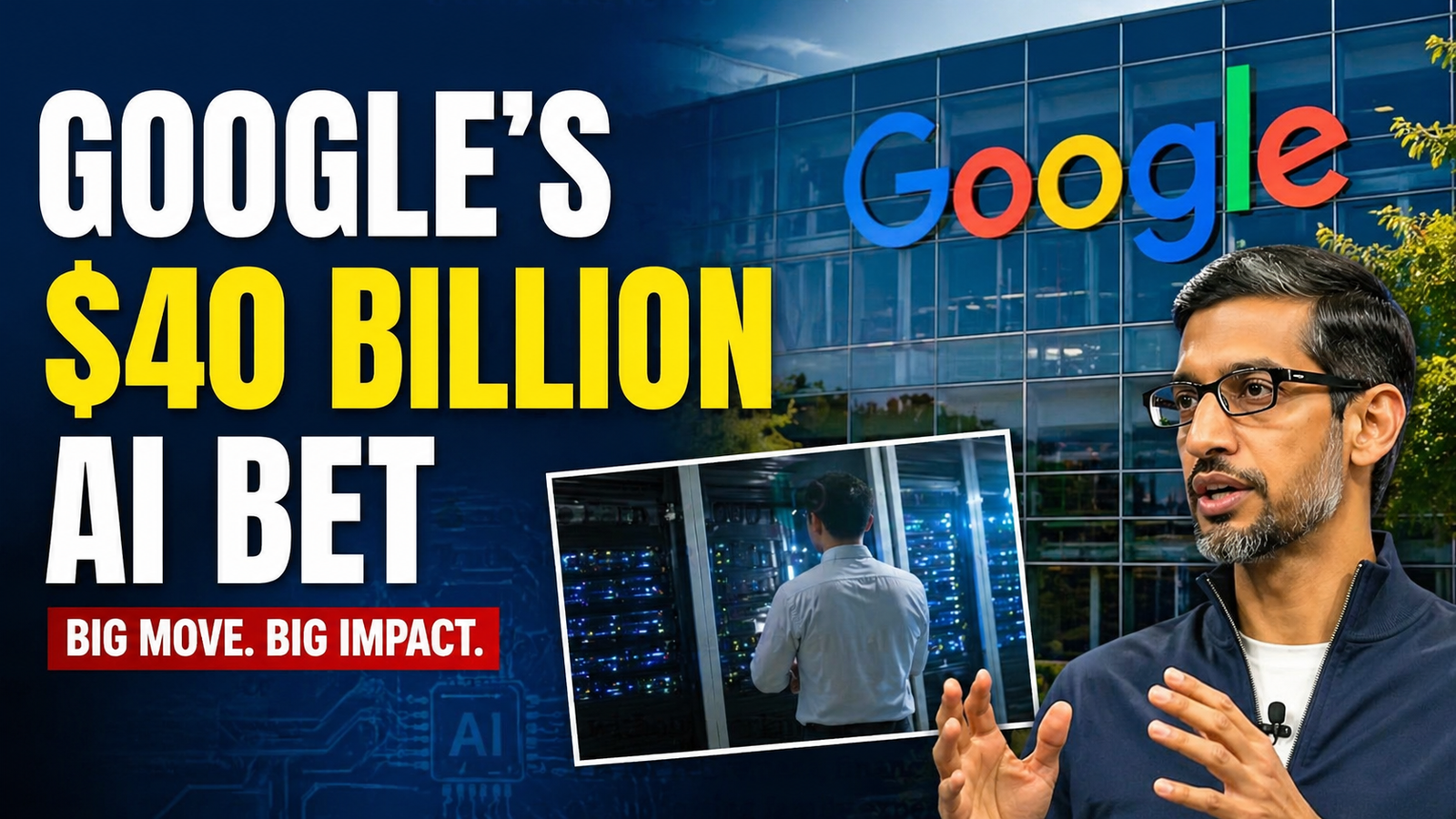
Alphabet, the parent company of Google, is reportedly exploring a huge $40 billion investment tied to artificial intelligence growth. If that number sounds wild, honestly, it is. Even by Big Tech standards, this would be one of the boldest AI-related spending moves we’ve seen.
And here’s the thing — when Google moves at this scale, the entire tech world pays attention.
This isn’t just about one company spending money. It could shape how we search online, how smart assistants work, how businesses operate, and how fast AI tools become part of daily life.
So what’s really happening, and why does it matter now?
What Is Alphabet Reportedly Planning?
According to reports, Alphabet is looking at a major long-term investment focused on expanding its artificial intelligence capabilities. That includes things like:
- Building more advanced data centers
- Buying high-performance AI chips
- Expanding cloud infrastructure
- Supporting next-generation AI models
- Competing more aggressively with rivals in generative AI
The reported figure — around $40 billion — shows just how serious the company may be about the next phase of AI.
Truth is, this doesn’t come out of nowhere.
Google has been involved in AI for years. From search ranking systems to language translation, maps, Gmail smart replies, and image recognition, AI has already powered many Google products quietly in the background.
But the public explosion of chatbots and generative AI tools changed the pace of the game.
Now, everyone wants faster, smarter, more useful AI. And companies know whoever leads this space could dominate the next decade.
Why This Matters Right Now
Timing is everything.
AI Robot Beats Human Players in Ping Pong — And It’s Raising Bigger Questions Than You Think
Over the past two years, users have changed how they interact with technology. Instead of only typing search queries, people now ask full questions, request summaries, generate images, draft emails, and solve problems through AI tools.
That shift matters because it challenges the traditional internet model Google built its empire on.
Search is still massive. But if users begin relying more on conversational AI, Google has to evolve quickly. Not slowly. Quickly.
That’s likely why a giant investment now would make sense.
It could help Alphabet move faster in three key areas:
1. Better Consumer AI Products
Users expect smarter search results, more accurate assistants, and tools that save time.
2. Stronger Cloud Business
Companies need AI infrastructure. Google Cloud wants to compete with other giants serving enterprise clients.
3. Staying Ahead of Rivals
Let’s be real: no major tech company wants to be seen as late to the future.
What It Could Mean for Everyday Users
This is where the story gets interesting.
When tech giants invest billions, regular people often feel the impact later through products they already use.
If Alphabet expands AI aggressively, users may notice:
Smarter Google Search
Search results could become more conversational, personalized, and direct.
Better Android Features
Phones may get stronger on-device AI tools for photos, writing, translation, battery optimization, and voice commands.
More Useful Workspace Tools
Google Docs, Gmail, Sheets, and Meet could become more automated and efficient.
Faster AI Tools for Small Businesses
Marketing, analytics, customer support, and content creation tools may become easier to access.
Better Language Support
This matters globally. AI improvements often help translation and multilingual users significantly.
So yes, this is a business story. But it can eventually become a daily life story too.
Why AI Investments Are So Expensive
Many readers ask the same question: why does AI cost this much?
Simple answer: computing power.
Training and running modern AI models requires:
- Huge server farms
- Advanced GPUs and AI chips
- Massive electricity usage
- High-end cooling systems
- Thousands of engineers and researchers
- Constant upgrades
That means only a few companies in the world can realistically compete at the top level.
This is why every new billion-dollar AI investment grabs headlines.
It’s not just money. It’s a signal of who intends to lead.
Could This Affect Jobs?
Honestly, yes — but not in one simple direction.
AI may automate some repetitive work, especially tasks involving basic writing, support, sorting, or routine admin work.
At the same time, it can create demand for:
- AI engineers
- Cybersecurity professionals
- Data specialists
- Product managers
- Prompt designers
- Cloud infrastructure workers
- Human reviewers and trainers
History usually shows technology changes jobs more than it simply removes them.
Still, transitions can be uncomfortable. That’s why this topic creates both excitement and anxiety.
Investors and Markets Will Watch Closely
Wall Street tends to reward companies seen as future-ready.
If Alphabet convinces investors that its AI spending will create stronger revenue later, markets may react positively. But if spending rises too fast without clear returns, critics could push back.
That tension is normal.
Big bets always come with pressure.
Especially when expectations are already sky-high.
What Happens Next?
WhatsApp New Feature Might Save You From Your Most Embarrassing Messages 😳
Nothing is guaranteed until officially confirmed or fully executed, but here are realistic next steps people will watch:
More AI Product Launches
Expect smarter search features, upgraded assistants, and faster tools.
Infrastructure Expansion
More data centers, more chip partnerships, more global AI capacity.
Competitive Pressure
Other tech giants may increase their own spending in response.
Regulatory Questions
As AI grows, governments may demand stronger rules around privacy, competition, and transparency.
Consumer Adoption
Ultimately, users decide what wins. Fancy technology means nothing if people don’t find it useful.
The Bigger Truth Behind This Story
Surprisingly, this story isn’t only about Google.
It’s about how the internet itself may be changing again.
We’ve gone from desktop browsing to mobile apps. Then from social feeds to creator platforms. Now we may be entering the AI-first phase of digital life.
That means how we learn, shop, work, search, create, and communicate could keep shifting rapidly.
Alphabet’s reported $40 billion move matters because it reflects that reality.
The biggest companies on Earth believe AI is no longer optional.
It’s foundational.
FAQ
Is Alphabet really investing $40 billion in AI?
Reports suggest Alphabet is considering or planning a major investment tied to AI expansion. Exact figures and timelines can change until officially finalized.
Why does Google need to spend so much?
Advanced AI requires expensive chips, data centers, energy, cloud systems, and top engineering talent.
Will Google Search change because of AI?
Very likely. Search is already evolving with AI summaries, smarter answers, and conversational tools.
Can this impact normal users?
Yes. Better phones, improved search, stronger productivity tools, translation, and smarter assistants are all possible outcomes.
Is this good or bad for jobs?
It could be both. Some tasks may be automated, while new technical and creative roles may grow.
Why is everyone talking about the AI race?
Because AI may influence business, education, media, software, and everyday digital habits for years to come.
Conclusion
Here’s the honest takeaway: when a company as powerful as Alphabet reportedly considers a $40 billion AI push, it’s not random spending. It’s a sign of where technology is heading.
Whether you’re excited, skeptical, or somewhere in between, this kind of move tells us one thing clearly — AI is becoming central to the next chapter of the internet.
And we’re all going to feel that shift sooner than many expect.