

🚨
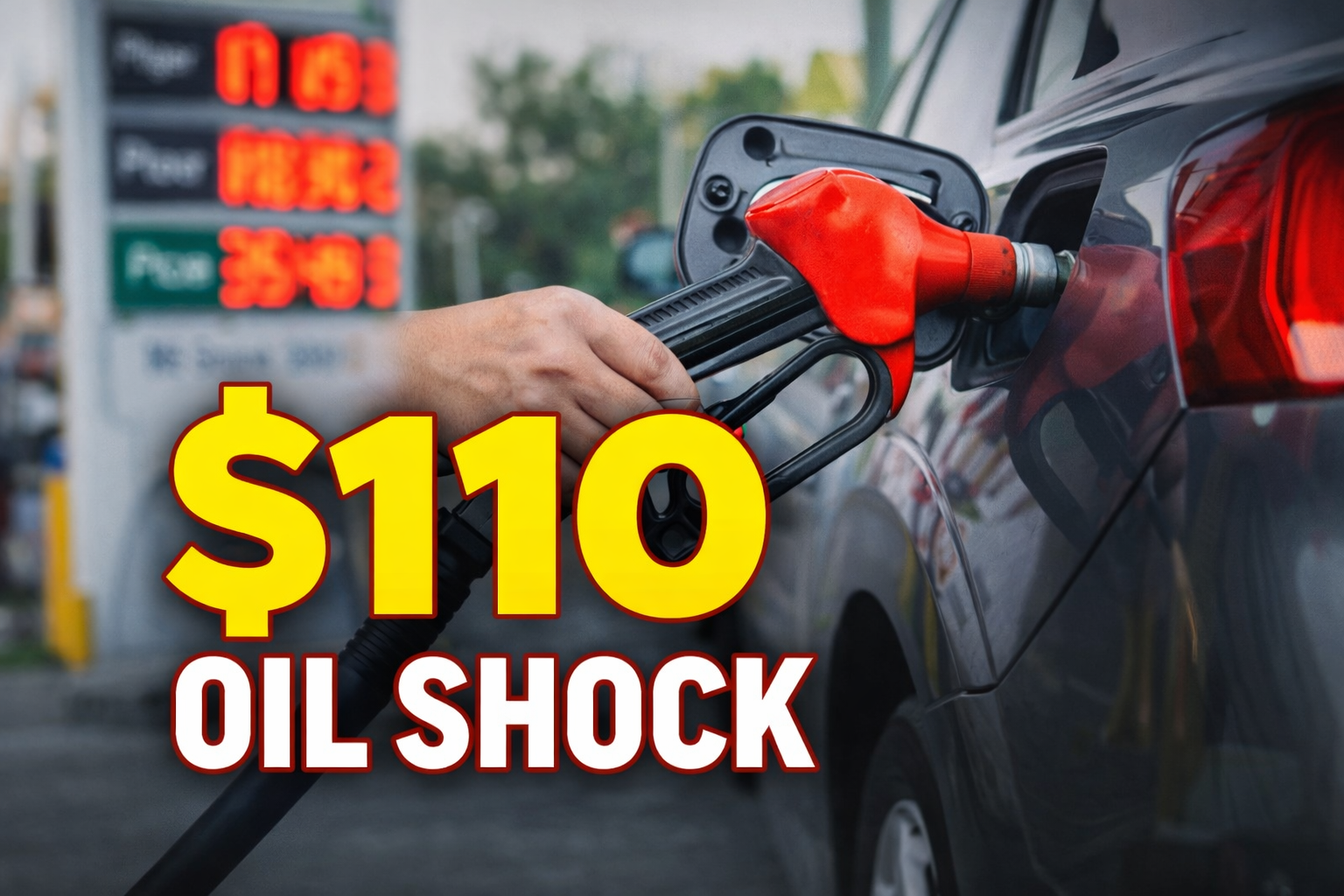
“Petrol Prices Could Rise Again… Here’s What the $110 Oil Shock Means for You”
🧠 Intro
You might not feel it today.
Maybe not even tomorrow.
But very soon…
your daily petrol cost could quietly go up again.
And no, this isn’t just another random prediction.
Global oil prices have suddenly crossed the $110 mark, and that’s the kind of number that usually triggers a chain reaction — fuel prices, transport costs, food delivery… everything.
It starts small.
Then suddenly, your monthly expenses feel heavier.
So the real question is:
👉 How bad can this actually get for common people like us?
📊 What Exactly Happened? (Simple Explanation)
Over the past few days, global crude oil prices have seen a sharp jump — crossing $110 per barrel, which is a big psychological and economic level.
This didn’t happen randomly.
A mix of global supply concerns, trade pressure, and production uncertainty has made markets nervous.
And when markets panic…
👉 oil prices go up
👉 and when oil goes up… everything follows
💥 Why This Matters More Than You Think
Let’s be real for a second.
Most people don’t track oil prices daily.
But you do notice when:
- Petrol crosses ₹100+ ⛽
- Auto fares increase 🚕
- Food delivery gets expensive 🍔
- Grocery bills slowly rise 🛒
That’s the ripple effect.
👉 Oil is not just fuel — it’s the backbone of transportation.
So when it spikes to $110, it hits almost every part of daily life.
🧍♂️ Real Impact on Common People
This is where it gets personal.
If this trend continues, you could start noticing:
🚗 1. Petrol & Diesel Price Hike
Even a small increase globally can lead to:
- ₹2–₹5 rise per litre (or more over time)
🛵 2. Daily Travel Becomes Costly
- Bike riders feel it immediately
- Cab & auto fares slowly increase
🍽️ 3. Food Prices Go Up
Transport cost ↑ =
Vegetables, milk, essentials all get slightly expensive
📦 4. Online Deliveries Cost More
- Higher delivery charges
- Surge pricing becomes common
And the worst part?
👉 It doesn’t hit all at once
👉 It builds slowly… and drains your wallet without you realizing
📉 What’s Causing This Oil Surge?
Alright, quick breakdown (keeping it simple):
- Global supply concerns
- Trade tensions affecting oil flow
- Production limits from key oil-producing regions
- Increased demand in some countries
Even a small imbalance in supply vs demand can push prices up fast.
And right now?
👉 The balance is shaky
🏦 What Governments Might Do Next
Governments usually step in when things get serious.
Possible actions include:
- Adjusting fuel taxes
- Releasing oil reserves
- Price control measures
But here’s the catch…
👉 These steps take time
👉 And sometimes, prices rise before relief comes
📈 What Happens Next? (Short-Term Outlook)
No one can predict exact numbers, but trends suggest:
- Prices may stay volatile for a few weeks
- Sudden spikes or drops are possible
- Fuel price revisions could follow soon
So yes…
👉 This situation is still developing
💡 What You Can Actually Do (Practical Tips)
Not everything is in your control, but a few smart moves can help:
- Combine trips to save fuel
- Use public transport occasionally
- Track fuel price trends weekly
- Avoid unnecessary travel when prices spike
Small changes… but they add up.
🔍 Why This $110 Oil Level Is a Big Deal (Not Just Another Number)
Let’s be honest — most of us don’t sit and track global oil charts every day.
You wake up, go to work, maybe scroll your phone… and life moves on.
But numbers like $110 per barrel?
Yeah, those are the ones that quietly start changing things behind the scenes.
This isn’t just a “finance people” topic.
It’s the kind of shift that slowly creeps into your everyday life — without warning.
Because here’s the thing…
Oil is not just about petrol.
It’s connected to almost everything you spend money on.
From the vegetables in your kitchen…
to the delivery bike bringing your food…
to the bus or cab you take daily…
👉 Oil sits somewhere in that chain.
So when it jumps this high, it creates a ripple effect — and that ripple eventually reaches you.
📦 The Hidden Chain Reaction Most People Don’t Notice
At first, nothing looks different.
Petrol prices might stay the same for a few days.
Shops don’t immediately increase prices.
Apps don’t suddenly charge more.
But behind the scenes?
Costs start building up.
Transport companies begin paying more for fuel.
Delivery services start adjusting their margins.
Businesses slowly prepare for higher expenses.
And then… step by step…
- A ₹2 increase here
- A ₹5 delivery fee there
- Slightly higher grocery bills next week
It doesn’t hit you all at once.
That’s what makes it dangerous.
👉 It’s slow… but consistent.
And by the end of the month, you’re left wondering:
“Why am I spending more than usual?”
🧠 Why Prices Don’t Drop As Fast As They Rise
This part frustrates a lot of people.
When oil prices go up → fuel prices increase quickly
But when oil prices fall → relief comes slowly
Why?
Because pricing isn’t just about raw oil.
There are:
- Taxes
- Transportation costs
- Refining expenses
- Government policies
So even if global prices cool down later…
👉 you might not feel the benefit immediately
And that delay is what keeps pressure on common people.
📉 Is This Temporary or Something Bigger?
Right now, the situation is still developing.
Some experts believe this could be a short-term spike caused by supply pressure.
Others think we might see continued volatility — meaning prices could go up and down unpredictably.
And that uncertainty?
👉 That’s what markets (and people) don’t like.
Because when things are uncertain, businesses play safe —
and “playing safe” usually means increasing prices to avoid losses.
🏠 How This Affects Your Monthly Budget (Real Talk)
Let’s bring this down to real life.
Imagine this:
- You spend ₹3000/month on petrol
- Prices go up slightly → now it’s ₹3300–₹3500
Add to that:
- Higher grocery bills
- Increased delivery charges
- Occasional transport fare hikes
Now your monthly spending quietly increases by ₹1000 or more.
No big announcement.
No warning notification.
Just… more money going out.
💭 The Bottom Line (Simple & Real)
This isn’t about panic.
But it is about awareness.
Because oil crossing $110 is one of those signals that usually leads to:
👉 Higher fuel costs
👉 Increased daily expenses
👉 More pressure on your budget
Maybe not instantly.
But gradually… and noticeably.
So yeah — you don’t need to stress.
But you should keep an eye on it.
Because the next time you stop at a petrol bunk or order something online…
👉 you might start noticing the difference.
❓ FAQ Section (Important for SEO)
1. Why are oil prices rising suddenly?
Because of global supply concerns and market uncertainty affecting production and trade.
2. Will petrol prices increase immediately?
Not instantly, but if oil stays above $110, increases are very likely.
3. How much can fuel prices rise?
It depends, but even a ₹2–₹5 increase per litre is possible initially.
4. Is this a temporary spike?
It could be short-term, but volatility is expected in coming weeks.
🧾 Conclusion
This is one of those situations where…
Nothing feels urgent right now.
But the impact builds quietly.
Oil at $110 isn’t just a number on global charts.
It’s something that slowly shows up in your everyday spending.
So yeah…
you might want to keep an eye on this.
Because the next time you visit a petrol bunk,
👉 the price might not be the same anymore.