

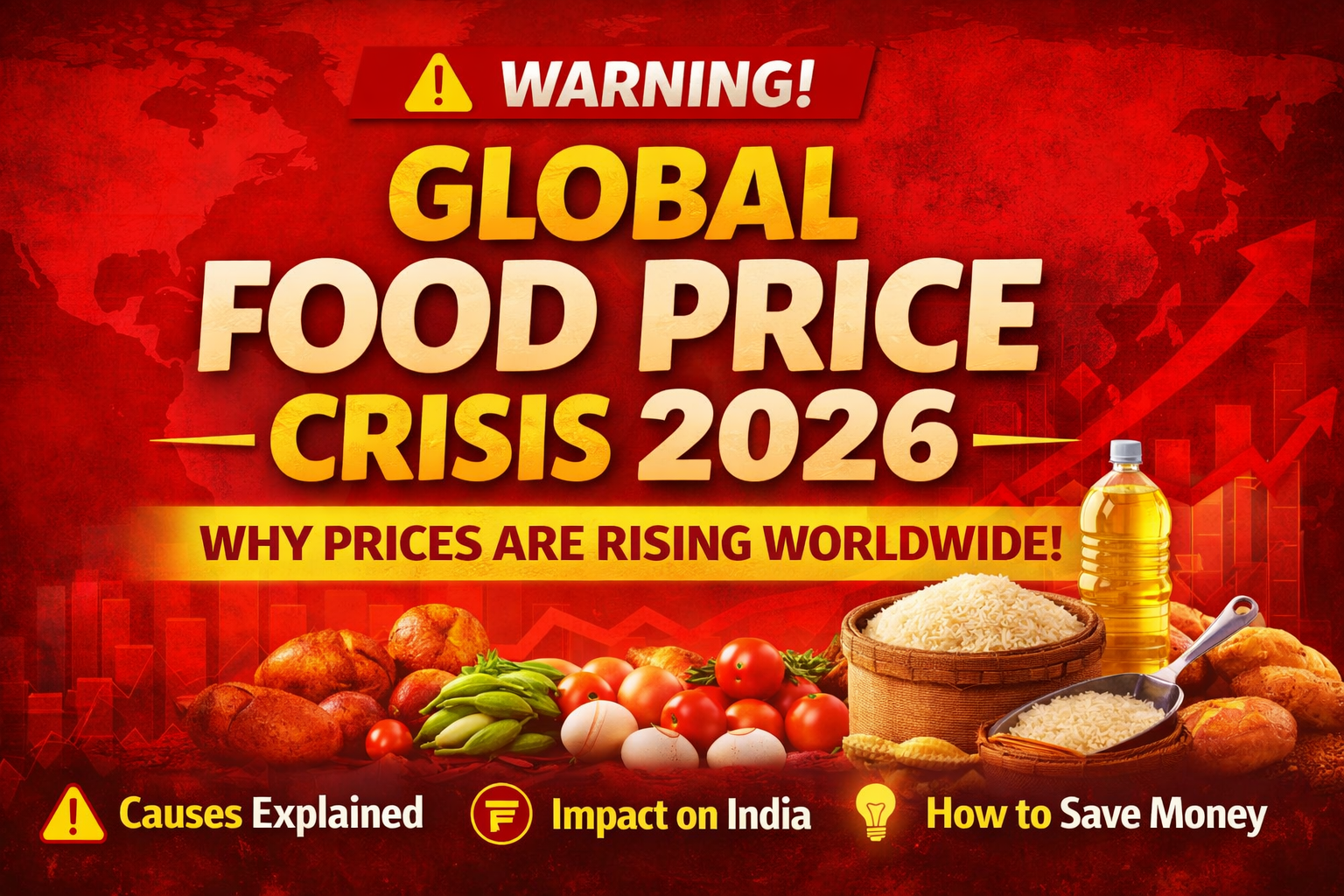
📰 Global Food Price Crisis 2026: Why Prices Are Rising Worldwide
🌍 Introduction
Global Food Price Crisis 2026 is becoming one of the biggest global concerns as food prices continue to rise rapidly across the world. From essential groceries to daily food items, people are facing increasing costs that are affecting their monthly budgets…
Food prices across the world are rising at an alarming rate in 2026, creating concern among governments, economists, and ordinary citizens. From vegetables and grains to cooking oil and dairy products, the cost of essential food items has increased significantly in many countries. This global food price crisis is not just a temporary issue but a complex situation driven by multiple factors such as climate change, supply chain disruptions, geopolitical tensions, and increasing demand.
For countries like India, where a large portion of the population depends on affordable food, rising prices can directly impact daily life. Understanding why this crisis is happening and what can be done to manage it is essential for everyone.
📊 What is the Global Food Price Crisis?
The global food price crisis refers to a situation where the cost of food items increases rapidly across multiple countries at the same time. This is not limited to one region but is affecting both developed and developing nations.
In recent months, reports have shown that staple foods such as wheat, rice, and edible oils have seen price hikes due to reduced supply and increased demand. This imbalance has made it difficult for governments to maintain stable prices.
🔍 Detailed Explanation of the Situation
The current rise in food prices is a result of interconnected global systems. Food production, transportation, and distribution are all linked across countries. When one part of the system is disrupted, it affects the entire chain.
For example, if a major wheat-producing country faces drought, it reduces global supply. At the same time, if transportation costs increase due to fuel prices, the cost of delivering food also rises. These combined effects lead to higher prices for consumers.
Another important factor is inflation. As the cost of production increases, farmers and suppliers are forced to raise prices to maintain profitability. This creates a cycle where food becomes more expensive over time.
⚠️ Major Causes of Rising Food Prices
🌡️ Climate Change and Extreme Weather
Unpredictable weather conditions such as droughts, floods, and heatwaves are affecting crop production worldwide. Reduced yields lead to lower supply, which increases prices.
🚢 Supply Chain Disruptions
Global supply chains have been affected due to transportation delays, increased fuel costs, and logistical challenges. This slows down the movement of food from farms to markets.
🌍 Geopolitical Conflicts
Conflicts between countries can disrupt food exports. When major exporting countries reduce supply, global prices rise significantly.
📈 Increased Demand
With population growth, the demand for food is continuously increasing. When demand rises faster than supply, prices go up.
💰 Rising Production Costs
Farmers are facing higher costs for fertilizers, seeds, labor, and fuel. These increased costs are passed on to consumers.
📉 Impact on Daily Life
The rising cost of food is affecting households in multiple ways. Families are forced to spend a larger portion of their income on basic necessities, leaving less money for other expenses such as education and healthcare.
In urban areas, middle-class families are feeling the pressure as grocery bills increase every month. In rural areas, farmers are struggling with high production costs and uncertain income.
Small businesses such as restaurants and street vendors are also affected, as they have to either increase prices or reduce portion sizes to manage costs.
🌾 Impact on India
India is both a producer and consumer of food, which makes the situation complex. While the country produces large quantities of grains, it is still affected by global price trends.
Factors affecting India include:
- Increased cost of imported items like edible oil
- Weather-related crop damage
- Rising transportation costs
- Inflation
The government is closely monitoring the situation and taking steps to stabilize prices.
🛡️ Step-by-Step Ways to Manage Rising Food Costs
✅ Step 1: Plan Your Budget
Track your monthly expenses and allocate a fixed amount for groceries.
✅ Step 2: Avoid Food Waste
Use food efficiently and avoid unnecessary wastage.
✅ Step 3: Buy Seasonal Products
Seasonal fruits and vegetables are usually cheaper and fresher.
✅ Step 4: Compare Prices
Check prices in different stores or online platforms before buying.
✅ Step 5: Store Essentials Properly
Buying in bulk and storing properly can help save money.
💡 Real-Life Example
A middle-class family in a metro city recently noticed that their monthly grocery expenses increased by nearly 25% compared to last year. To manage this, they started buying seasonal vegetables, reducing food waste, and planning meals in advance. These small changes helped them control their expenses without compromising on nutrition.
🏛️ Government Actions
Governments across the world, including India, are taking steps to control food inflation:
- Releasing food stocks to stabilize supply
- Providing subsidies on essential items
- Regulating exports and imports
- Supporting farmers with financial aid
These measures aim to reduce the burden on consumers and ensure food availability.
📈 Future Outlook
Experts believe that food prices may remain high in the short term due to ongoing global challenges. However, long-term solutions such as sustainable farming, better storage systems, and improved supply chains can help stabilize prices.
Technology is also playing a role in improving agricultural productivity and reducing losses.
❓ FAQ Section
1. Why are food prices increasing globally?
Food prices are rising due to climate change, supply chain issues, and increased demand.
2. Is India heavily affected by this crisis?
India is affected but has some control due to its domestic production.
3. How can individuals manage rising costs?
By budgeting, reducing waste, and choosing affordable alternatives.
4. Will food prices decrease soon?
Prices may stabilize, but immediate reduction is uncertain.
5. What is the government doing?
Governments are controlling supply, providing subsidies, and supporting farmers.
🧠 Conclusion
The global food price crisis in 2026 is a serious issue that affects millions of people worldwide. While the causes are complex, understanding them can help individuals and governments take better decisions.
By adopting smart spending habits and supporting sustainable practices, it is possible to manage the impact of rising food prices. At the same time, long-term solutions are necessary to ensure food security for future generations.