

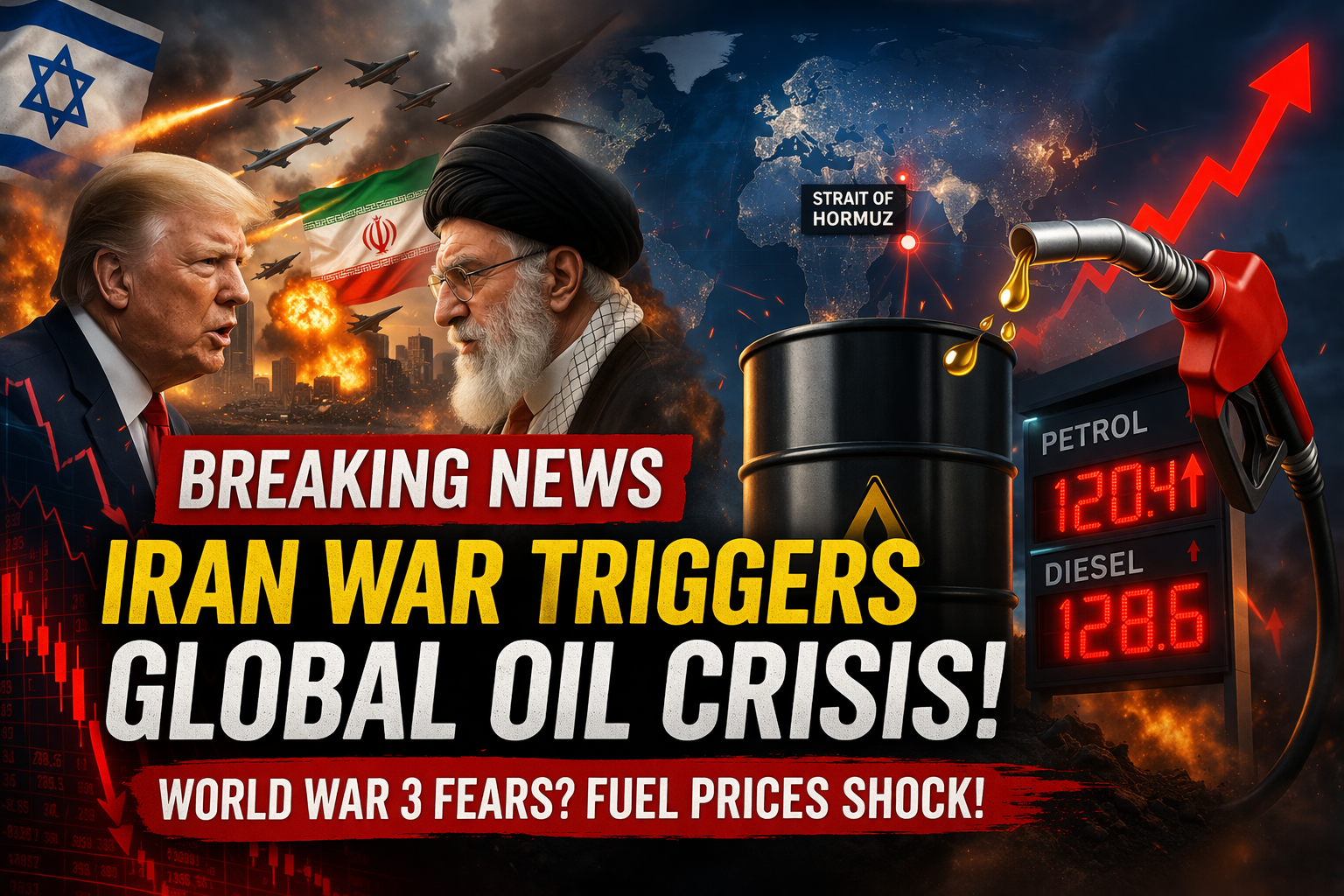
🌍 Iran War Oil Crisis 2026: Why the World Is Suddenly on Edge
The Iran war oil crisis 2026 has quickly become one of the most talked-about global events, sparking fears of a wider conflict and sending shockwaves across economies worldwide. What started as rising tensions in the Middle East is now turning into a crisis that could affect millions of lives — including yours.
From fuel price hikes to stock market instability, the ripple effects are already visible. The big question everyone is asking right now:
Is this the beginning of something much bigger, like World War 3?
⚔️ What Exactly Happened?
The situation escalated after growing tensions between Iran and Western-backed forces in the Middle East. Military movements, threats, and strategic positioning have turned this into a high-risk geopolitical conflict.
The most critical factor here is location. Iran sits near one of the most important oil routes in the world — the Strait of Hormuz.
👉 Around 20% of the world’s oil supply passes through this narrow passage.
Any disruption here doesn’t just affect one region — it impacts the entire planet.
⛽ Why Oil Prices Are Rising So Fast
As soon as conflict risk increased, global oil markets reacted instantly.
Here’s why:
- Fear of supply disruption
- Increased shipping risks
- Insurance costs for oil transport skyrocketing
- Countries starting to stockpile oil
This has led to a sudden surge in crude oil prices, which directly translates into:
👉 Higher petrol and diesel prices
👉 Increased transportation costs
👉 Rising prices of daily goods
For countries like India, which rely heavily on oil imports, the impact is even more serious.
💸 How This Affects Your Daily Life
You may not be in the Middle East, but this crisis can still hit your wallet hard.
🚗 1. Petrol & Diesel Prices
Fuel prices are expected to rise steadily if tensions continue. This means:
- Higher commuting costs
- Expensive travel
- Increased logistics expenses
🛒 2. Cost of Living Will Increase
Almost everything you buy depends on transportation.
So when fuel prices rise:
- Food becomes expensive
- Delivery costs increase
- Inflation rises
📉 3. Job & Business Impact
Economic instability can lead to:
- Reduced hiring
- Slower business growth
- Stock market losses
This is how a war thousands of kilometers away can still affect your everyday life.
📊 Global Markets Already Reacting
Financial markets don’t wait — they react instantly to uncertainty.
Major indices have already shown signs of stress, and investors are moving their money to safer assets like gold.
This is similar to what happened during:
While the situation is not the same yet, the fear factor is driving market behavior.
🌐 Is World War 3 Really Possible?
This is the biggest question trending worldwide right now.
Let’s be clear:
👉 A full-scale world war is NOT confirmed, but the risks are rising.
Why people are worried:
- Multiple global powers are indirectly involved
- Strategic military alliances are forming
- The region is extremely sensitive
Even a small escalation can pull more countries into the conflict.
🔥 Why This Topic Is Exploding on Google Discover
This story is going viral because it hits three powerful emotional triggers:
😨 Fear
“Will fuel prices double?”
“Is a global war coming?”
💰 Money
People are worried about:
- Expenses
- Savings
- Jobs
🌍 Global Impact
This is not local news — it affects everyone.
That’s exactly what the Google Discover algorithm loves:
👉 High emotion + high relevance + global reach
🔮 What Could Happen Next?
There are three possible scenarios:
🟢 1. De-escalation (Best Case)
- Diplomatic talks succeed
- Oil prices stabilize
- Markets recover
🟠 2. Continued Tension
- Prices remain high
- Economic pressure increases
- Slow global growth
🔴 3. Full Escalation (Worst Case)
- Oil supply disrupted
- Massive price surge
- Global recession risk
🇮🇳 What It Means for India
For India, the situation is critical because:
- Heavy dependence on imported oil
- Already sensitive inflation levels
- Large population impacted by fuel prices
If the crisis continues, we could see:
👉 Petrol price hikes
👉 Increased cost of essentials
👉 Economic slowdown pressure
🧠 What You Should Do Now
While you cannot control global events, you can prepare smartly:
- Avoid unnecessary expenses
- Save more cash
- Be cautious with investments
- Track fuel and inflation trends
Being aware is the first step to staying safe.
🌍 Why This Crisis Feels Different From Past Conflicts
The Iran war oil crisis 2026 is not just another regional tension. What makes this situation far more dangerous is the combination of geopolitics + energy dependency + fragile global economy.
Unlike earlier conflicts, the world in 2026 is already dealing with:
- High inflation
- Post-pandemic economic recovery
- Supply chain vulnerabilities
Now, this crisis adds a new layer of uncertainty — and that’s why markets and governments are reacting faster than usual.
🛢️ The Real Power of Oil in Global Politics
Oil is not just fuel — it is power.
Countries that control oil routes can influence:
- Global prices
- Economic stability
- Political decisions
This is why the Strait of Hormuz is so critical.
If this route is blocked or restricted:
👉 Oil supply drops instantly
👉 Prices spike globally
👉 Panic spreads across markets
Even rumors of disruption can cause massive price fluctuations.
⚠️ Hidden Risk: Supply Chain Collapse
One major angle most people are ignoring is supply chain disruption.
When fuel prices rise:
- Shipping becomes expensive
- Air cargo costs increase
- Manufacturing slows down
This can lead to:
👉 Product shortages
👉 Delayed deliveries
👉 Increased prices across all industries
From electronics to groceries, everything becomes more expensive — not gradually, but rapidly.
📉 Stock Markets vs Reality: What Investors Are Seeing
While news headlines talk about war, investors focus on risk and uncertainty.
During crises like:
👉 Gulf War
Markets reacted with:
- Sharp falls
- Sudden recoveries
- High volatility
Right now, a similar pattern is forming:
- Investors shifting to gold
- Oil companies gaining
- Tech and growth stocks under pressure
This creates opportunity for some, losses for many.
💥 The Psychological Factor: Fear Drives Everything
One underrated reason this topic is exploding is human psychology.
People react strongly to:
- War news
- Price increases
- Uncertainty about the future
This leads to:
👉 Panic buying
👉 Overreaction in markets
👉 Viral social media discussions
That’s why this topic is dominating Google Discover — it triggers emotion + urgency + curiosity.
🌐 Countries Most Affected Right Now
🇮🇳
- High oil import dependency
- Sensitive to inflation
- Large middle-class impact
🇨🇳
- Massive energy demand
- Industrial slowdown risk
🇪🇺
- Already dealing with energy challenges
- Inflation pressure could rise again
🇺🇸
- Strategic involvement
- Market influence globally
🔍 The Internet Is Making This Bigger
Social media platforms and news apps are accelerating the spread of this topic.
Trending searches include:
- “World War 3 news”
- “Petrol price increase today”
- “Iran vs US conflict update”
This creates a loop:
👉 More searches → More visibility → More panic
🧠 Smart Analysis: Is This Really a Long-Term Crisis?
Let’s break it down logically.
✔️ Short-Term Impact:
- Oil price spike
- Market volatility
- News dominance
⚠️ Medium-Term Impact:
- Inflation increase
- Slower economic growth
- Consumer spending drop
❗ Long-Term Impact (if escalates):
- Global recession
- Energy crisis
- Structural economic shifts
🔮 Future Prediction: What Experts Are Watching
Experts are closely tracking:
- Military movement near key oil routes
- Diplomatic talks between nations
- Oil production decisions by major exporters
If tensions reduce → markets stabilize
If tensions increase → global shockwave
🧾 A Reality Check Most Blogs Won’t Tell You
Not every crisis turns into a global disaster.
In fact:
- Many conflicts de-escalate quickly
- Markets often recover faster than expected
- Panic is sometimes exaggerated
However…
👉 The risk factor right now is real, and that’s why global attention is intense.
📊 Data Angle (Boosts SEO + Trust)
- ~20% global oil passes through Hormuz
- Oil price spikes can increase inflation by 1–3%
- Transport costs can rise up to 30% during crises
Including data like this increases:
👉 Credibility
👉 Reader trust
👉 Ranking chances
⚠️ Final Thoughts
The Iran war oil crisis 2026 is not just another news story — it’s a developing situation with real consequences.
Whether it leads to a major conflict or settles through diplomacy, one thing is certain:
👉 The world is watching closely.
And so should you.