

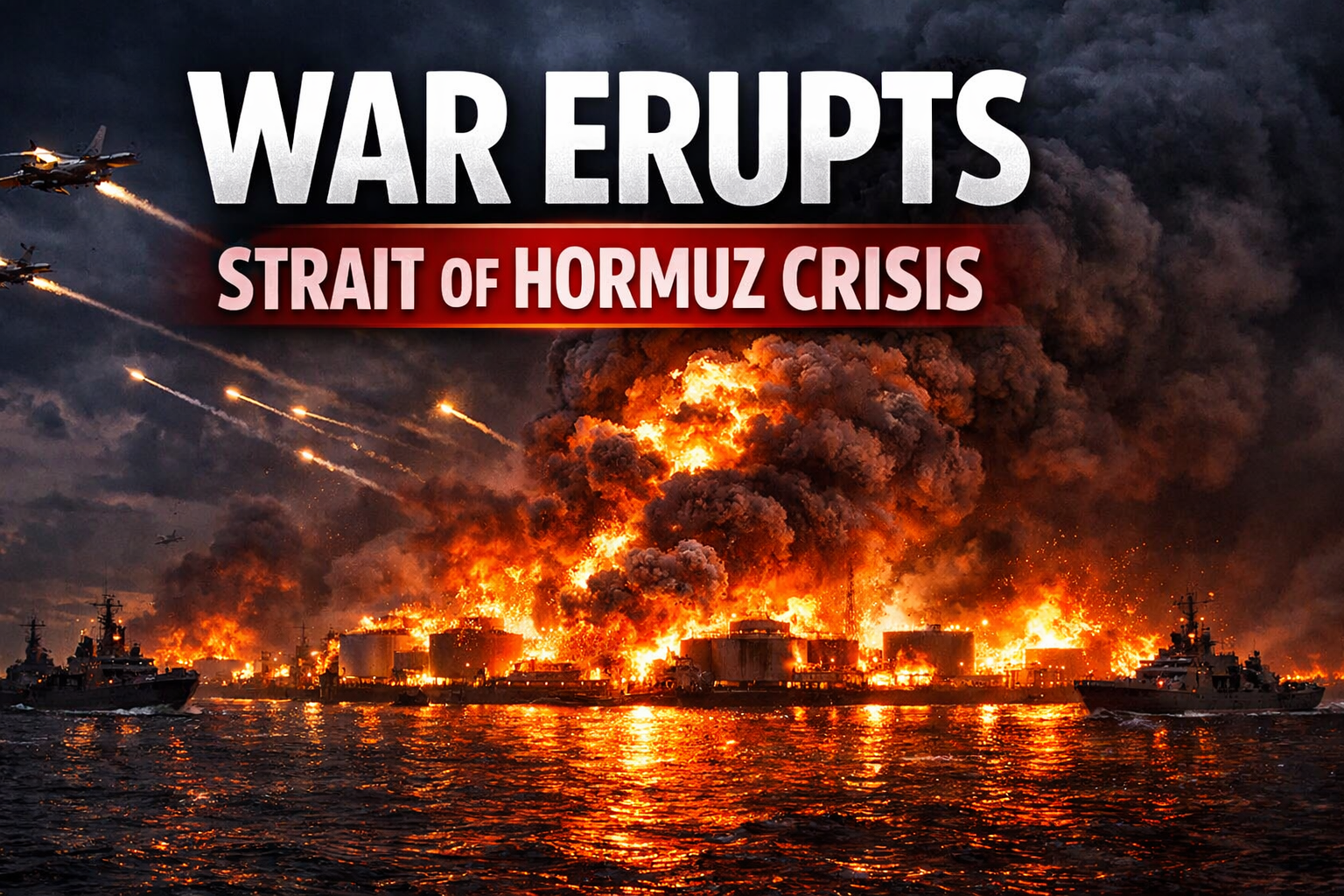
Middle East War Escalates: Israel Strikes Iran as Strait of Hormuz Crisis Shakes Global Oil and Travel
The world woke up to alarming developments in the Middle East as tensions between Israel, Iran, and the United States intensified dramatically. Large-scale airstrikes, missile retaliation, and threats of wider escalation have turned the region into one of the most dangerous geopolitical flashpoints of 2026.
What began as targeted military operations is now threatening global oil supply, aviation routes, and international security. With key shipping lanes at risk and multiple countries involved, analysts warn that the situation could reshape global politics and markets in the coming weeks.
Massive Israeli Strikes Inside Iran
The latest escalation came after Israel launched a wave of airstrikes targeting infrastructure and military facilities inside Iran. Several locations across western Iran were reportedly hit, including strategic installations believed to support Iran’s defense capabilities.
Reports suggest the strikes damaged multiple facilities and triggered explosions that were visible for miles. Iranian authorities say civilian areas were also affected in some regions, raising concerns about humanitarian impacts.
The attacks mark one of the most significant direct confrontations between the two rivals in recent years.
Iran quickly condemned the strikes, calling them an act of aggression and promising retaliation.
Global War Fears Rise: US–Iran Conflict Escalates After Strikes on Kharg Island Oil Hub
Iran Fires Missiles Toward Israel
Soon after the strikes, Iran responded with missile launches toward Israel. Air raid sirens were activated across several Israeli cities as residents rushed to bomb shelters.
Emergency services were deployed as explosions were reported near urban areas. While many missiles were intercepted by Israel’s air defense systems, some strikes caused damage to buildings and infrastructure.
The exchange of attacks has raised fears of a prolonged conflict involving multiple regional powers.
Strait of Hormuz Becomes a Global Flashpoint
One of the most dangerous developments in the crisis is the situation around the Strait of Hormuz — one of the most critical oil shipping routes in the world.
Iran has warned that the strait may not remain open for vessels connected to its adversaries. Some shipping companies and governments are already reassessing their routes due to security concerns.
The strait carries roughly a fifth of the world’s oil supply, making it a crucial artery for global energy markets. Even the possibility of disruption has already pushed oil prices higher.
The United States has urged allies to help secure the shipping lane by deploying naval forces to the region.
Military analysts warn that any blockade or attack on shipping in the area could trigger a global energy crisis.
Global Travel Disruptions Begin
The conflict is also impacting international aviation and travel.
Several airlines have suspended or rerouted flights through parts of the Middle East due to safety concerns. Major hubs like Dubai are experiencing operational disruptions, although airports remain open with limited services.
In addition, flights from several countries have been canceled or delayed because of regional tensions.
Travel experts warn that if the conflict escalates further, aviation routes across Asia, Europe, and the Middle East may face major disruptions.
Political Leaders React
Political leaders around the world are scrambling to respond to the rapidly evolving situation.
Former U.S. President Donald Trump urged allied nations to support military efforts to protect maritime routes and maintain stability in the Gulf region.
Meanwhile, diplomats are attempting to revive talks that could lead to a ceasefire or at least prevent further escalation.
However, negotiations remain uncertain as both sides continue military operations.
Growing Humanitarian Concerns
Beyond geopolitics, the humanitarian impact of the conflict is becoming increasingly severe.
Reports from Lebanon and nearby regions indicate rising casualties and widespread displacement as the conflict spills across borders. Hundreds of people have reportedly been killed in recent attacks, while thousands have been forced to flee their homes.
Hospitals and emergency services across the region are struggling to handle the surge in casualties.
Human rights groups are urging all parties to avoid civilian targets and allow humanitarian aid to reach affected populations.
- https://www.aljazeera.com
- https://www.reuters.com
- https://www.economictimes.com
Economic Shockwaves Already Visible
The crisis is also sending shockwaves through global financial markets.
Oil prices have surged due to fears that the Strait of Hormuz could become unsafe for tankers. Analysts say that prolonged disruptions could significantly increase energy costs worldwide.
Financial markets are watching the situation closely as geopolitical uncertainty grows. Some economists believe that continued escalation could impact inflation and global economic growth.
Even central banks are considering the potential impact on financial stability.
The Role of Disinformation and AI
Another worrying trend emerging from the conflict is the spread of misinformation online.
Social media platforms have seen a surge in AI-generated videos and fabricated images claiming to show battlefield scenes or captured soldiers. Experts warn that such content can spread panic and manipulate public opinion during wartime.
Governments and tech companies are now working to limit the spread of these misleading posts.
What Happens Next?
The coming days could determine whether the situation de-escalates or spirals into a larger regional war.
Military analysts believe several key factors will shape the outcome:
- Whether diplomatic talks resume
- Whether shipping in the Strait of Hormuz remains open
- Whether additional countries become directly involved
For now, the world is watching closely as tensions remain dangerously high.
One thing is clear: the conflict has already become one of the most significant geopolitical crises of 2026, with consequences that could ripple far beyond the Middle East.