

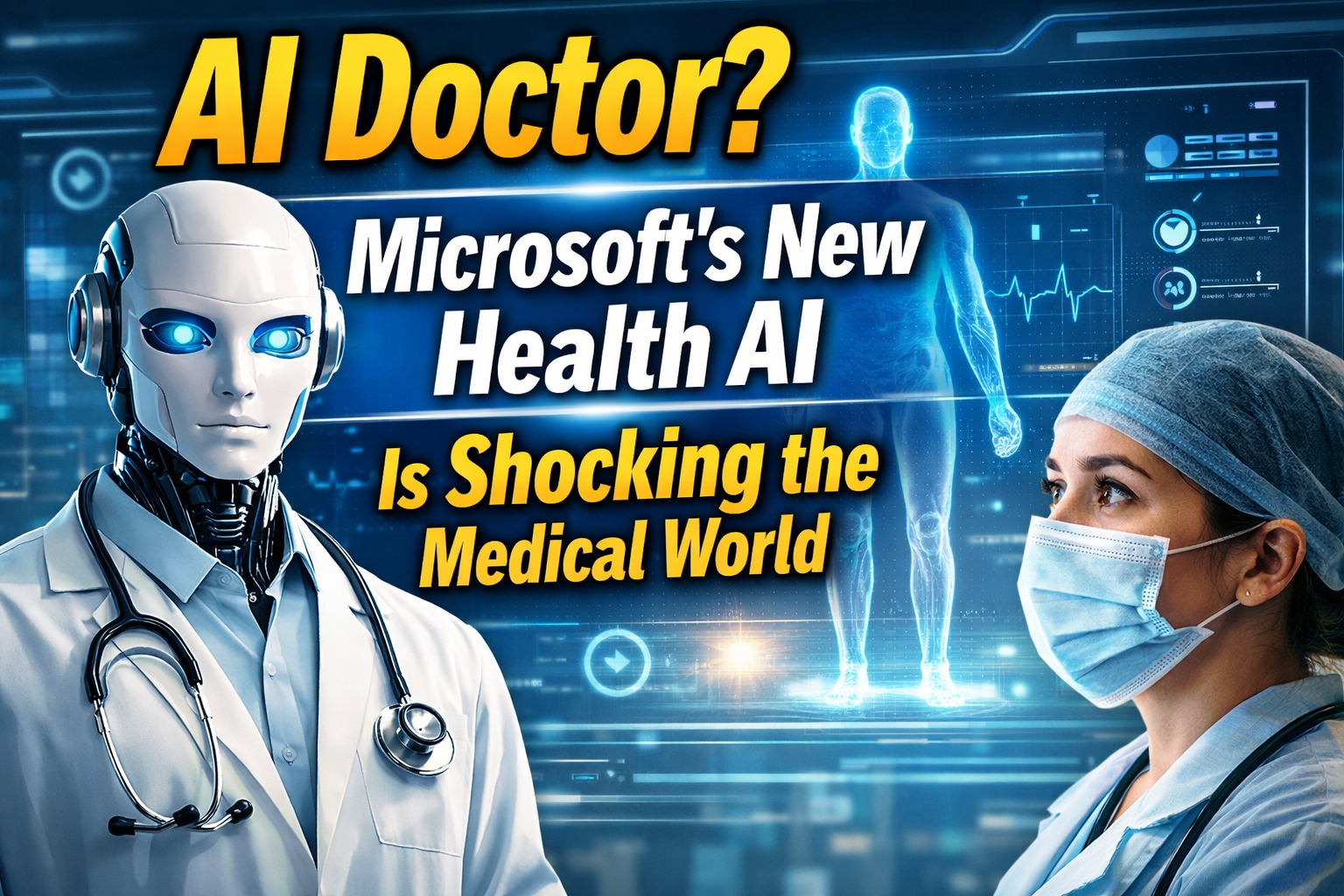
Microsoft Copilot Health AI: The AI Doctor Revolutionizing Healthcare in 2026
Artificial intelligence is rapidly transforming the medical industry, and the launch of Microsoft Copilot Health AI marks a major step forward in healthcare technology. The new AI-powered system is designed to help doctors analyze medical records, monitor patient data from wearable devices, and improve clinical decision-making.
Healthcare systems around the world are facing increasing pressure due to rising patient numbers and limited medical resources. Technologies like Microsoft Copilot Health AI aim to support healthcare professionals by providing faster insights, identifying health risks earlier, and improving the overall efficiency of medical care.
What Is Microsoft Copilot Health AI?
Microsoft Copilot Health AI is an advanced artificial intelligence platform developed by Microsoft that assists healthcare professionals by analyzing complex medical information. The system can process electronic health records, laboratory results, and data from wearable health devices to provide useful insights to doctors.
Unlike traditional software, AI systems can detect patterns in massive amounts of medical data. This allows physicians to receive recommendations or alerts about potential health risks that might otherwise be missed.
For example, if a patient’s wearable device records unusual heart rate patterns, the AI system may flag this information and notify doctors for further evaluation. More details about Microsoft’s AI healthcare initiatives can be explored on the official website of Microsoft.
How Microsoft Copilot Health AI Works
The technology behind Microsoft Copilot Health AI combines large language models with advanced data analysis tools. These systems are capable of understanding medical terminology, reviewing clinical notes, and identifying patterns across large patient datasets.
Doctors can interact with the AI system by asking questions about a patient’s medical history, test results, or symptoms. The AI then analyzes relevant data and provides summarized insights that help doctors make faster and more informed decisions.
This can significantly reduce the time doctors spend reviewing records and searching through complex patient histories.
Integration With Wearable Devices
One of the most powerful features of Microsoft Copilot Health AI is its ability to integrate with wearable health devices. Smartwatches and health trackers are becoming increasingly common, collecting data such as heart rate, sleep patterns, physical activity, and blood oxygen levels.
By analyzing this continuous stream of information, the AI system can identify potential health issues earlier than traditional medical checkups.
For instance, subtle changes in heart rate patterns or sleep behavior could indicate stress, illness, or cardiovascular problems. Early detection allows doctors to intervene before conditions become more serious.
Benefits for Doctors and Hospitals
The introduction of Microsoft Copilot Health AI could significantly improve efficiency in hospitals and clinics. Doctors often spend a large portion of their time reviewing patient records, documenting visits, and managing administrative tasks.
AI-powered tools can automate many of these processes, allowing medical professionals to focus more on patient care.
Hospitals can also benefit from improved data analysis. AI systems can detect trends across thousands of patients, helping healthcare providers identify outbreaks, predict disease patterns, and improve treatment strategies.
For readers interested in how artificial intelligence is transforming global technology and economies, you can also read our detailed report on
https://suntalknews.com/global-ai-technology-race-2026/ which explores the worldwide competition in AI innovation.
Improving Patient Outcomes
One of the biggest advantages of Microsoft Copilot Health AI is the potential to improve patient outcomes. Faster analysis of medical data can help doctors detect illnesses earlier and recommend treatments sooner.
Early diagnosis is particularly important for conditions such as heart disease, diabetes, and certain cancers. AI systems can help identify warning signs long before symptoms become severe.
As a result, patients may receive treatment earlier, increasing the chances of successful recovery.
Concerns About AI in Healthcare
Despite its many advantages, the use of AI in medicine also raises important questions. Privacy and data security are major concerns because medical records contain highly sensitive information.
Technology companies must ensure that patient data is protected through strong encryption and strict security policies.
Another concern is the reliability of AI recommendations. While AI can assist doctors, it should not replace human medical expertise. Healthcare professionals must always review and verify AI-generated insights before making clinical decisions.
The Future of AI Healthcare
The launch of Microsoft Copilot Health AI highlights how artificial intelligence is becoming a critical tool in modern medicine. As technology continues to evolve, AI systems may become even more capable of diagnosing diseases, predicting health risks, and recommending personalized treatments.
Experts believe the next generation of healthcare could include fully integrated AI systems that monitor patient health continuously and alert doctors before medical problems develop.
This shift could transform healthcare from reactive treatment to proactive prevention.
Why Microsoft Copilot Health AI Matters
The development of Microsoft Copilot Health AI represents a major milestone in the digital transformation of healthcare. By combining artificial intelligence, medical data, and wearable technology, the platform could help doctors deliver faster, more accurate, and more personalized care.
As healthcare systems around the world search for ways to improve efficiency and patient outcomes, AI tools like this may play a crucial role in shaping the future of medicine.
For patients and doctors alike, the integration of AI into healthcare could lead to smarter, safer, and more accessible medical care in the years ahead.