

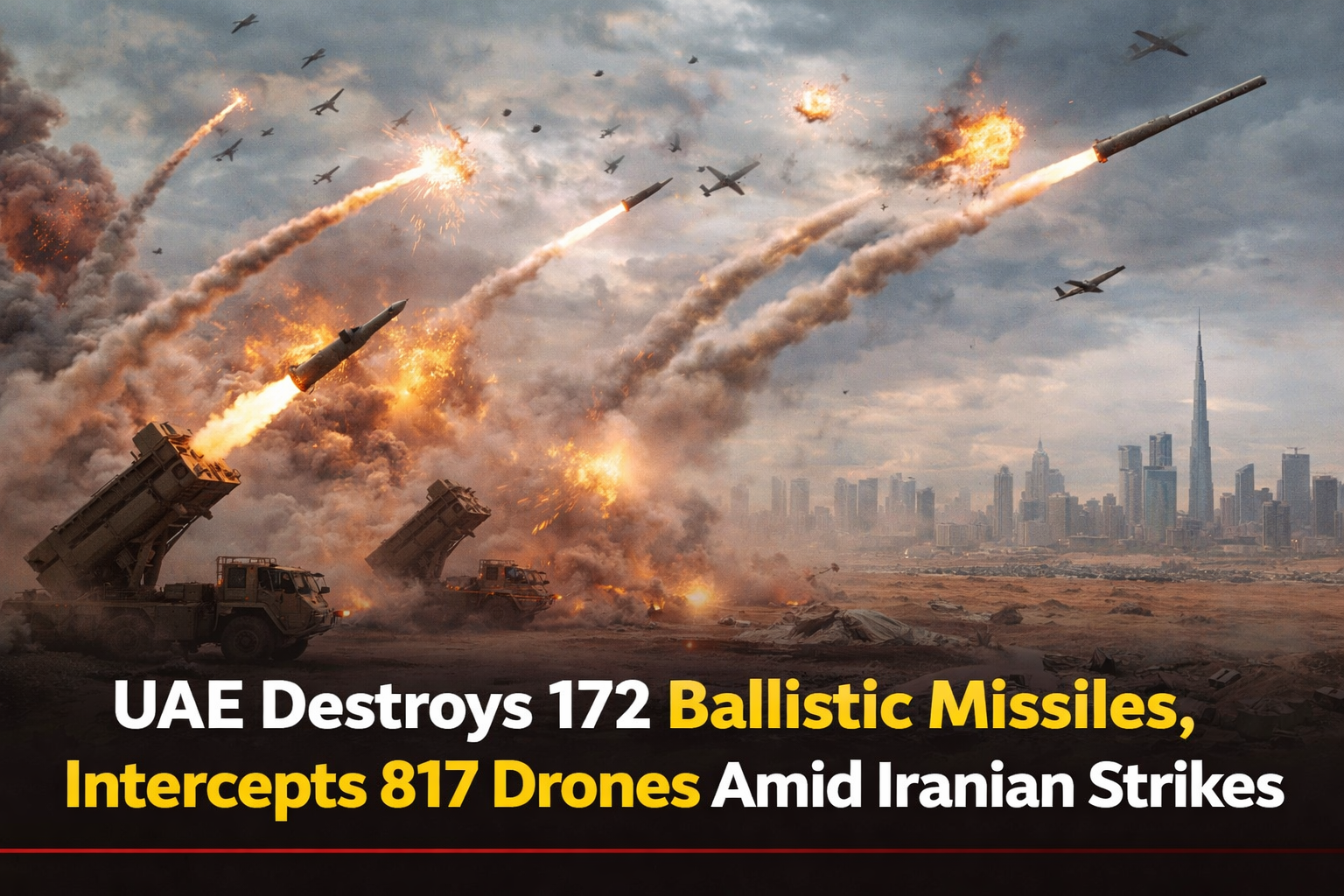
UAE Destroys 172 Ballistic Missiles, Intercepts 817 Drones Amid Escalating Iranian Strikes
In one of the largest defensive military responses in the region’s recent history, the United Arab Emirates (UAE) has confirmed the destruction of 172 ballistic missiles and the interception of 817 drones amid ongoing Iranian strikes. The announcement marks a significant escalation in tensions and highlights the scale of aerial threats faced by the Gulf nation.
According to official statements, the UAE’s advanced air defense systems successfully neutralized the incoming threats over multiple days of heightened military activity. Authorities stated that the majority of missiles and drones were intercepted before reaching their intended targets, preventing what could have been widespread damage to critical infrastructure and civilian areas.
Massive Defensive Operation
Security officials described the operation as one of the most complex air defense challenges the country has faced. The coordinated missile and drone attacks reportedly came in waves, testing the UAE’s layered defense systems.
Military analysts note that intercepting 172 ballistic missiles is a substantial defensive achievement. Ballistic missiles travel at extremely high speeds and are designed to evade interception. Successfully neutralizing such a large number demonstrates significant defensive preparedness and technological capability.
The interception of 817 drones further underscores the scale of the assault. Drone warfare has become increasingly prominent in modern conflicts, with unmanned aerial vehicles used for reconnaissance, surveillance, and direct attacks. The large volume of drones suggests a coordinated strategy aimed at overwhelming air defense systems.
Regional Tensions Intensify
The incident comes amid rising tensions between Iran and several Gulf nations. While officials have not released full operational details, regional observers say the strikes reflect an increasingly volatile security environment.
Experts believe the latest escalation could impact broader Middle East stability. The Gulf region plays a crucial role in global energy markets, and any sustained conflict raises concerns about oil supply disruptions and economic ripple effects worldwide.
International leaders have urged restraint, calling for diplomatic engagement to prevent further escalation. Security analysts warn that continued missile and drone exchanges could lead to unintended consequences, including expanded regional involvement.
Protection of Civilian Infrastructure
UAE authorities emphasized that protecting civilians and critical infrastructure was a top priority throughout the operation. Air defense units were reportedly on high alert following intelligence assessments indicating potential aerial threats.
Emergency response teams were mobilized, and precautionary measures were implemented across major cities. While officials have not confirmed extensive damage, they stated that defensive efforts significantly minimized potential casualties and infrastructure impact.
Residents in several areas reported hearing air defense activity during the period of heightened alert. Social media footage showed interception flashes in the night sky, though authorities have urged the public to rely only on verified sources for updates.
Advanced Defense Capabilities
The UAE has invested heavily in modern air defense systems over the past decade. Military experts say the country’s layered defense architecture includes radar networks, missile interception platforms, and electronic warfare capabilities designed to detect and neutralize threats at varying altitudes and ranges.
The successful interception numbers suggest high operational coordination between radar detection systems and rapid-response missile batteries. Defense analysts point out that handling simultaneous ballistic missile and drone attacks requires advanced tracking systems and real-time threat assessment.
This latest development highlights how warfare in the region is increasingly shaped by missile and drone technology. As unmanned systems become more accessible, nations are adapting their defense strategies to counter high-volume aerial assaults.
International Reactions
Global leaders are closely monitoring the situation. Several countries have expressed concern over the potential for further escalation, urging dialogue and de-escalation efforts.
Diplomatic channels are reportedly active as regional and international stakeholders seek to prevent a broader conflict. Analysts warn that prolonged hostilities could strain alliances and impact global trade routes, particularly those linked to Gulf shipping corridors.
Financial markets have also responded cautiously, with investors watching developments closely. Energy markets remain particularly sensitive to security risks in the region.
What Happens Next?
While the UAE has demonstrated significant defensive capability, experts caution that continued escalation could pose ongoing risks. The scale of the intercepted threats indicates a serious security challenge, and regional stability remains fragile.
Observers say future developments will depend on diplomatic engagement and strategic decision-making by regional powers. For now, the UAE’s air defense success stands as a major operational milestone amid one of the most intense aerial threat episodes in recent memory.
Authorities continue to monitor the situation closely, maintaining heightened readiness as tensions persist.