

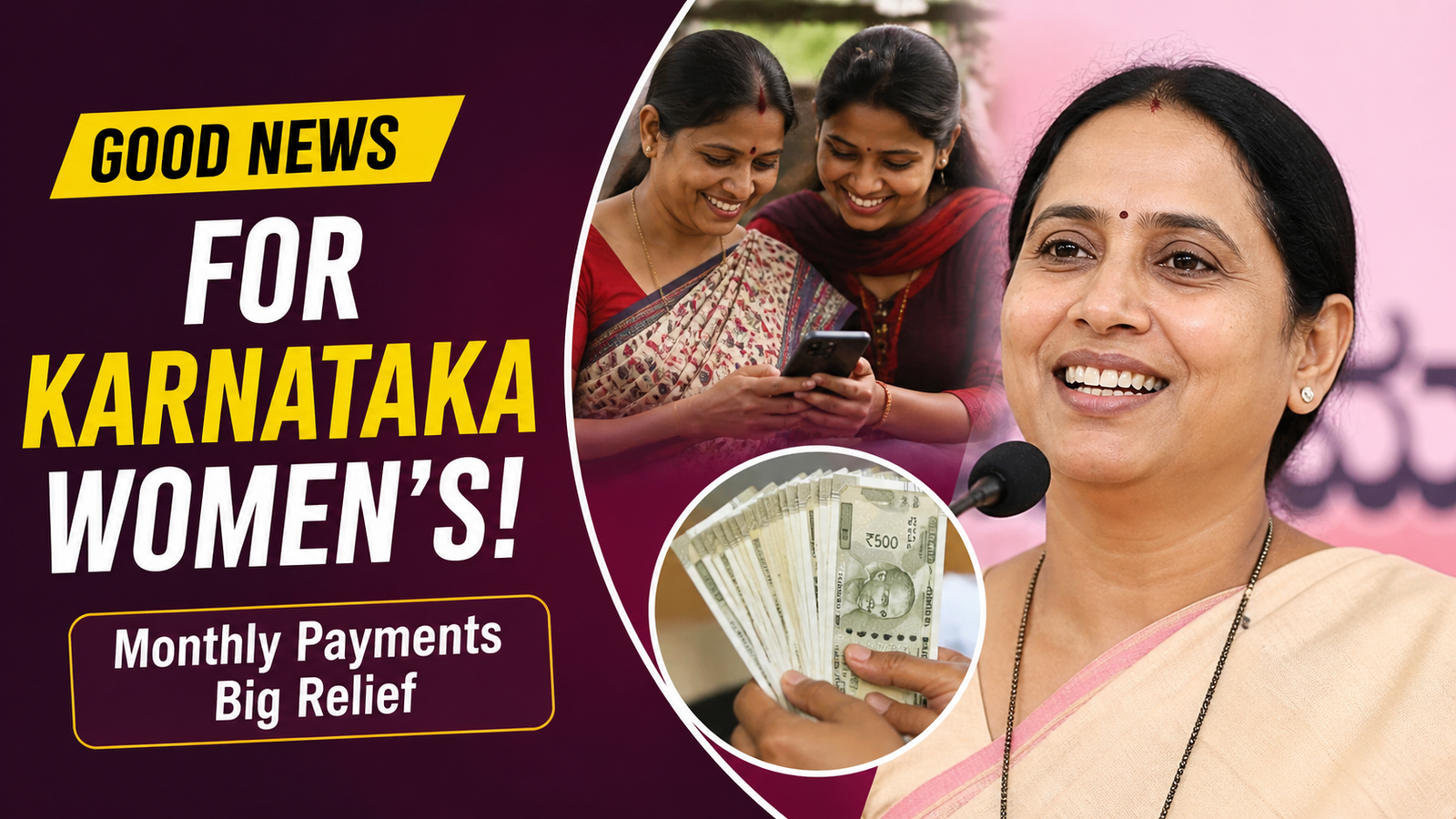
There’s something quietly reassuring about financial support you can actually count on. And for thousands of women across Karnataka, that sense of reliability might finally be within reach.
A recent update around the Gruhalakshmi scheme has sparked fresh hope — and honestly, it’s the kind of news many families have been waiting for. The possibility that payments could be credited every single month without delays is more than just an administrative tweak. It’s a shift that could make everyday life a little more predictable.
So, what exactly has changed?
The Gruhalakshmi scheme, launched by the Karnataka government, was designed with a clear purpose: to provide financial assistance directly to women heads of households. Under the scheme, eligible beneficiaries receive ₹2,000 per month through Direct Benefit Transfer (DBT).
However, in reality, payments haven’t always followed a strict monthly schedule. Some beneficiaries have experienced delays, irregular credits, or lump-sum deposits covering multiple months.
Now, Women and Child Development Minister Lakshmi Hebbalkar has indicated that the government is working toward ensuring payments are made regularly every month. While this may sound like a small operational update, the impact could be significant.
Why this matters right now
Let’s be real — when money arrives unpredictably, planning becomes difficult.
₹11,000 Financial Support for Pregnant Women: Who Can Apply and How to Get the Benefit
For many households relying on this scheme, the ₹2,000 isn’t just extra cash. It often goes toward groceries, school expenses, utility bills, or small savings. When payments are delayed, families are forced to adjust, sometimes borrowing or cutting back.
A steady monthly deposit changes that dynamic completely.
It’s not just about the amount — it’s about timing and trust.
If implemented properly, this update could:
- Improve financial stability for families
- Reduce dependence on informal borrowing
- Help women plan expenses more confidently
- Strengthen trust in government welfare systems
And in a broader sense, it reinforces the idea that welfare schemes should work predictably, not just generously.
What women on the ground might experience
For many beneficiaries, the biggest change will be psychological.
Imagine knowing that on a fixed date every month, money will be credited to your account. That kind of certainty can ease stress in ways that aren’t always visible.
Some real-world impacts could include:
- Better budgeting for monthly essentials
- Ability to set aside small savings
- Reduced financial anxiety
- More independence in household decisions
In households where women manage day-to-day expenses, this consistency could quietly shift decision-making power too.
And honestly, that’s where schemes like this often make the deepest difference — not in headlines, but in daily life.
The bigger picture behind the move
This push toward regular monthly transfers also reflects a larger trend in welfare governance — improving delivery systems rather than just announcing new benefits.
Direct Benefit Transfer systems have already reduced leakages and improved transparency. The next step is reliability.
If Karnataka manages to streamline Gruhalakshmi payments into a consistent monthly cycle, it could set a benchmark for similar schemes across India.
But of course, implementation will be key.
Because announcements create hope — but consistency builds credibility.
Are there still challenges?
Yes, and it’s important to acknowledge them.
Even with strong intent, ensuring monthly payments requires:
- Efficient backend processing
- Accurate beneficiary databases
- Coordination between departments
- Timely fund allocation
Technical issues, banking delays, or verification errors can still affect the flow of payments.
So while the update is promising, the real test lies in execution over the next few months.
What could happen next?
If things move as indicated, beneficiaries may start noticing:
- Payments arriving on a fixed schedule
- Fewer delays or backlogs
- Improved communication from authorities
There could also be updates through official channels regarding payment dates or system improvements.
For now, the message is cautiously optimistic.
It’s not a dramatic overhaul — but it’s a meaningful step toward making the scheme more dependable.
FAQ
1. What is the Gruhalakshmi scheme?
It is a Karnataka government initiative that provides ₹2,000 per month to women heads of eligible households through Direct Benefit Transfer.
2. What is the latest update about payments?
The government is working toward ensuring that payments are credited regularly every month without delays.
3. Who announced this update?
Women and Child Development Minister Lakshmi Hebbalkar shared this development.
4. Will all beneficiaries receive money every month now?
That is the goal, but implementation may take time. Consistency will depend on system efficiency and execution.
5. What should beneficiaries do if payments are delayed?
They can check their bank account status, DBT records, or contact local authorities for clarification.
6. Has the payment amount changed?
No, the amount remains ₹2,000 per month.
Conclusion
Sometimes, the most impactful changes aren’t flashy announcements — they’re quiet improvements that make systems work better.
The move toward ensuring monthly payments under the Gruhalakshmi scheme falls into that category.
If delivered as promised, it could bring a sense of stability that many families genuinely need. And for women managing households, that reliability isn’t just helpful — it’s empowering.
Now, all eyes are on how smoothly this transition unfolds.
Because at the end of the day, consistency isn’t just a feature of a good scheme — it’s what makes people believe in it.